
How To Grow 4C Hair Faster Naturally
Disclosure: Some of the links in this post are affiliate links. This means if you click on the link and purchase an item, I will receive an affiliate commission at no extra cost to you.
If you’ve ever looked in the mirror and wondered why your 4C hair doesn’t seem to be getting any longer, you’re not the only one to ask that question.
One month turns into three, then six, and it can start to feel like your hair has stayed the same length the entire time.
The funny thing is, your hair might actually be growing.
With 4C hair, shrinkage can hide a lot of your length. On top of that, if your ends keep breaking at the same rate your hair is growing, it can look like nothing is changing.
That’s why growing healthy 4C hair isn’t just about what happens at your scalp. It’s also about keeping the hair you’ve already grown.
If you’re still learning about your texture, our guide on what 4C hair is explains the unique characteristics that make this hair type different from other curl patterns.
There isn’t a single product that can make your hair grow overnight, and there isn’t one secret oil that works for everyone. Most of the time, healthy hair growth comes from simple habits that are repeated consistently over weeks and months.
In this article, you’ll learn practical ways to grow 4C hair naturally, reduce breakage, and create the kind of routine that supports longer, healthier hair over time.
Why Your 4C Hair Doesn’t Seem to Grow
If you’ve ever compared your hair to someone else’s and wondered why yours doesn’t seem to be getting any longer, you’re not overthinking things.
It’s a thought that crosses almost everyone’s mind at some point.
The interesting part is that your hair may actually be growing, but you just can’t see it yet.
Shrinkage
One of the biggest reasons is shrinkage.
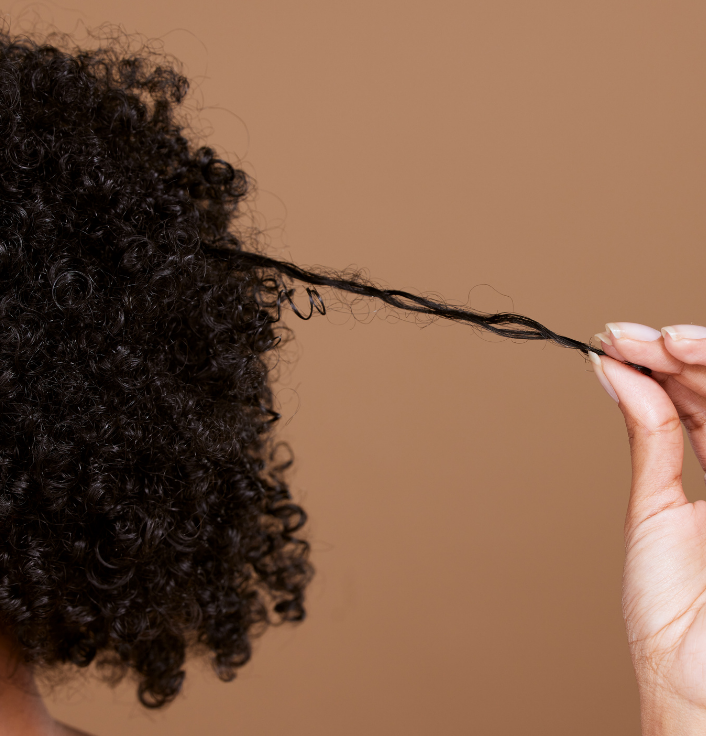
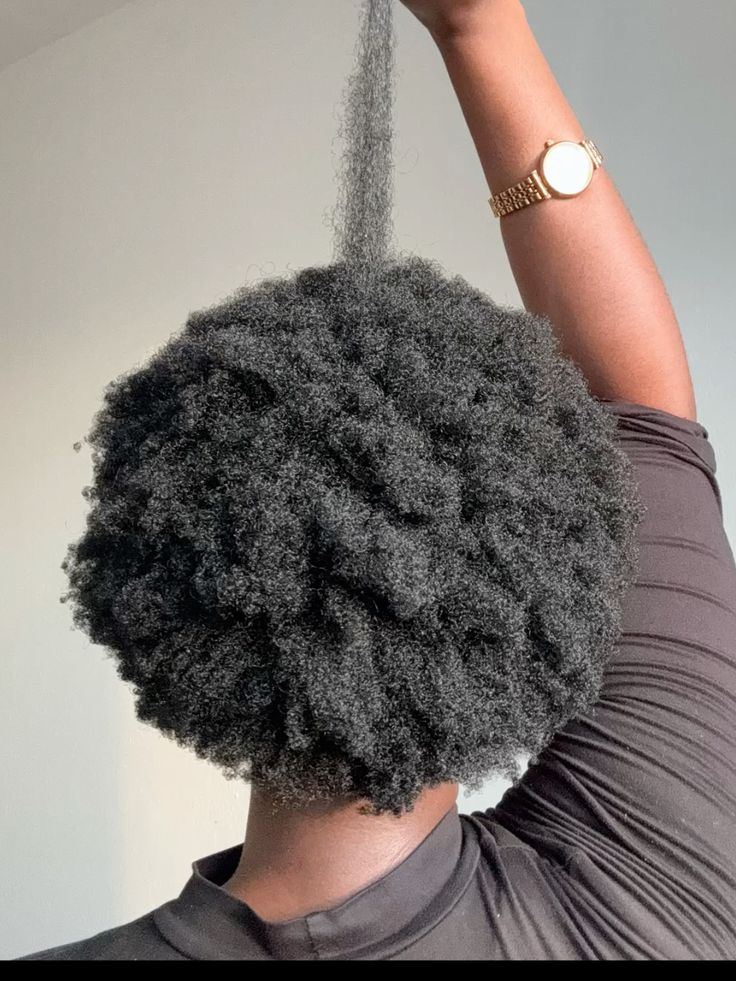
4C hair naturally coils very tightly, so new growth doesn’t always look like new length. Hair that stretches to 10 inches can easily look half that size when it’s left in its natural state.
If you’re still figuring out your curl pattern, How to Identify True 4C Hair explains why shrinkage is one of the things that makes 4C hair so unique.
breakage
Then there’s breakage.
Think about it this way: if your hair grows half an inch this month but you lose half an inch from your ends because they’re dry or breaking, it won’t look like you’ve made any progress.
That’s why people often say their hair has “stopped growing” when what’s really happening is that they aren’t keeping the growth they’re getting.
If you notice lots of broken strands after detangling or styling, common 4C hair mistakes that cause breakage can help you figure out what might be causing it.

Another thing that catches people off guard is expectations.
Social media makes it easy to believe that everyone else’s hair grows incredibly fast.
What you don’t always see are the months, or even years, of consistent care behind those results.
Healthy hair growth is usually slow.
The difference is that people who see the most progress are often the ones who protect their hair well enough to keep the length they’ve already grown.
That’s why learning how to grow 4C hair faster isn’t really about speeding up your natural growth rate. It’s about creating the right conditions for healthy growth while holding on to every bit of progress you make.
Things To Do To Grow Your 4c Hair Faster
1. Grow From The Inside Out
It’s easy to focus on products when you’re trying to grow 4C hair faster, but your hair also depends on what’s happening inside your body.
Your hair grows from your scalp, and just like the rest of your body, it needs the right nutrients to stay healthy. Even the best hair care routine can’t make up for a diet that’s missing key nutrients.
Your diet also plays a bigger role than many people realize. Hair needs nutrients to grow well, so eating enough protein, iron, zinc, biotin, and vitamins like D and E can support healthier strands.
Foods like eggs, fish, beans, lentils, leafy greens, nuts, and seeds are great choices.
Staying hydrated matters too. Drinking enough water won’t magically speed up hair growth, but it helps keep your hair and scalp healthy, reducing dryness and breakage over time.
You don’t need to completely change your diet overnight.
Simply eating balanced meals, staying hydrated, and giving your body the nutrients it needs can support healthier hair over time.
2. Start With a Healthy Scalp
When people think about growing their hair, they usually focus on the strands.
One mistake many people make is adding more products without removing the old ones first.
Over time, oils, creams, gels, and even dead skin can build up on your scalp. When that happens, your scalp may feel itchy, your hair can feel heavy, and even your favourite products may not seem to work as well anymore.
That’s why washing your hair regularly is so important.
For many people with 4C hair, washing every one to two weeks works well. It helps remove buildup without leaving your hair feeling stripped of moisture. If you’re still trying to figure out the right schedule, How Often Should You Wash 4C Hair can help you find a routine that suits your hair.
Your regular shampoo is usually enough for most wash days, but if you use a lot of heavy creams, butters, or oils, using a clarifying shampoo once or twice a month can help give your scalp a fresh start.
When you shampoo, pay most of your attention to your scalp.
Use your fingertips to gently massage the shampoo in instead of scratching with your nails. A gentle massage cleans your scalp without irritating it and can make wash day feel a little more relaxing too.

3. Give Yourself a Gentle Scalp Massage
You don’t always need an expensive product to support healthy hair growth.
Sometimes, the simplest habits are the ones that stick.
A few minutes of gently massaging your scalp each day can help stimulate blood flow to your hair follicles and create a healthier environment for your hair to grow. Some small studies have even found that regular scalp massages may help improve hair thickness over time.
The best part is that it doesn’t cost anything.
Use the pads of your fingers, not your nails, and massage your entire scalp in gentle circular motions for about five minutes. You can do it while you’re shampooing, moisturizing your scalp, or even while relaxing in the evening.
If you’re already following a consistent daily hair care routine for 4C hair, adding a quick scalp massage is an easy habit that takes very little extra time.

You can also pair your scalp massage with a lightweight natural oil, while others prefer to do it on a clean, dry scalp.
Neither approach is wrong.
If you decide to use an oil, options like rosemary, peppermint, and castor oil are popular choices in the natural hair community. They won’t magically make your hair grow overnight, but they can be a nice addition to a healthy hair care routine when used correctly.
If you’re curious about which oils are worth trying, how to dilute them safely, and what the research actually says, best essential oils for 4C hair growth covers everything in more detail.
4. Keep Your Hair Moisturized
One of the biggest mistakes people make when trying to grow 4C hair faster is focusing only on new growth.
What really makes the difference is keeping the hair you’ve already grown.
If your hair is constantly dry and breaking, you could be growing half an inch every month without ever seeing that progress. Every strand that snaps off is a length you’ll have to grow all over again.
That’s why keeping your hair moisturized isn’t just about making it feel soft; it’s one of the best things you can do for length retention.
A good place to start is with your wash day.
DEEP CONDITION YOUR HAIR
Deep conditioning every wash day gives your hair the moisture it needs before you style it. Apply a moisture-rich deep conditioner to clean, damp hair, cover it with a plastic cap, and leave it on for about 20 to 30 minutes.
If you can add a little heat, even better. Heat helps lift the hair cuticle slightly, allowing the conditioner to penetrate more deeply instead of just sitting on the surface.
If you’re unsure which products are worth buying, our guide to Best Deep Conditioners for Dry 4C Hair breaks down what to look for, including ingredients like shea butter, aloe vera, glycerin, coconut milk, and hydrolyzed proteins.

Moisturize when needed
Moisture doesn’t stop after wash day, though.
Your hair loses moisture throughout the week, so you’ll need a routine that helps replace it before your strands become dry and brittle.
Many people with 4C hair use the LOC method-Liquid, Oil, then Cream; to help lock moisture into the hair.
You start with water or a water-based leave-in conditioner, follow with an oil to help seal in that moisture, and finish with a cream for extra softness and protection.
Not every head of hair responds the same way, so don’t feel like you have to follow the LOC method exactly. The most important thing is finding a routine that keeps your hair hydrated between wash days.
If you’re still experimenting with products and routines, the best leave-in conditioners for 4C Hair and our weekly hair care routine for healthy 4C hair can help you figure out what works best for your hair.
Listen to your hair; if it starts feeling dry after two or three days, that’s usually a sign it needs moisture again.
Staying consistent with those small touch-ups is much easier than trying to fix extremely dry hair later.
5. Handle Your Hair Carefully
Moisture is only one part of the equation, though. How you handle your hair every day matters just as much.
Every time you comb, detangle, style, or even constantly touch your hair, there’s an opportunity for breakage. That doesn’t mean you should avoid handling your hair altogether; it just means being a little more intentional every time you do.
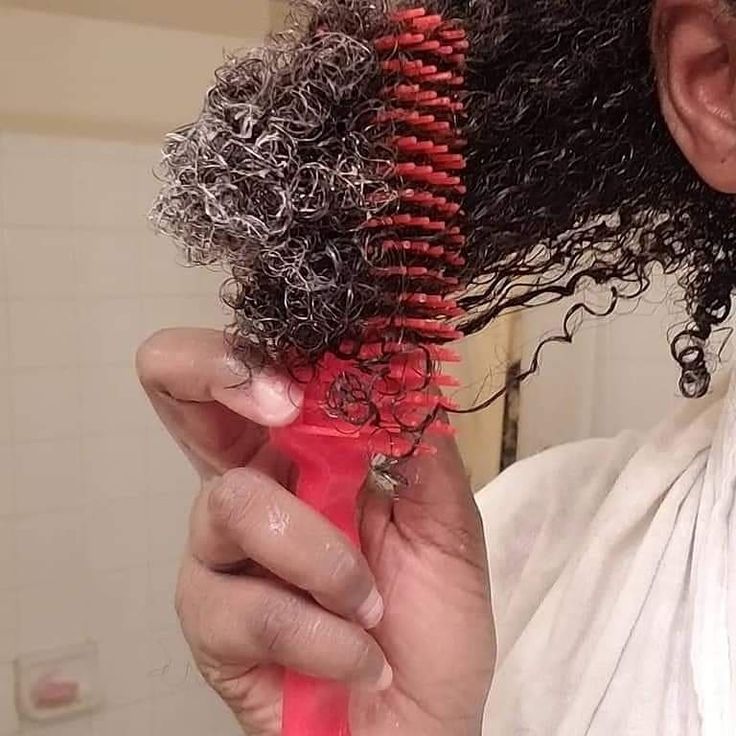
Always detangle your hair while it’s damp
Always detangle your hair when it’s damp and coated with a conditioner that gives your strands plenty of slip.
Trying to detangle dry 4C hair is one of the fastest ways to cause unnecessary breakage. If you’re looking for more ways to protect your strands, Length Retention Tips That Actually Work for 4C Hair shares simple habits that help reduce breakage over time.
Working in sections also makes a huge difference.
Instead of trying to tackle your entire head at once, divide your hair into four to eight sections. It gives you better control and helps prevent small tangles from turning into large knots.
As you detangle, always start from the ends and slowly work your way toward the roots. Pulling a comb from your roots straight through to the ends forces every knot together, and that’s usually where unnecessary breakage happens.
The tools you use matter too.
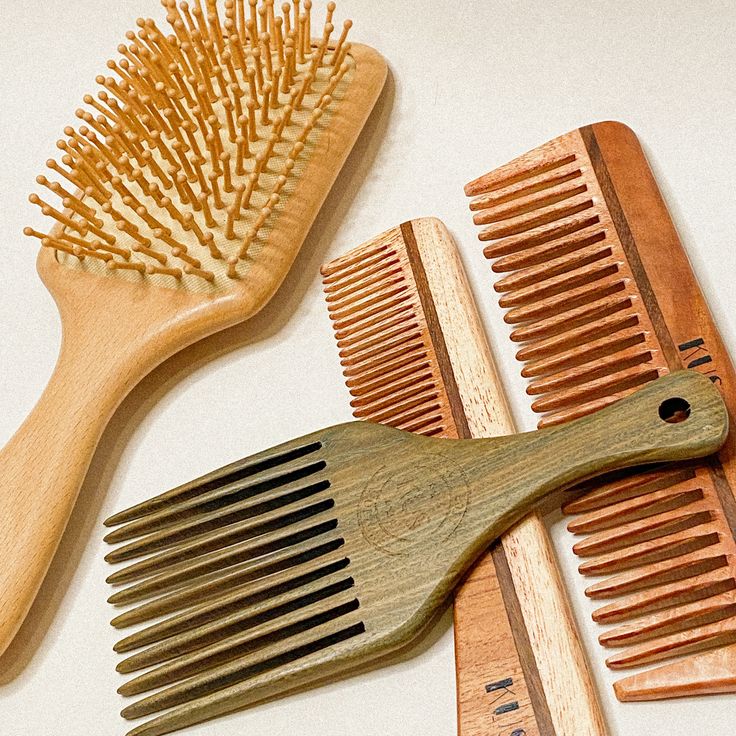
Wide-tooth combs, detangling brushes made for textured hair, and even your fingers are much gentler on 4C hair than fine-tooth combs. Choosing the right tool can make wash day feel a lot less frustrating.
Also, remember that your hair doesn’t need to be restyled every single day.
The more you manipulate it, the greater the chance of breakage. Styles that last for several days, like twist-outs, braid-outs, or other best protective hairstyles for 4C hair, give your strands a chance to rest while helping you hold on to the length you’re working so hard to grow.
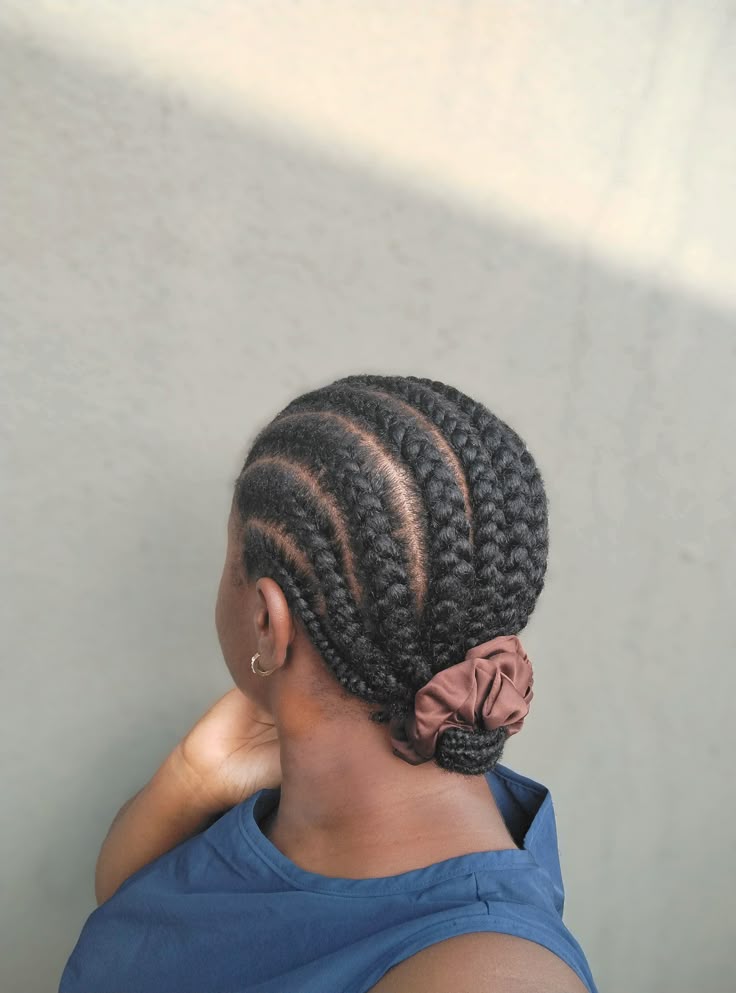
6. Choose Protective Styles That Actually Protect
Protective styles can be a great way to help grow 4C hair faster, but only when they’re done the right way.
When they’re done properly, they give your hair a break from daily combing, brushing, and styling. They also keep your ends tucked away, which helps reduce friction and breakage over time.
That’s one reason they’re often recommended if you’re trying to grow 4C hair faster.
A protective style only protects your hair when it’s installed and maintained the right way. If you’re not sure which styles are the gentlest on 4C hair, you’ll find plenty of ideas in Protective Hairstyles for 4C Hair.
A protective style should never leave your scalp feeling sore.
If your braids are so tight that they give you a headache, leave bumps around your hairline, or make it painful to sleep, they’re doing more harm than good.
Over time, constant tension can weaken your edges and even lead to traction alopecia.
A good protective style should feel secure but still be comfortable enough that you can go about your day without discomfort.
7. Don’t Forget About Your Hair Once It’s Styled
One mistake people make is thinking they can completely forget about their hair once it’s in braids, twists, or cornrows.
Your scalp still needs attention, and your hair still needs moisture.
Keeping your scalp clean and lightly moisturized every few days can help reduce dryness, itching, and flakes while your style is in. If you’re wondering how to build that into your routine, a weekly hair care routine makes it much easier to stay consistent.
If you have any of your own hair exposed, don’t forget about your ends either. A little moisture goes a long way in helping them stay soft and less prone to breakage.
Also, protective styles aren’t meant to stay in forever.
For most people, six to eight weeks is a good guideline. Leaving them in much longer can lead to excessive buildup, matted new growth, and tangles that are much harder to deal with when it’s time to take your hair down.
Removing your style deserves just as much patience as putting it in.
Before you start, apply a generous amount of conditioner or a detangling product to help soften your hair. Then work one section at a time instead of rushing through the process.
Once the braids or twists are out, gently detangle your natural hair before moving on to the next section. It takes longer, but your hair will thank you for it.
If wash day usually feels overwhelming after taking down a protective style, following a proper Wash Day Routine for 4C Hair can make the process much smoother and help you avoid unnecessary breakage.
8. Trim Your Hair Regularly
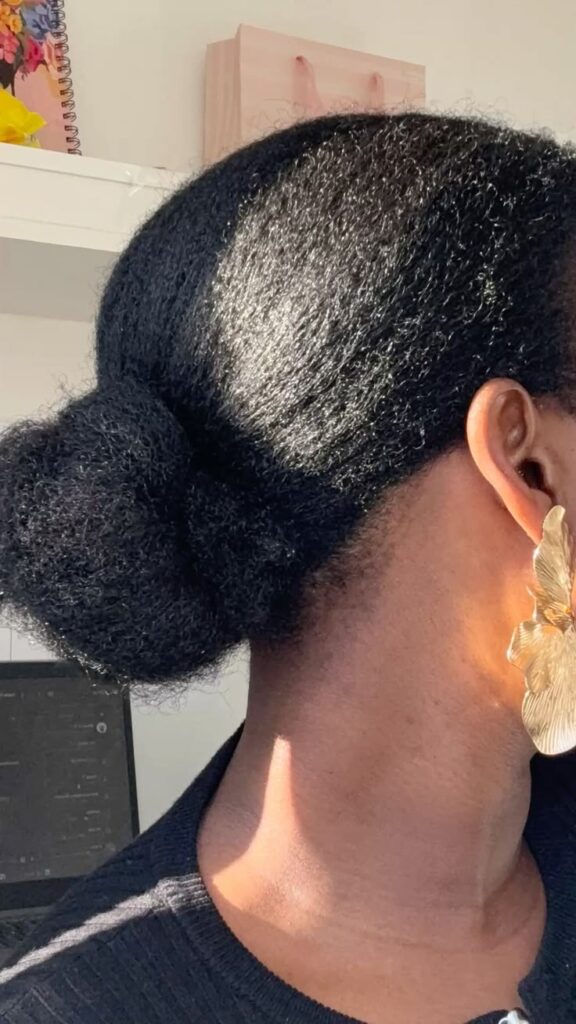
It sounds strange at first. When you’re trying to grow 4C hair faster, cutting your hair feels like the last thing you should do.
But trimming and hair growth aren’t enemies.
In fact, regular trims can help you keep more of the length you’re working so hard to grow.
Here’s why;
Split ends don’t stay where they start.
Once the end of a strand splits, the damage slowly works its way upward. If it’s left for too long, that one small split can turn into a much bigger break, leaving you with less hair than you would have lost from a simple trim.
That’s why trimming isn’t about making your hair grow faster; it’s about stopping unnecessary breakage before it gets worse.

Trim every eight to twelve weeks, or when you notice any of these signs: rough, thin, or stringy ends, difficulty retaining moisture in your ends, excessive single-strand knots, or ends that feel noticeably different in texture from the rest of your hair.
Learning to spot these signs early makes it much easier to hold on to your length over time.
That’s also one reason understanding common 4C hair myths is so helpful. One of the biggest myths is that avoiding trims altogether will automatically give you longer hair.
It usually doesn’t. You don’t need large trims; often a quarter to a half inch is enough to remove damage and restore the health of your ends.
9. Protect Your Hair At Night
What you do at night can have just as much impact on your hair as what you do during the day.
You spend hours asleep every night, and if your hair isn’t protected during that time, all that rubbing and friction can slowly lead to dryness, tangles, and breakage.
Cotton pillowcases are one of the biggest reasons this happens.
As you move in your sleep, the fabric creates friction against your hair. Over time, it can pull moisture from your strands and leave your hair feeling drier than it did the night before.
If you’ve ever wondered why your 4C hair isn’t growing, night-time breakage is one of those small habits that’s easy to overlook but can make a real difference over time.
The good news is that fixing it is simple.
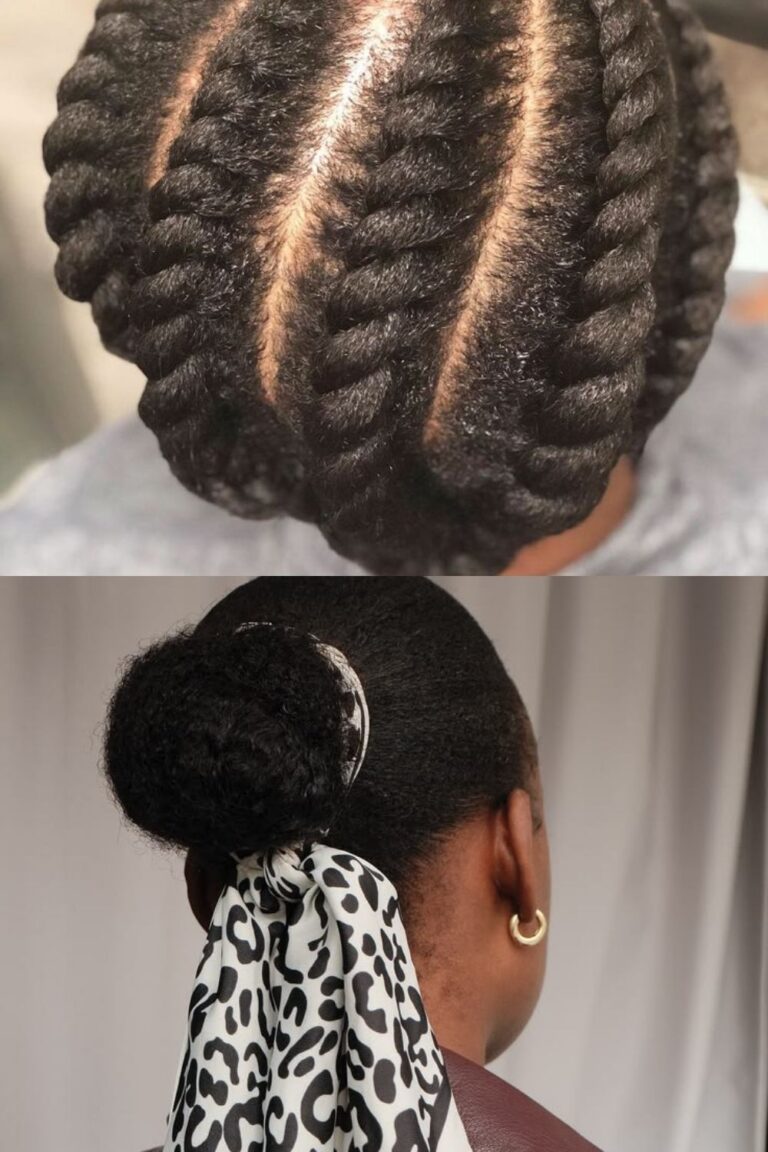
Sleeping with a satin or silk bonnet, or switching to a satin pillowcase, helps reduce friction and allows your hair to glide smoothly instead of catching and breaking.
Before putting on your bonnet, loosely gather your hair into a pineapple using a satin scrunchie. This helps preserve your hairstyle, reduces overnight tangles, and makes your hair much easier to manage the next morning.

If you’re wearing twists, braids, or another protective style, don’t skip your night-time routine just because your hair is tucked away.
Small habits like these might not seem like much, but they play a big role in length retention tips that actually work for 4C Hair. The less breakage you experience while you sleep, the more of your hard-earned growth you’ll actually get to keep.
10. Stay Consistent and Give Your Hair Time
When you’re trying to grow 4C hair faster, consistency will always matter more than perfection.
You don’t need a complicated routine with dozens of products to see results. What your hair really responds to is regular care over weeks and months, not doing everything perfectly for one week and then giving up.
That’s why it’s important to build a routine that works for your lifestyle.
If spending four or five hours on wash day every week isn’t realistic, don’t force it. A simple routine that you can stick to every week will always give you better results than an elaborate routine you only manage once in a while.
Start with the basics. A gentle shampoo, a deep conditioner, a leave-in conditioner, an oil, and a styling product are enough for most people.
As you get to know your hair better, you can slowly adjust your routine based on what your hair actually needs instead of buying every product you see online.
If you’re still putting your routine together, The Ultimate Beginner’s Guide to 4C Hair is a great place to start. It covers the essentials without making natural hair care feel overwhelming.
PROGRESS TRACKING
One thing that also helps is keeping track of your progress.
Hair growth is slow, so it’s easy to feel like nothing is happening when you look in the mirror every day. In reality, your hair may be growing just fine; you simply don’t notice the small changes.
Taking a photo once a month can make a huge difference.
Try to take your pictures in the same lighting, with your hair stretched in a similar way each time. Then compare your photos every three months instead of every week. You’ll usually notice progress that you would have otherwise missed.
Keeping a simple routine and tracking your progress also makes it easier to spot what’s working and what needs to change. That’s one reason many people find a monthly hair care checklist so helpful; it keeps you consistent without having to remember every little detail.

Most importantly, be patient with yourself.
Healthy hair growth doesn’t happen overnight. It takes time, consistency, and a little patience. But if you keep showing up for your hair, month after month, those small habits will eventually turn into noticeable results.
Before You Go
How fast your hair grows is something you don’t have much control over. A lot of it comes down to genetics. Some people naturally grow hair a little faster than others, and that’s completely normal.
That’s also why it’s important to be careful with products that promise unbelievably fast results. No oil, serum, or hair product can suddenly make your hair grow two or three times faster, no matter what the label says.
What you can do is give your hair the best chance to grow well.
That means taking care of your scalp, keeping your hair moisturized, eating a balanced diet, and reducing breakage wherever you can. When your hair is healthy and you’re holding on to more of the length you grow, the difference becomes much more noticeable over time.
You may not change how quickly your hair grows, but you can absolutely improve how much of that growth you keep, and that’s often what helps people finally start seeing longer, healthier 4C hair.






4 Comments