
The Complete Guide To Hair Porosity For 4C Hair
Disclosure: Some of the links in this post are affiliate links. This means if you click on the link and purchase an item, I will receive an affiliate commission at no extra cost to you.
Have you ever followed someone else’s 4C hair routine exactly, only to end up with completely different results? Maybe a product that leaves someone else’s hair soft and moisturized makes your hair feel greasy, or perhaps your hair dries out again just hours after moisturizing.
In many cases, the difference isn’t your curl pattern. It’s your hair porosity.
Hair porosity affects how easily your strands absorb and hold onto moisture. Understanding your porosity can help you choose products more wisely, build a routine that actually works for your hair, and avoid wasting money on products that aren’t suited to your needs.
If you’re still learning about the characteristics of 4C hair, you’ll quickly discover that hair type and hair porosity are two completely different things. Two people can both have 4C hair but need completely different routines because their porosity levels aren’t the same.
Knowing your porosity also makes it easier to understand why your hair behaves the way it does. It can explain why moisture disappears quickly, why products sometimes sit on top of your strands, or why your wash day results never seem to match what you see online.
In this complete guide, you’ll learn what hair porosity is, why it matters for 4C hair, how to determine your porosity level, and how each type affects your hair care routine.
What Is Hair Porosity?
Hair porosity refers to your hair’s ability to absorb, retain, and release moisture.
Think of each strand of hair as having a protective outer layer called the cuticle. The way these cuticles are arranged determines how easily water, conditioners, and other products move into your hair.
Some people’s cuticles lie very flat, making it harder for moisture to enter. Others have cuticles that are more open, allowing moisture to enter quickly but also escape just as easily.
That’s why two people with the same hair texture can have completely different experiences with the same products.
Understanding porosity helps explain why one person may only need a small amount of moisturizer while another has to reapply moisture throughout the week. It also makes choosing products much easier because you’ll know what your hair actually needs instead of relying on trial and error.
Hair Type and Hair Porosity Are Different
One of the biggest misconceptions is that hair type automatically determines hair porosity.
It doesn’t.
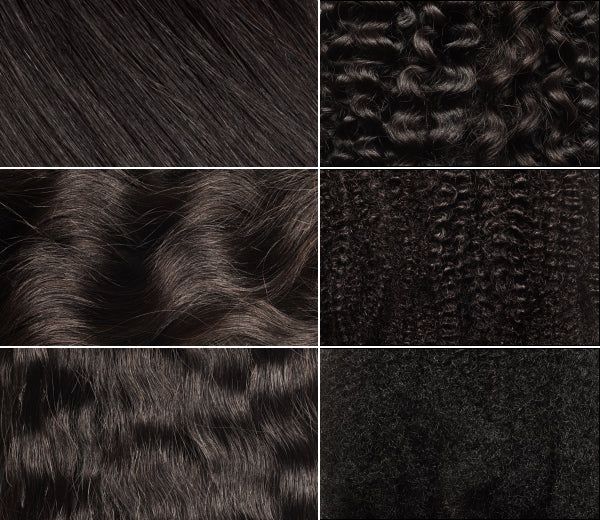
Your hair type describes your curl pattern, while porosity describes how your hair handles moisture.
For example, two people can both have tightly coiled hair, yet one may struggle to absorb water while the other loses moisture very quickly.
That’s why understanding how moisture moves through your hair is just as important as knowing your curl pattern.
Why Hair Porosity Matters for 4C Hair
Because 4C hair naturally has a tight curl pattern, it already faces challenges with moisture retention. The scalp’s natural oils have a harder time traveling from the roots to the ends, making dryness a common concern.
When porosity is added to the equation, moisture management becomes even more personal.
Someone with low-porosity hair may struggle to get moisture into their strands, while someone with high-porosity hair may struggle to keep it there.
Learning your porosity level helps you build a routine that works with your hair instead of against it. It also helps explain why some people constantly battle dryness while others find their hair stays moisturized for days.
The Three Hair Porosity Types
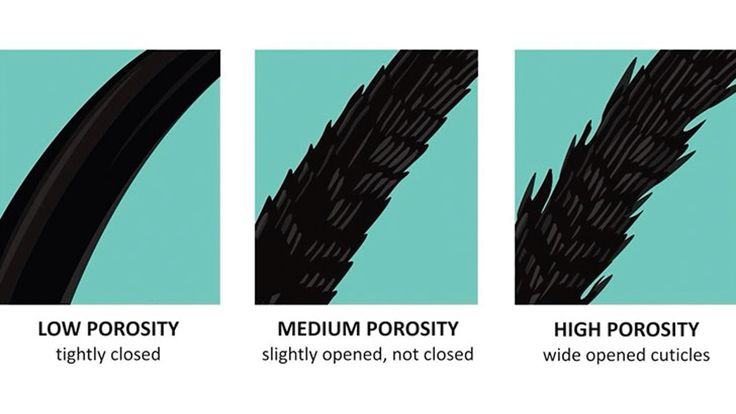
Every strand of hair falls into one of three porosity categories: low, medium, or high.
The difference isn’t how curly your hair is or how thick it feels. Instead, it’s about how easily moisture moves through the hair shaft.
Think of your hair cuticle as a door that controls how easily moisture gets in and out of your hair.
When the cuticles lie very flat, moisture has a harder time getting in. Slightly raised cuticles allow moisture to move in and out more easily, while overly raised cuticles let moisture enter quickly but lose it just as fast.
Knowing which category your hair falls into makes it much easier to understand why your hair behaves the way it does and how to care for it more effectively.
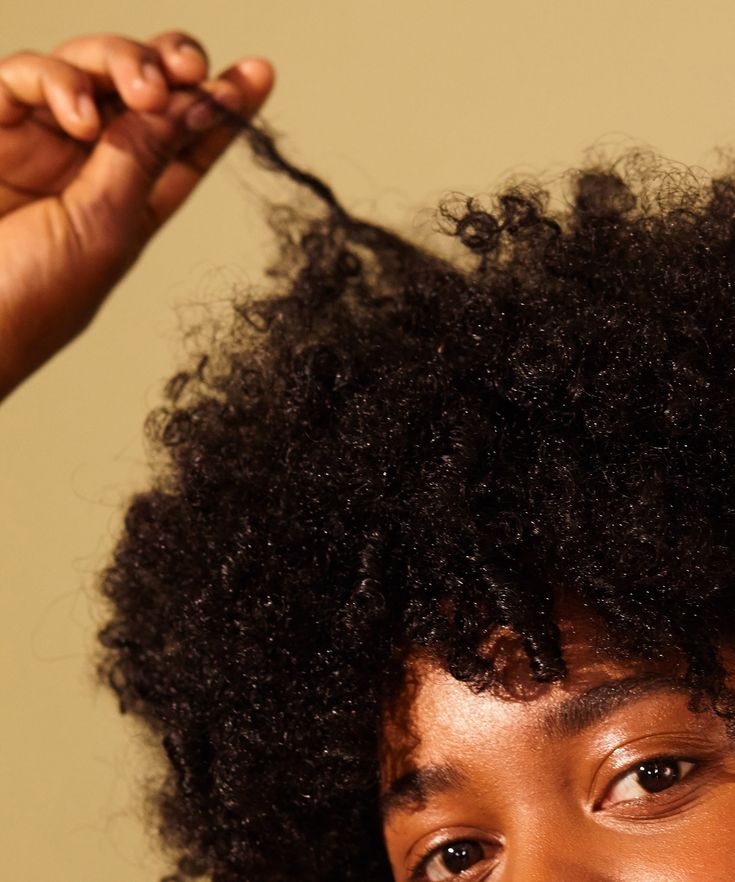
Low Porosity Hair
Low porosity hair has tightly closed cuticles that resist moisture.
Instead of soaking into the strands immediately, water and products often sit on the surface before gradually being absorbed.
This doesn’t mean your hair can’t be moisturized. It simply means that moisture usually needs a little help getting inside the strand.
People with low-porosity hair often notice that products build up easily or that it takes longer for their hair to become fully wet on wash day. Lightweight products and gentle heat are often recommended because they encourage better product absorption without weighing the hair down.
We’ll explore this in much more detail in our guide on recognizing the signs of low-porosity 4C hair, where you’ll learn how to identify this porosity level with confidence.
Medium Porosity Hair
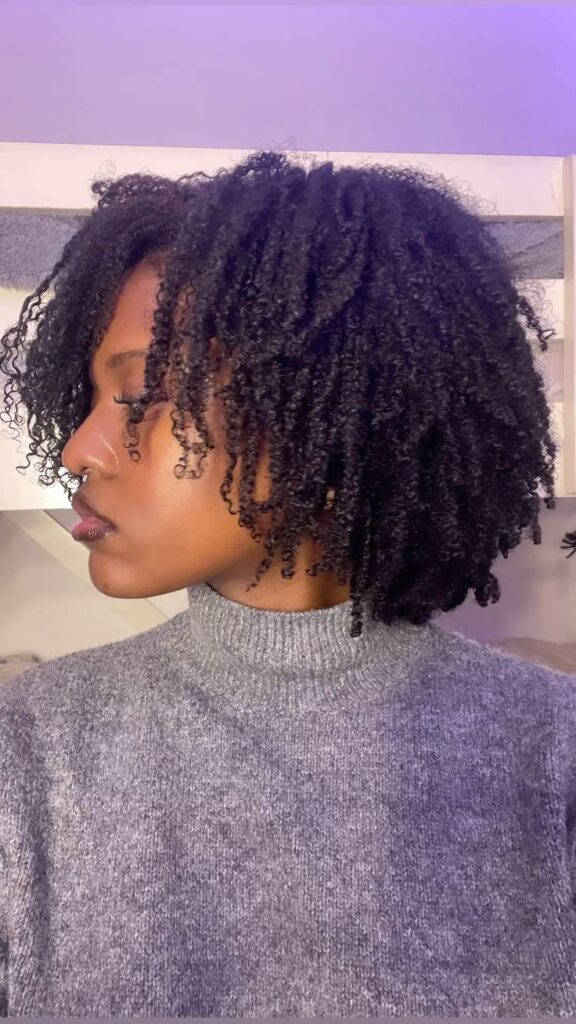
Medium porosity is often considered the most balanced porosity level.
The cuticles are neither too tightly closed nor overly raised, allowing moisture to enter and remain in the hair without much difficulty.
Because of this balance, medium-porosity hair is often easier to manage. It usually responds well to regular conditioning and doesn’t require as much extra effort to maintain moisture.
That doesn’t mean it can be neglected, though. Healthy habits are still important for keeping the hair strong and preventing unnecessary damage.
Later, we’ll explain what makes medium-porosity hair different and how to maintain this balance over time.
High Porosity Hair
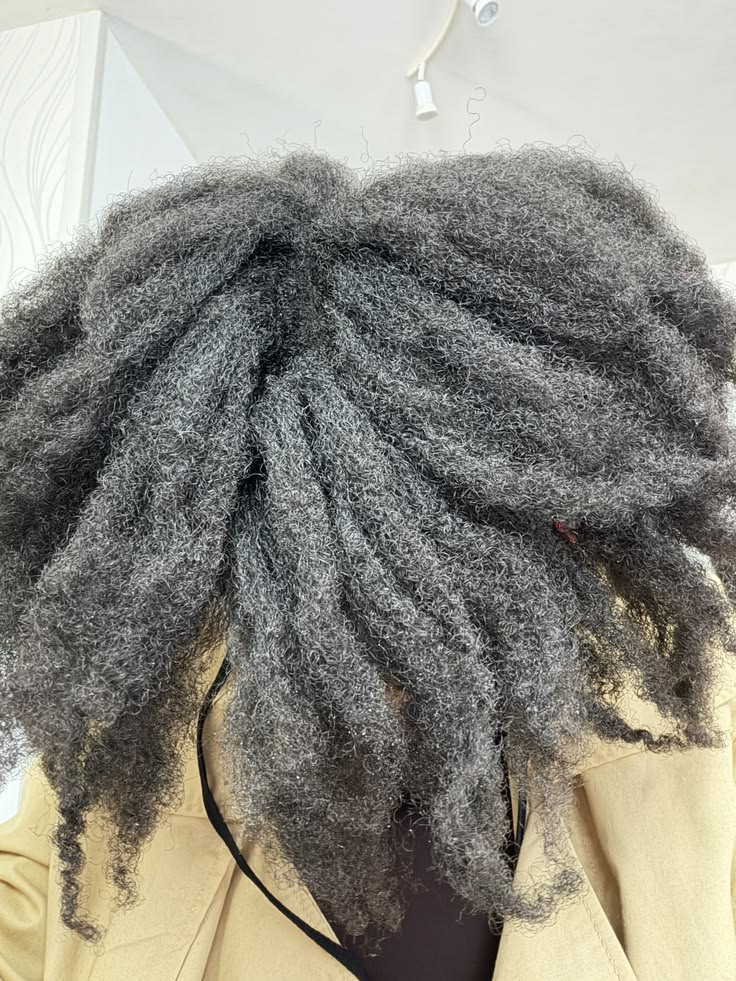
High porosity hair has cuticles that are more open than usual.
This allows moisture to enter the strand quickly, but it also allows that moisture to escape much faster.
As a result, high-porosity hair often feels dry shortly after being moisturized. It may also become frizzy more easily or seem difficult to keep hydrated throughout the week.
Although this can be frustrating, high porosity isn’t something that should discourage you. With the right products and techniques, it’s possible to build a routine that helps your hair retain moisture more effectively.
We’ll cover practical routines and product recommendations in our guide to caring for high-porosity 4C hair.
What Determines Your Hair Porosity?
Many people assume they’re born with one porosity level forever, but that’s only partly true.
While genetics play an important role, your everyday hair care habits can also influence how your hair behaves over time.
Genetics
For many people, porosity is inherited.
If your hair naturally absorbs moisture slowly or loses it very quickly without much chemical processing, genetics may be the main reason.
This is why family members with similar curl patterns sometimes experience similar hair care challenges.
Heat and Chemical Treatments
Frequent heat styling, bleaching, coloring, and chemical relaxers can gradually change the condition of the hair cuticle.
Over time, these processes may increase porosity by lifting or damaging the cuticle layer.
If you’re currently growing out chemically treated hair, understanding how transitioning affects your natural hair can also help explain why different parts of your hair behave differently.
Daily Hair Care Habits
Your routine also plays a role.
Rough detangling, excessive brushing, tight hairstyles, and skipping regular conditioning can weaken the hair over time, making it more difficult for the cuticle to protect the strand.
On the other hand, a routine focused on gentle handling, moisture, and regular conditioning helps keep your hair healthier regardless of its porosity level.
That’s one reason why building a consistent wash day routine is so important for maintaining healthy 4C hair.

How to Find Your Hair Porosity
You don’t need expensive equipment to get a good idea of your hair porosity. While no home test is 100% accurate, combining a few simple observations can help you understand how your hair behaves.
Instead of relying on just one method, pay attention to how your hair reacts during wash day, after moisturizing, and throughout the week. The more patterns you notice, the easier it becomes to identify your porosity level.
Observe How Your Hair Gets Wet
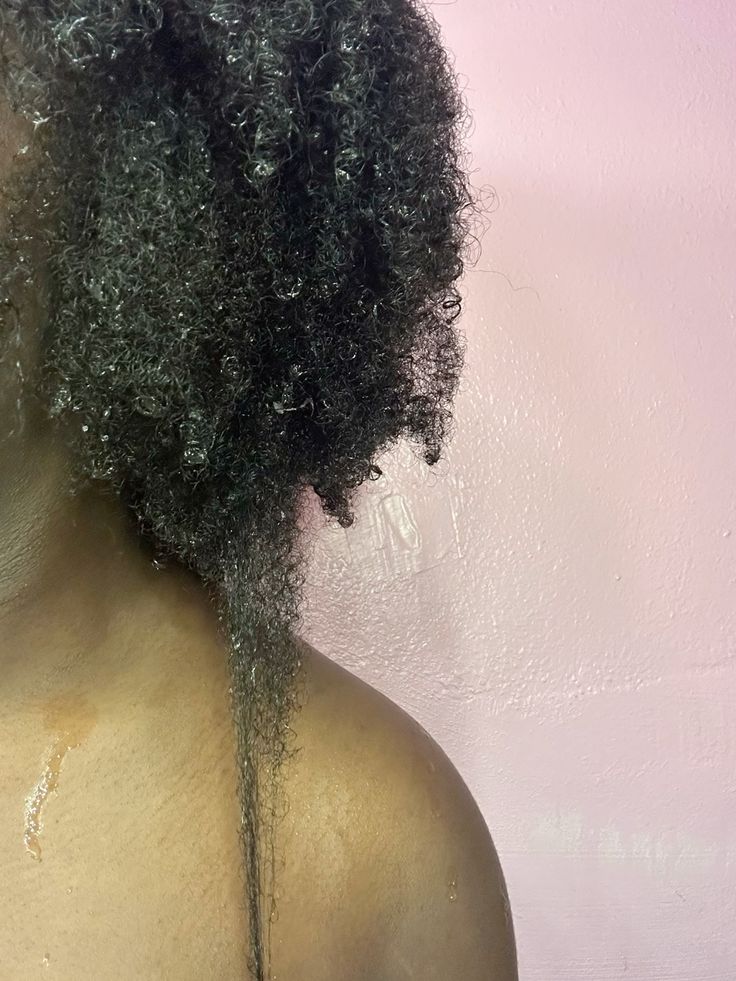
One of the easiest clues is watching what happens when water first touches your hair.
When water beads on the surface for a while before soaking in, your hair may have low porosity.
Hair that becomes wet almost immediately and stays moisturized for a reasonable amount of time often has medium porosity.
On the other hand, hair that absorbs water instantly but seems dry again not long afterward may be high porosity.
Notice How Long Your Hair Takes to Dry
Drying time can also provide useful information.
Hair that takes several hours to dry often leans toward low porosity because moisture enters and leaves the strand slowly.
Medium-porosity hair usually dries at a moderate pace.
High-porosity hair often dries much faster because moisture escapes more easily.
Keep in mind that hair density, thickness, and protective styles can also affect drying time, so this observation works best when combined with other signs.
Pay Attention to Product Absorption
Your favorite products can also reveal a lot about your hair.
Creams and conditioners that tend to sit on top of your strands instead of soaking in are often a sign of low-porosity hair.
Hair that absorbs products well without leaving heavy buildup usually has medium porosity.
When your hair seems to absorb everything immediately but still feels dry after a short time, high porosity may be the reason.
Knowing why some products seem to work better than others often comes down to understanding your porosity rather than constantly buying new products.
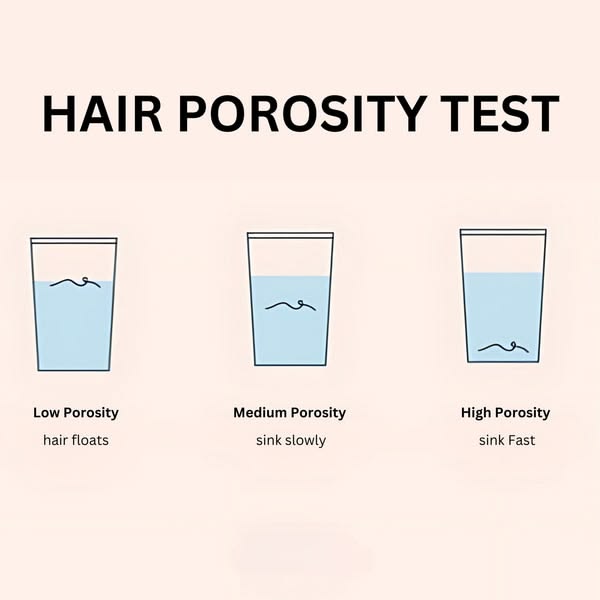
The Float Test
The float test is probably the most well-known way to estimate hair porosity.
To try it:
- Shampoo your hair to remove product buildup.
- Allow one clean strand to dry completely.
- Place the strand into a clear glass of room-temperature water.
- Wait for about three to five minutes.
Some people believe:
- Hair that floats may indicate low porosity.
- Hair that stays in the middle of the water may indicate medium porosity.
- Hair that sinks quickly may indicate high porosity.
However, this test isn’t always reliable. Oils, conditioners, and even the thickness of the strand can affect the results.
Treat it as one clue rather than a final answer.
Common Hair Porosity Mistakes
Understanding your porosity is helpful, but it’s just as important to avoid some of the misconceptions that often cause confusion.
Assuming Every Dry Head of Hair Has High Porosity
Dry hair doesn’t automatically mean you have high porosity.
Many people with low-porosity hair experience dryness because moisture struggles to enter the strand in the first place.
That’s why understanding what your hair is actually telling you is more useful than guessing based on dryness alone.
Changing Products Too Quickly
It’s tempting to replace your entire routine after learning about porosity, but that’s usually unnecessary.
Introduce one product at a time and give your hair several wash days to respond before deciding whether it’s working.
Consistency often produces better results than constantly switching products.
Ignoring the Health of Your Hair
Porosity is only one part of healthy hair care.
Factors like regular conditioning, gentle detangling, trimming damaged ends, and maintaining a healthy scalp also have a major impact on how your hair looks and feels.
Expecting One Routine to Work Forever
Your hair can change over time.
Chemical treatments, heat styling, environmental conditions, and even seasonal weather can influence how your hair behaves.
That’s why it’s worth paying attention to your hair throughout the year instead of assuming your routine will never need adjusting.
Choosing Hair Products Based on Your Porosity
Once you understand your hair porosity, shopping for products becomes much easier. Instead of buying every product that promises moisture or growth, you can focus on ingredients and formulas that actually suit your hair’s needs.
Remember that porosity is only one factor. Your hair density, strand thickness, lifestyle, and styling habits also play a role. Still, knowing your porosity gives you a much better starting point when building a routine.
If You Have Low Porosity Hair
Low-porosity hair usually benefits from lightweight, water-based products that don’t leave heavy buildup on the strands.
Many people also find that applying products to damp, freshly washed hair helps improve absorption.
Clarifying your hair occasionally can also be helpful because product buildup tends to accumulate more easily on low-porosity strands.
If you’re unsure whether this sounds like your hair, our article on the signs of low-porosity 4C hair can help you confirm before changing your routine.
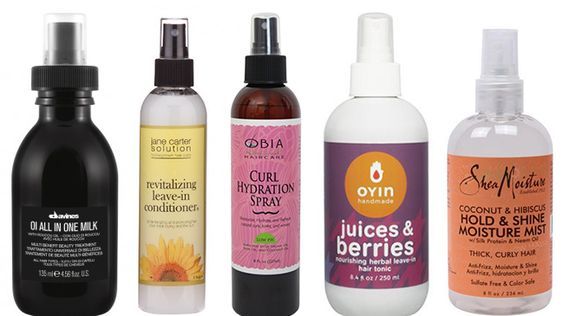
If You Have Medium Porosity Hair
Medium-porosity hair is often the easiest to maintain because it naturally balances moisture absorption and retention.
Most moisturizing products work well, provided you maintain a consistent routine.
Rather than chasing new products, focus on protecting your hair from unnecessary heat, harsh chemicals, and excessive manipulation so it stays healthy.
We’ll cover long-term maintenance in our guide explaining how to maintain medium-porosity hair.
If You Have High Porosity Hair
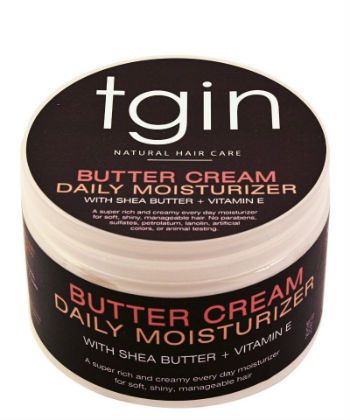
High-porosity hair often responds well to richer conditioners and products that help slow moisture loss.
Deep conditioning, sealing moisture, and reducing excessive heat styling can all help improve moisture retention over time.
If your hair frequently feels dry despite moisturizing, you’ll find more detailed routines in our guide to managing high-porosity hair.

Frequently Asked Questions
Can your hair porosity change over time?
Yes.
While your natural porosity is influenced by genetics, heat styling, bleaching, colouring, chemical treatments, and even everyday wear can gradually change how your hair absorbs and retains moisture.
Is hair porosity more important than hair type?
Neither is more important because they describe different things.
Your hair type tells you about your curl pattern, while porosity explains how your strands handle moisture.
Understanding both gives you a much clearer picture of what your hair needs.
Can I have more than one porosity level?
Yes.
It’s possible for different parts of your hair to have different porosity levels.
For example, healthy new growth may have lower porosity than older, chemically treated or heat-damaged ends.
Should I test my porosity often?
Not necessarily.
Unless you’ve made significant changes to your hair, such as colouring, bleaching, relaxing, or frequent heat styling, your porosity usually won’t change dramatically in a short period.
Does porosity affect hair growth?
Porosity doesn’t determine how fast your hair grows.
However, it can affect how well your hair retains moisture, which influences breakage and length retention. Healthy moisture habits often make it easier to see the progress your hair is already making.
Final Thoughts

Understanding hair porosity is one of the best things you can do for your 4C hair. It helps explain why your hair responds differently to products, why certain routines work better than others, and how you can build a regimen that’s based on your hair’s actual needs instead of trends.
Whether your hair is low, medium, or high porosity, there’s no “best” type. Each has its own strengths and challenges. The goal isn’t to change your porosity but to learn how to work with it.
Once you understand how your hair absorbs and holds moisture, you’ll be able to make smarter product choices, create a more effective routine, and spend less time guessing what your hair needs.

17 Comments