21 Protective Styles for Active Kids
Disclosure: Some of the links in this post are affiliate links. This means if you click on the link and purchase an item, I will receive an affiliate commission at no extra cost to you.
Keeping a child’s natural hair neat and healthy can become challenging when they are always running, playing, swimming, attending school, or simply enjoying being a kid. Constant movement can lead to tangling, dryness, frizz, and frequent manipulation, especially when the hair is left loose every day.
That is where protective styles for active kids can make a real difference. The right style can keep the hair organized while reducing unnecessary daily handling. It can also make mornings easier for parents and children without taking away from the fun and creativity of natural hair.
However, protective styling for children is not simply about keeping hair looking neat for as long as possible. A good children’s hairstyle should be comfortable, age-appropriate, gentle on the scalp, and easy to maintain. Tight braids or styles that place too much tension on the hairline can create more problems than they solve.
Parents should also remember that children have different hair needs. Some have fine strands, while others have dense 4C hair that needs more time and moisture. A good kids’ 4C hair care routine should always come before and during protective styling.
In this guide, we’ll look at 21 practical protective hairstyles that can work well for active children, along with tips for choosing and maintaining styles without putting unnecessary stress on their hair.
What Makes a Protective Style Good for an Active Child?
An active child needs a hairstyle that can handle movement without requiring constant fixing. A style that looks beautiful but comes loose after one afternoon of playing may not be the most practical choice.
Good protective styles should keep the ends of the hair tucked or organized, reduce excessive manipulation, and allow the child to move comfortably. They should also be simple enough for parents to maintain without repeatedly pulling or restyling the hair.
Comfort matters just as much as appearance. If a child complains that their scalp hurts, the hairstyle feels too tight, or they cannot sleep comfortably, the style needs to be loosened or removed.
Before styling, make sure the hair is properly moisturized and detangled. If you’re looking for ideas that make styling easier, a gentle detangling routine can help reduce pulling and unnecessary breakage.
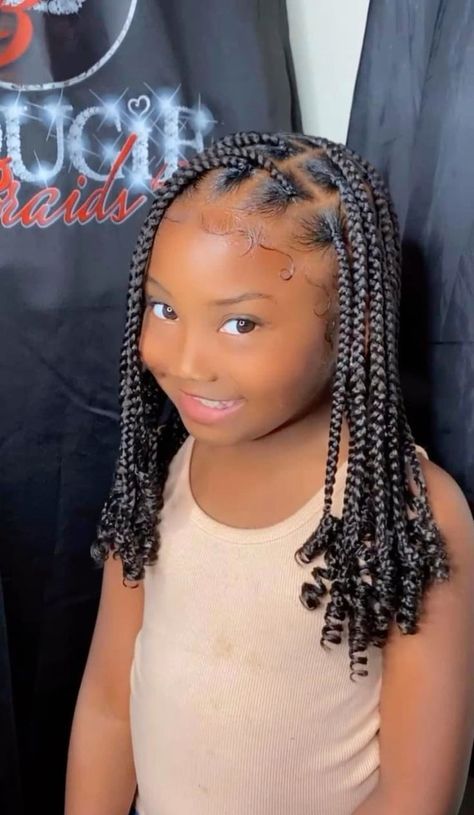
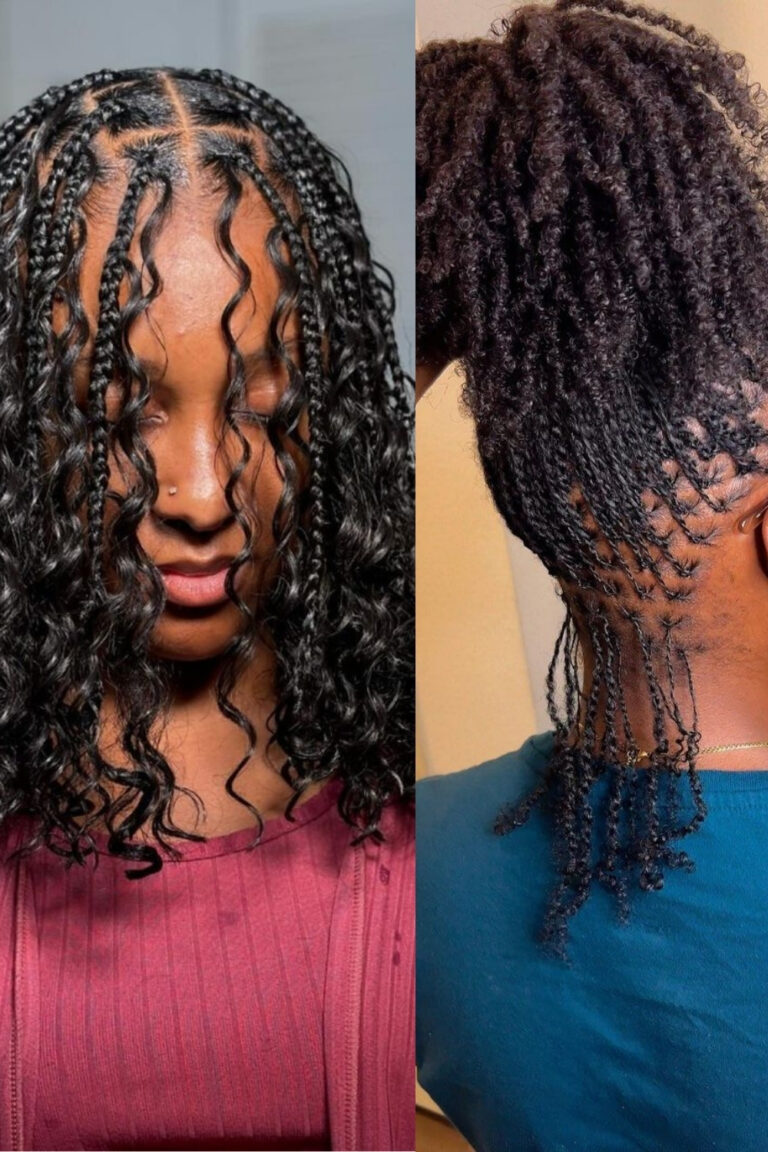
1. Medium-Sized Box Braids
Medium-sized box braids are one of the most practical choices for an active child because they keep individual sections of hair organized. They can make daily styling much easier while giving children plenty of freedom to play.
The key is to avoid making the braids too small or too tight. Medium sections generally make maintenance easier and can reduce the amount of tension placed on individual strands.
Parents can also refresh the scalp and moisturize the natural hair around the braids as needed. For more ideas, easy protective hairstyles can provide additional options when you want something practical.
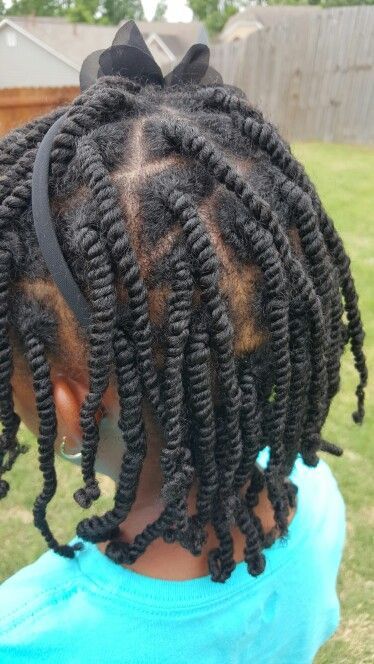
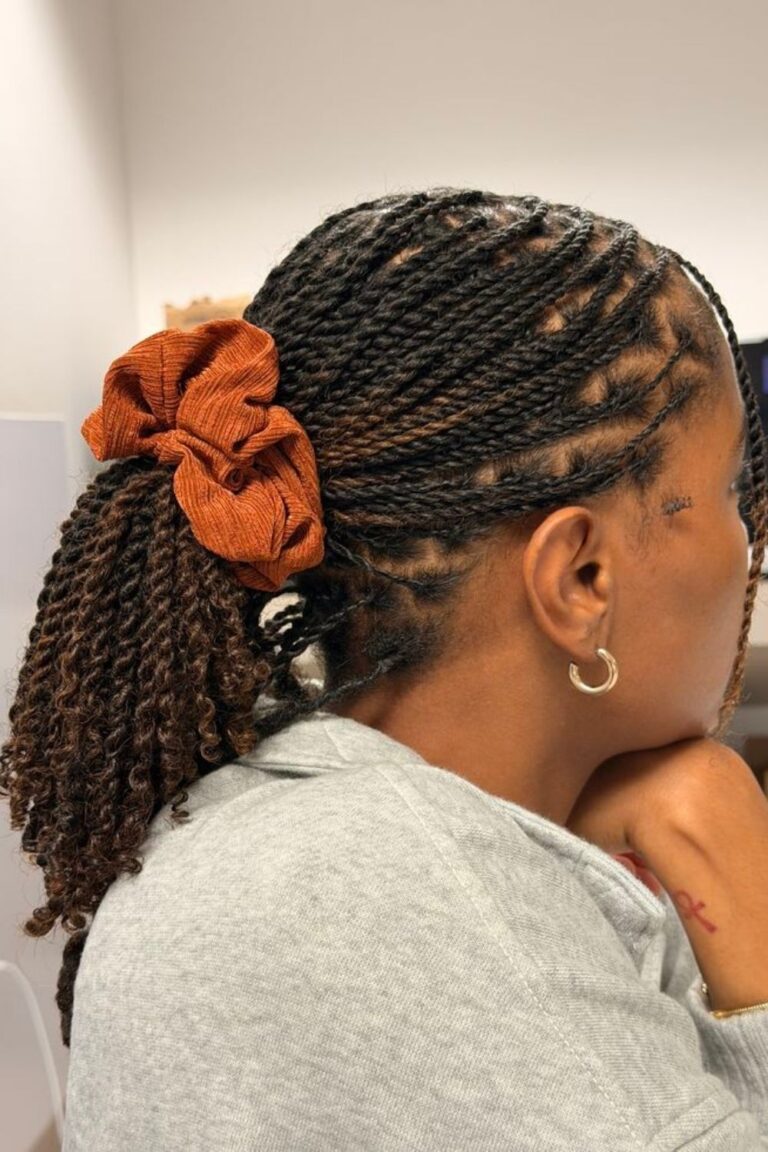
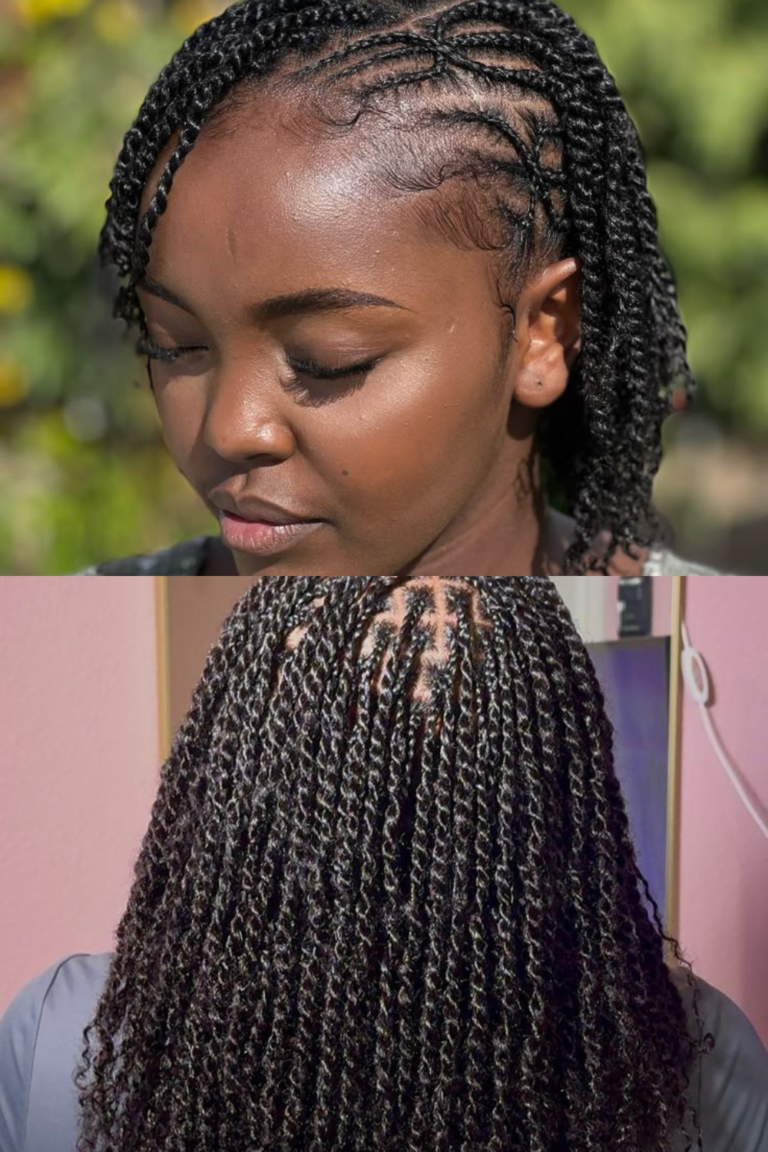
2. Two-Strand Twists
Two-strand twists are simple, lightweight, and particularly useful for children who do not like sitting through lengthy styling sessions. They can be created in different sizes depending on the child’s hair density and desired look.
They also make it relatively easy to access the scalp and moisturize the hair. Larger twists can be especially practical for younger children because they take less time to create and remove.
For children who enjoy changing their hairstyles, twists can also become the starting point for another look later. Parents can find more inspiration among twist styles for natural hair.
3. Simple Cornrows
Cornrows are a classic choice for active children because they keep the hair close to the scalp and away from the face. They can also stay neat during everyday activities when they are installed properly.
For children’s hair, however, the braids should never be excessively tight. A child’s hairline and scalp are delicate, so comfort should always come before creating an extremely sleek appearance.
Simple straight-back patterns are often enough. If you want more ideas for braided looks, braided hairstyle inspiration can help you explore different patterns.
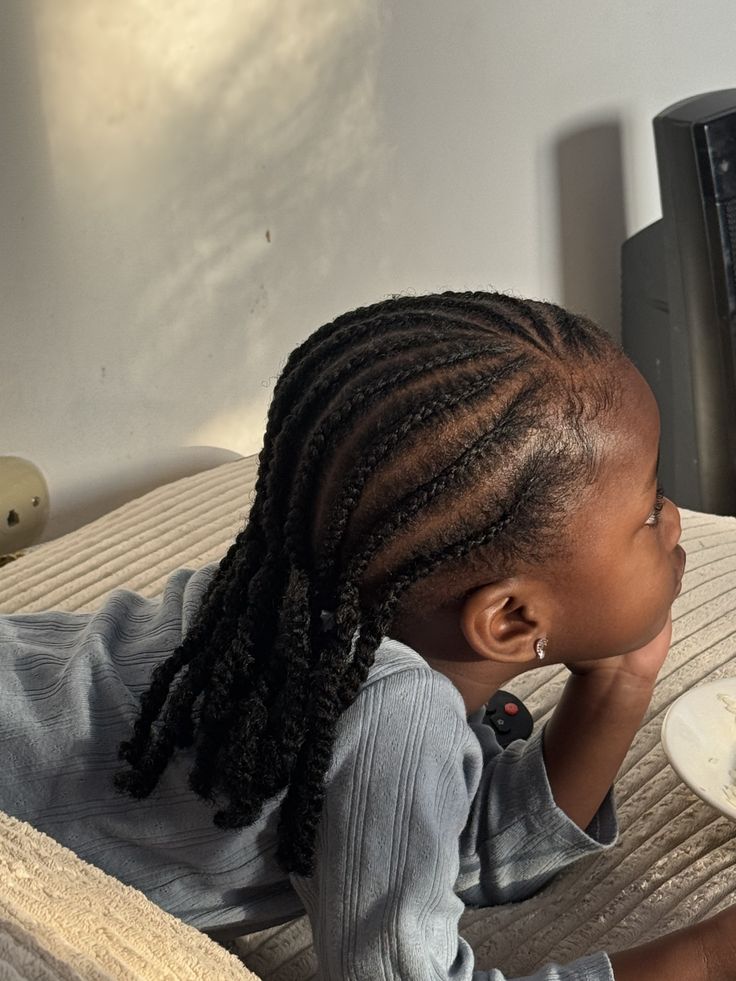
4. Braided Ponytails
Braided ponytails combine the convenience of a ponytail with the structure of braids. The hair can be divided into a few sections and braided before being gathered into one or more ponytails.
This makes the style practical for children who spend a lot of time outdoors. It also gives parents plenty of room to create variations without needing an elaborate design.
Keep the base of each ponytail comfortable rather than pulling the hair tightly toward the scalp. For more ideas, cute ponytail hairstyles can provide inspiration.
Image File: braided-ponytails-active-child.jpg
Alt Text: Active child wearing neat braided ponytails with natural 4C hair
Search Prompt: Black girl braided ponytails natural hair
5. Flat Twists
Flat twists are another lightweight option for children who are constantly moving. Unlike loose twists, they stay closer to the scalp, helping to keep the hair controlled throughout the day.
They can be created in straight rows, curved patterns, or simple side designs. Keeping the sections reasonably large can also make the hairstyle easier and faster to install.
Flat twists work particularly well when parents want a protective style without adding extensions. A low-manipulation hair routine can help keep the hair healthy between styling sessions.
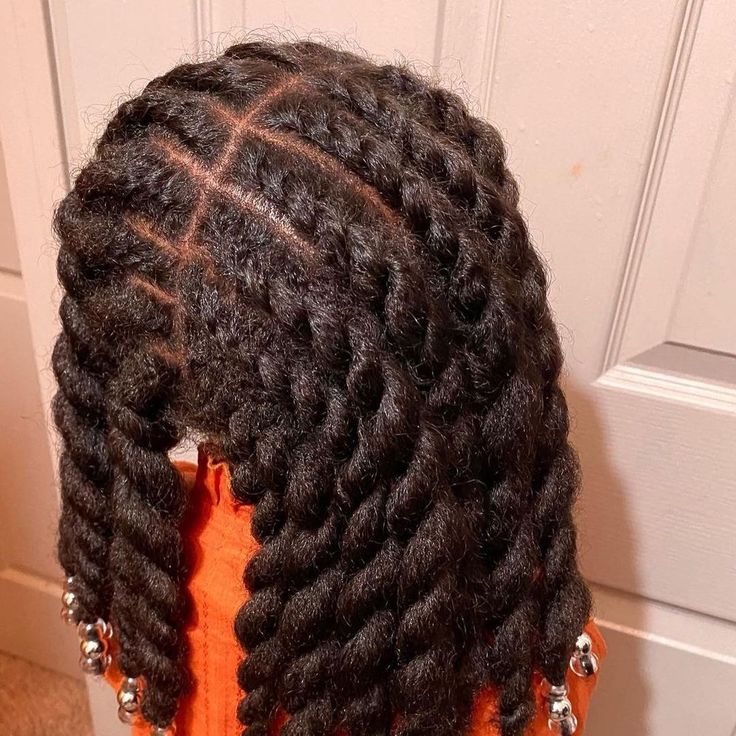
6. Cornrow and Puff Combination
A cornrow and puff combination gives children the best of both worlds. The front portion is organized into cornrows while the remaining hair is gathered into a puff.
This style can be especially useful for children who enjoy having some volume in their hairstyle. The puff should not be pulled excessively, and the hair should be moisturized before gathering it.
Because the style leaves some hair exposed, it may need more refreshing than fully braided options. You can also explore natural puff hairstyle ideas for similar variations.
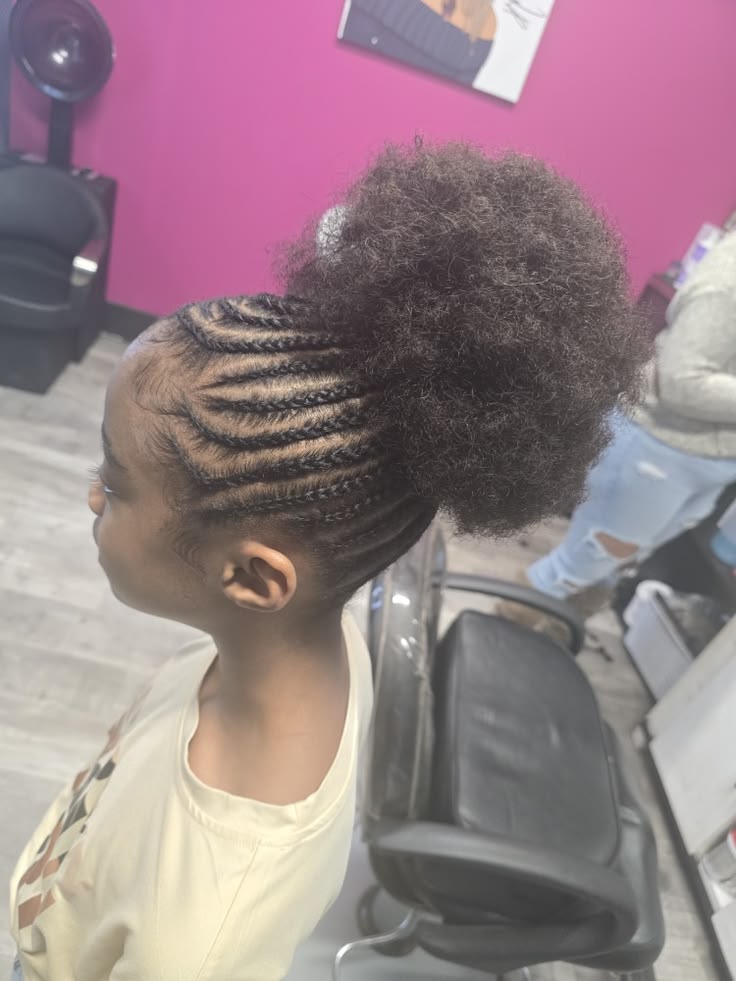
7. Chunky Twists
Chunky twists are ideal when you want a protective style that can be installed relatively quickly. The larger sections mean fewer individual twists, which can reduce styling time.
They are also easy to undo when the child needs a fresh wash. Depending on the child’s hair, chunky twists can last for several days while still looking neat.
Use a lightweight moisturizing product before twisting, especially if the hair tends to become dry quickly. A simple moisturizing routine can help the style remain comfortable.
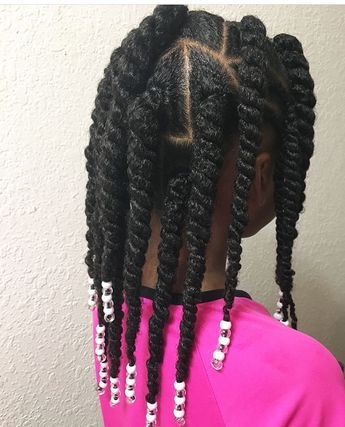
8. Braided Buns
Braided buns keep the hair gathered and tucked away, making them useful for children who participate in sports or other activities. They can also look neat without requiring complicated patterns.
The hair can be divided into several braids and wrapped into one or two buns. Soft hair ties should be used, and the style should not be pulled tightly around the hairline.
This is particularly practical when parents want a style that can transition from school to outdoor activities. For additional ideas, easy braided hairstyles can offer more options.
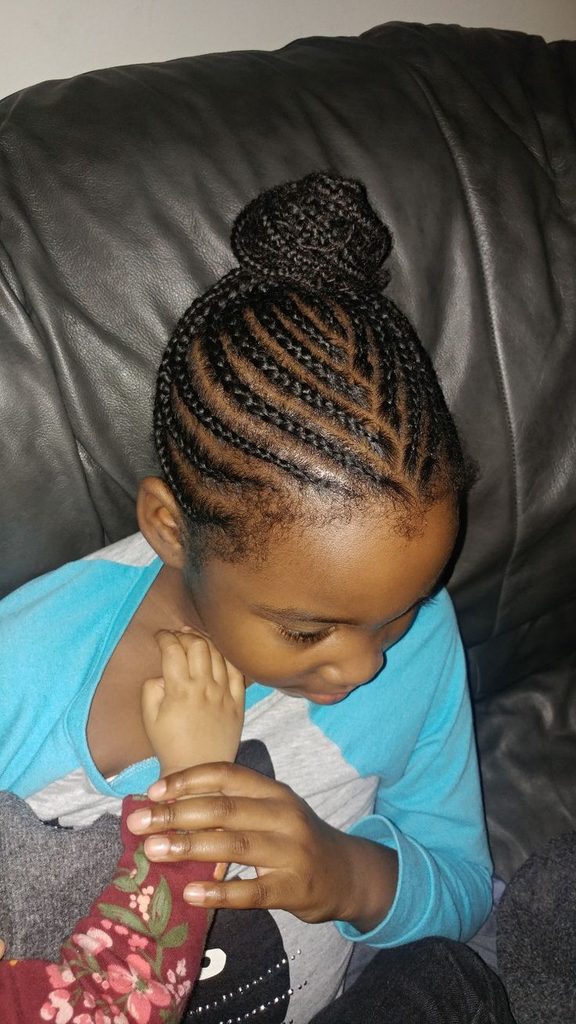
9. Flat-Twist Crown
A flat-twist crown creates a neat design around the head while keeping much of the hair controlled. It can be a lovely option for children who want something more decorative.
The twists should be installed gently around the perimeter rather than pulled tightly. If the child has a sensitive hairline, leave enough space around the edges to prevent unnecessary tension.
This style can also work for special occasions while remaining practical enough for everyday wear. Natural hair accessories can be added sparingly to make the style more playful.
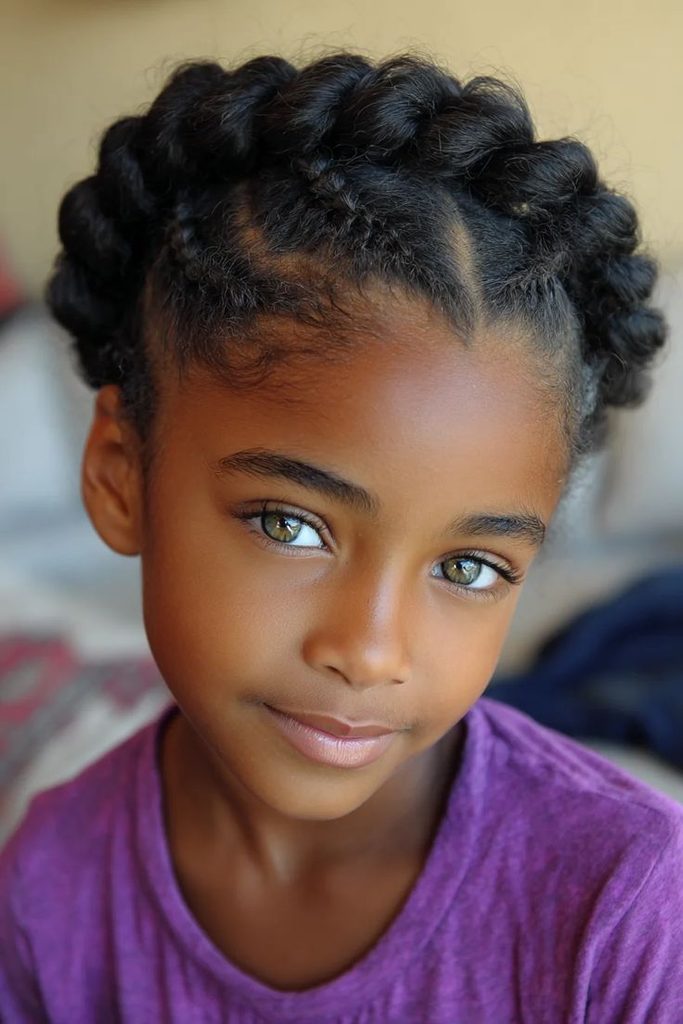
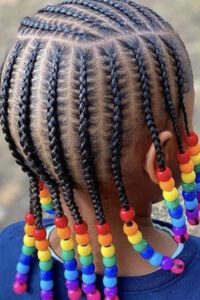
10. Mini Cornrows With Beads
Small cornrows decorated with beads can create a fun hairstyle that children often enjoy. The beads add visual interest without requiring heat or chemical processing.
Because smaller braids can create more tension, the sections should not be excessively tiny. The stylist should also avoid pulling the hairline tightly while creating the pattern.
Choose lightweight beads and make sure they do not become uncomfortable during sleep or physical activity. For more inspiration, beaded natural hairstyles can give you additional styling ideas.
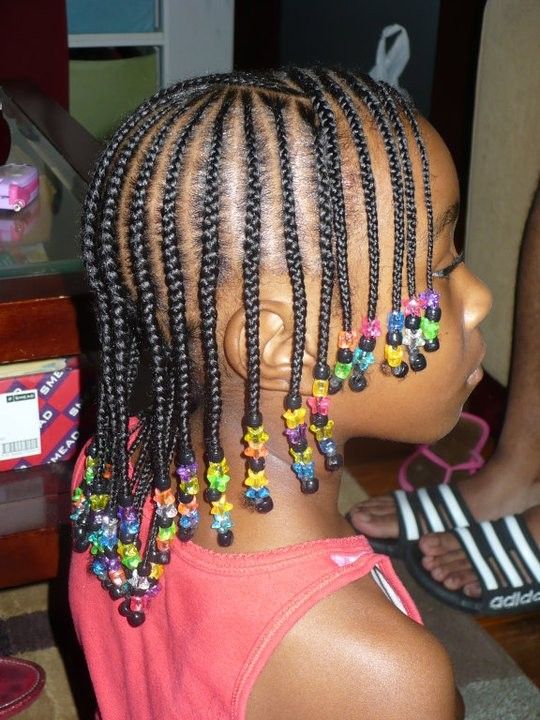
11. Two Low Puffs With Braided Sections
Two low puffs with braided sections are a playful option that does not require the entire head to be braided. The front can be divided into a few simple braids before the remaining hair is gathered into low puffs.
This style is particularly useful when you want something cute without spending several hours styling. The puffs can also be refreshed easily when needed.
Avoid pulling the puffs too tightly because repeated tension can affect the hairline. Cute puff hairstyles can provide more ideas for similar child-friendly looks.
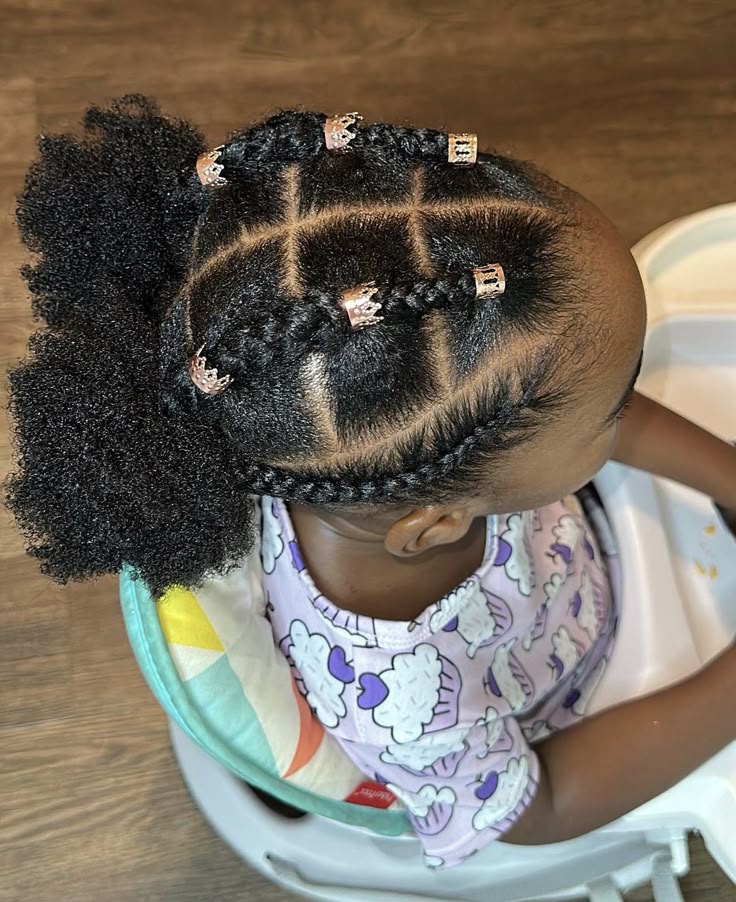
12. Large Flat Twists Into a Bun
Large flat twists can be directed toward the back and gathered into a simple bun. This creates a neat style while keeping most of the hair secured.
It can also be a useful choice for children who dislike having loose hair around their face. Because the twists are large, the style can usually be installed faster than many intricate braided designs.
The bun should remain comfortable and should not be pulled tightly. If you’re planning a longer-term style, check out protective styling tips to help maintain the hair underneath.
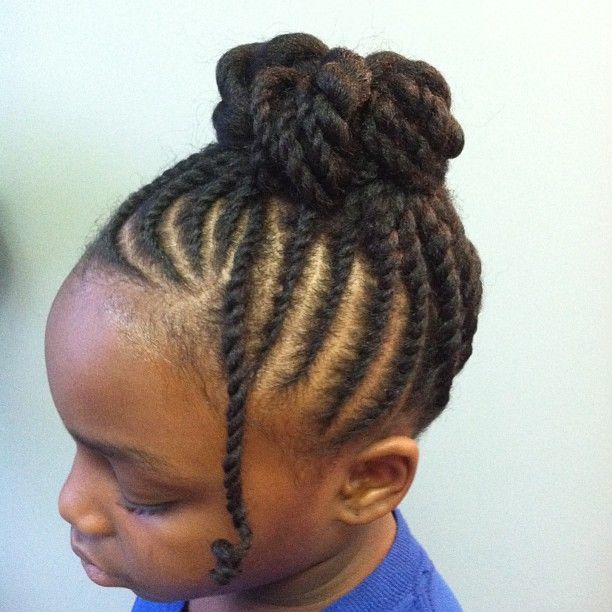
13. Crochet-Style Twists
Crochet-style twists can offer children the appearance of a longer hairstyle while keeping their natural hair tucked underneath. They may be useful for older children who can comfortably tolerate a longer installation.
The underlying hair should be prepared carefully before installation. Avoid making the base too tight, particularly around the edges.
Parents should also pay attention to the child’s scalp while the style is installed. More information about how long protective styles should stay in can help you avoid leaving the hairstyle in longer than appropriate.
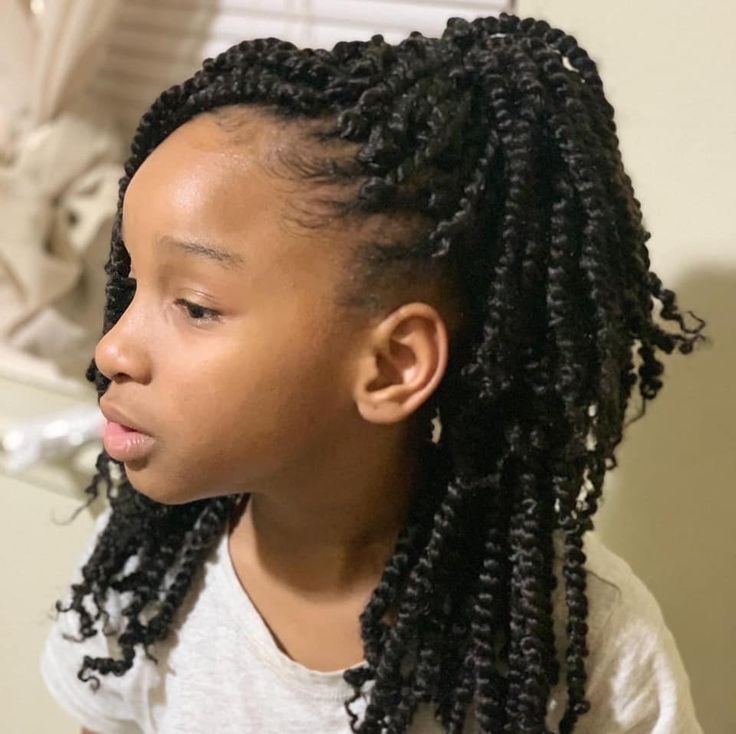
14. Large Box Braids With Beads
Large box braids can be easier to manage than very small braids, especially when a child spends much of the day being physically active. Adding a few beads can make them more fun without complicating the hairstyle.
The braids should remain lightweight enough for the child to move comfortably. Heavy extensions can place unnecessary strain on the scalp and hairline.
Parents should also check the roots regularly for buildup or irritation. A healthy scalp routine is especially useful when hair is kept in a protective style.
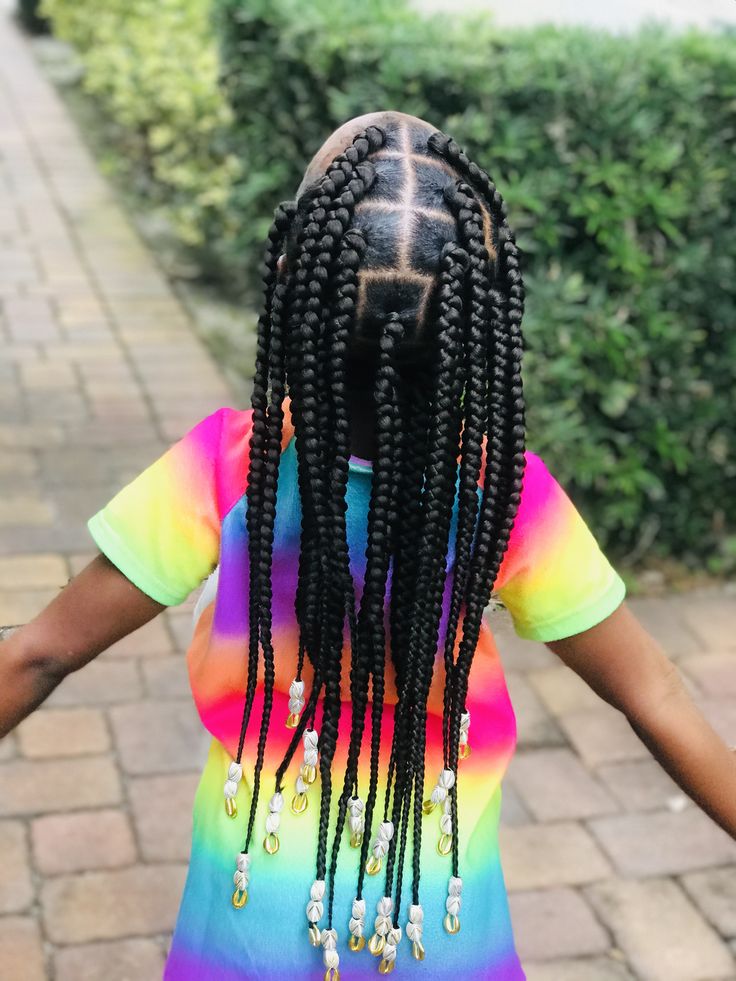
15. Braided Mohawk
A braided mohawk can give an active child a fun hairstyle without leaving the entire head loose. The sides are usually braided while the middle section is gathered or styled upward.
The design can be adjusted to suit the child’s hair length and density. Keeping the braids moderately sized makes the style easier to maintain and remove.
This is a good option when the child wants a hairstyle that feels more playful than a traditional set of braids. For more ideas, creative braided styles can provide inspiration.
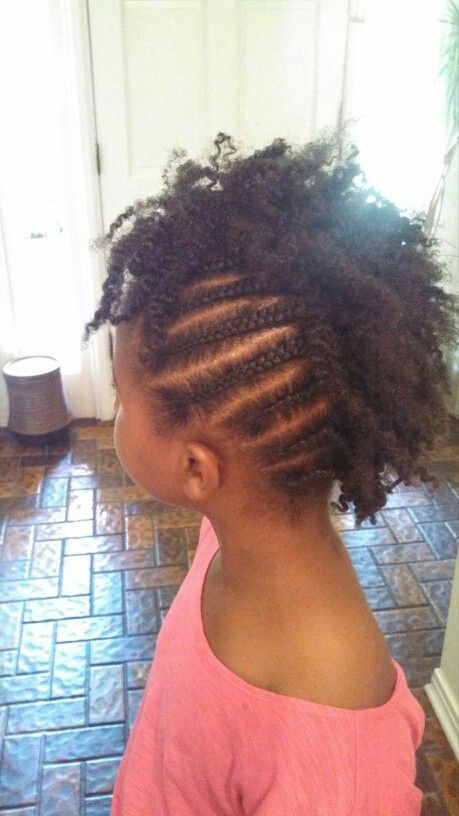
16. Cornrowed Ponytail
A cornrowed ponytail keeps the hair close to the scalp before gathering the ends into a ponytail. It is practical for children who need their hair away from their face during activities.
The cornrows can be simple and straight rather than highly detailed. This reduces installation time and makes the style easier to recreate.
Use a soft band to secure the ponytail and avoid pulling the hairline too tightly. Parents can also explore easy school hairstyles for other practical options.
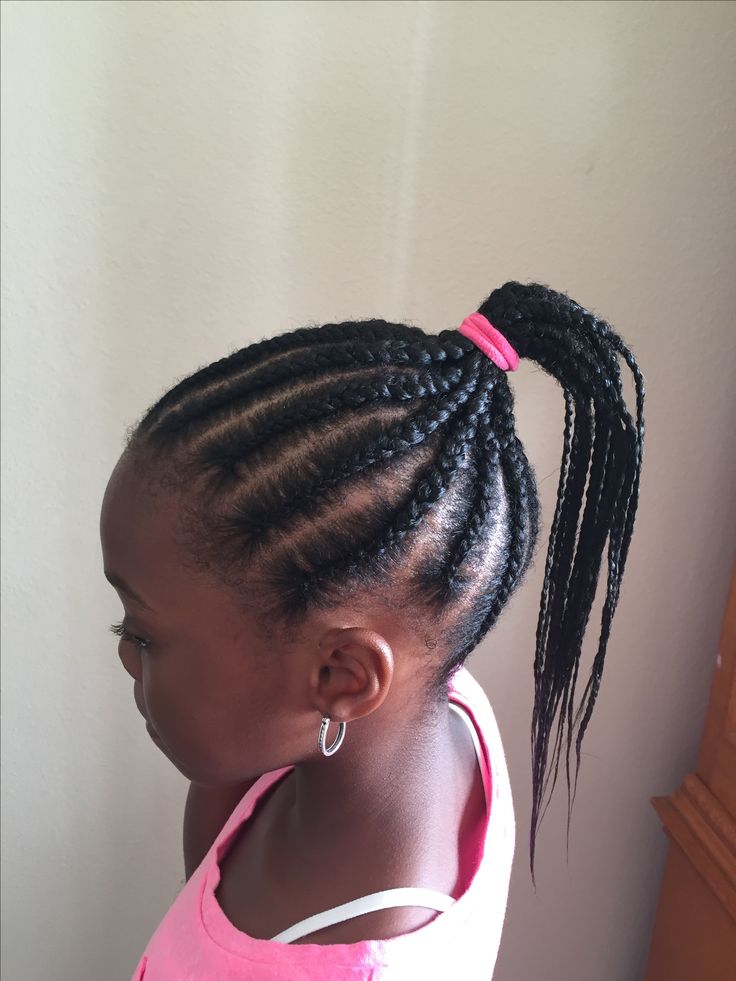
17. Two Braided Pigtails
Two braided pigtails are simple, familiar, and easy to maintain. The hair is divided into two sections and braided down toward the ends.
They can work especially well for younger children because the style is easy to recreate and does not require complicated parting. The braids can also be decorated with small accessories if desired.
Make sure the bases are not pulled too tightly. For more ideas suited to younger children, age-appropriate natural hairstyles can be helpful.
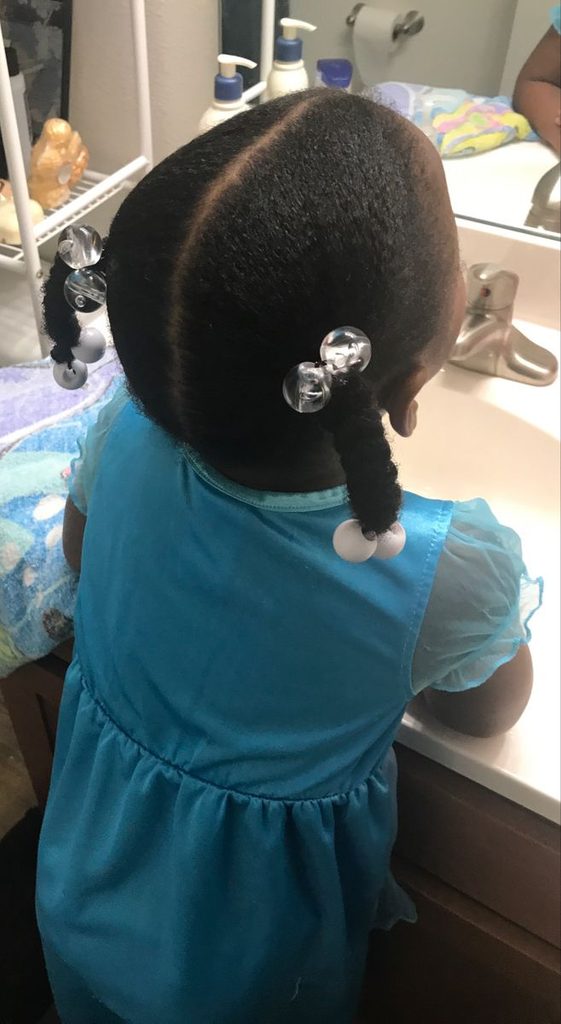
18. Flat-Twisted Side Ponytail
A side ponytail with flat twists gives a simple hairstyle a little more personality. The front and sides can be flat-twisted before the remaining hair is gathered gently to one side.
It is a useful option when you want to keep the hair organized without completely covering it with extensions. The style can also be refreshed relatively quickly.
Moisturizing the exposed hair before gathering it can help reduce dryness. Weekly hair care practices can also help keep the hair healthy between styles.
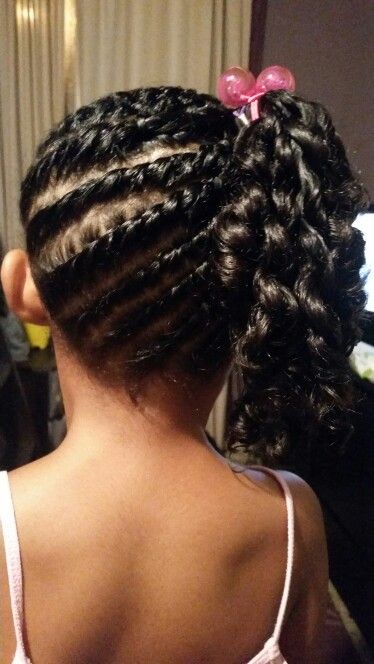
19. Braided Crown With Low Bun
A braided crown with a low bun creates a neat protective hairstyle that can work for both everyday activities and occasions. The crown keeps the front organized while the bun secures the remaining hair.
It can be created with a few larger braids rather than many tiny sections. This makes it more comfortable and reduces styling time.
Keep the bun loose enough to avoid unnecessary tension at the back of the head. Simple kids’ hairstyles can provide more low-stress ideas when you need something quick.
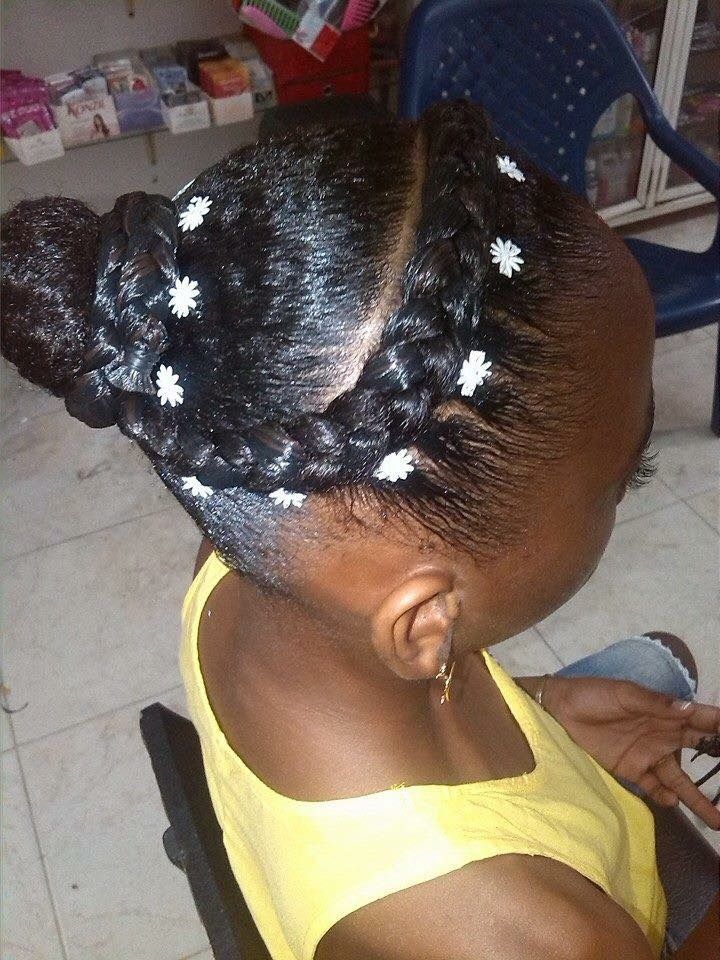
20. Flat Twists With Two Puffs
Flat twists combined with two puffs create a playful hairstyle while keeping much of the hair controlled. The twists can be placed along the front while the back is divided into two puffs.
This can be a particularly good choice for children who like volume but still need their hair organized for an active day. It is also easier to refresh than many intricate protective styles.
Use gentle bands and avoid repeatedly brushing or tightening the puffs. For additional ideas, natural hair puff styles can help you create similar variations.
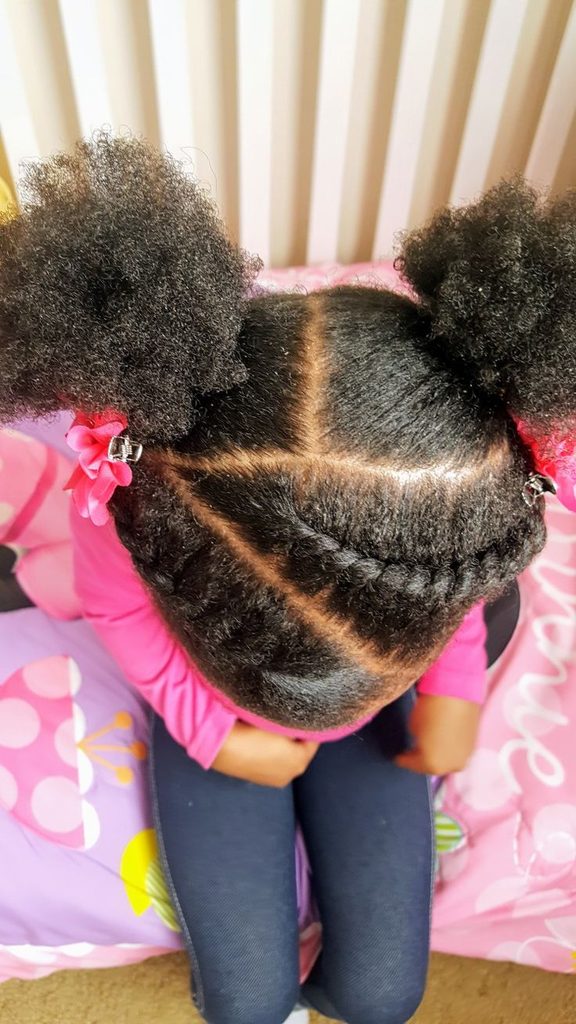
21. Simple Plaited Updo
A simple plaited updo brings the hair together into one organized style. The hair can be divided into several medium sections, braided, and pinned or gathered into a comfortable updo.
It is useful when a child needs a hairstyle that keeps the ends tucked away while still looking neat. The design can be kept very simple so that installation does not become a stressful experience.
As with every children’s protective style, comfort should come first. Avoid tight edges, heavy extensions, and styles that cause scalp pain. A healthy natural hair routine will always be more important than keeping one hairstyle in for as long as possible.
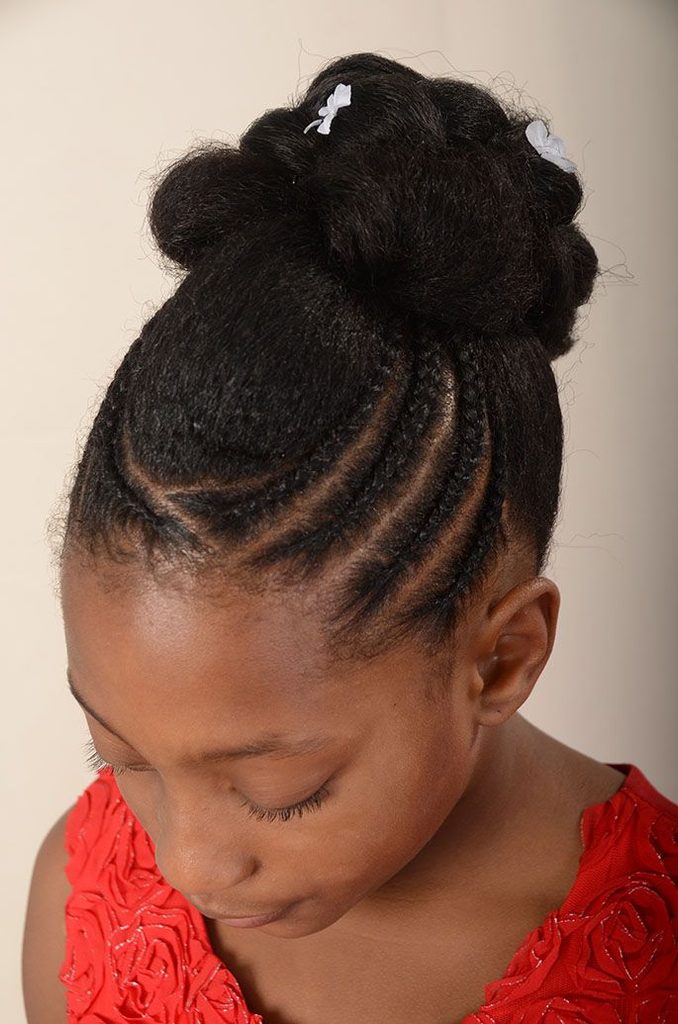
How to Prepare a Child’s Hair Before Protective Styling
Protective styling starts before the actual hairstyle is created. Hair that is dry, tangled, or already breaking should not simply be placed into a long-term style and forgotten.
Start by gently cleansing the hair and removing buildup. Follow with conditioner and carefully detangle the hair in manageable sections. A gentle wash day routine can make this preparation much easier.
Once the hair is clean and conditioned, make sure it is properly moisturized. Depending on the child’s hair needs, you may also use a suitable leave-in product before styling.
Avoid loading the hair with heavy products immediately before installing braids or twists. Too much product can create buildup and make the scalp difficult to keep clean.
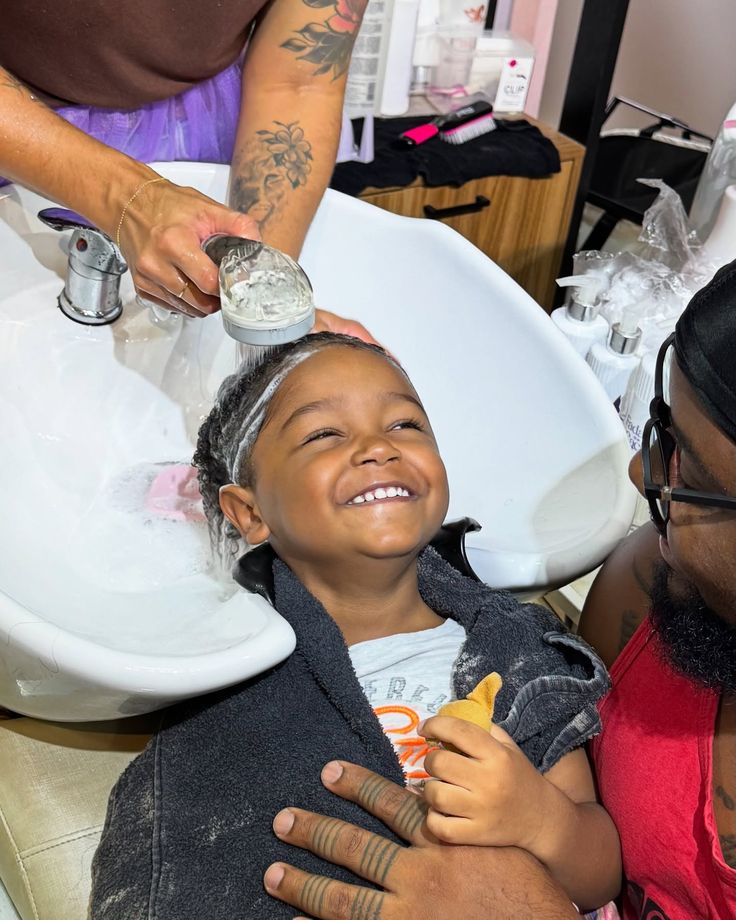
How to Maintain Protective Styles for Active Kids
Active children may sweat more than adults, particularly when they participate in sports or spend a lot of time outdoors. This means the scalp should still receive attention even when the hair is in a protective style.
Pay attention to itching, excessive buildup, unpleasant odor, flakes, or discomfort. These can be signs that the style needs maintenance or removal rather than simply adding more product.
The scalp should not be ignored just because the hair is braided or twisted. Depending on the style, gently cleansing the scalp may be necessary.
Moisture is also important. If the natural hair begins feeling extremely dry, use a lightweight moisturizing product rather than repeatedly applying thick oils or heavy creams.
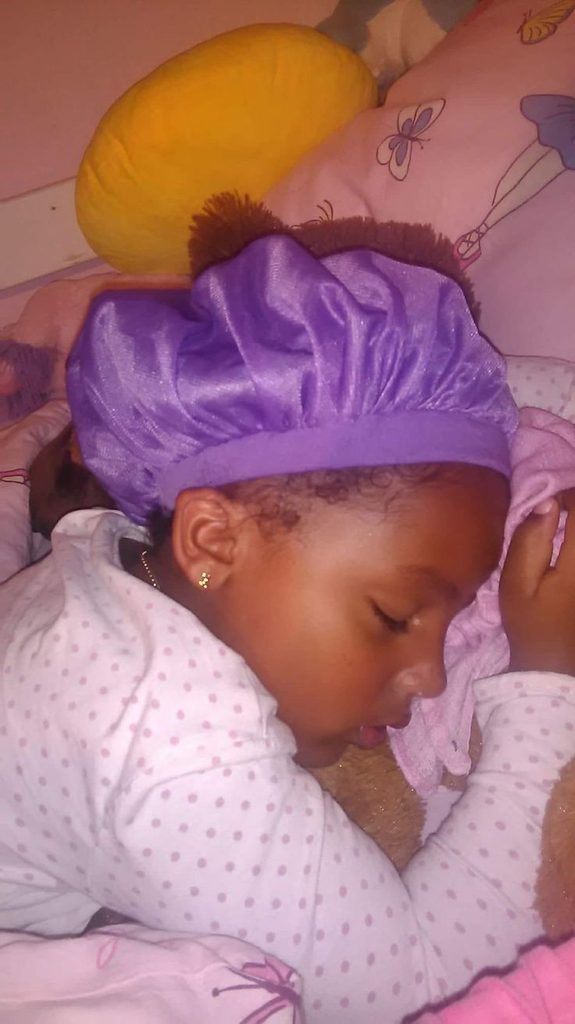
Parents should also protect the hairstyle at night. A satin or silk covering can reduce friction between the hair and bedding and help the style remain neater.
How Long Should Protective Styles Stay in Children’s Hair?
There is no single number of days that works for every child or every hairstyle. The appropriate duration depends on the style, the child’s hair condition, scalp health, and how well the hairstyle is being maintained.
A style should never be kept in simply because it still looks neat. If the scalp becomes uncomfortable, the hair becomes heavily tangled, or the roots show significant buildup, it may be time to remove the style.
Children also tend to touch and manipulate their hair more than adults, which can affect how long a style remains suitable. Regular checks are therefore important.
When removing the style, be patient. Do not rush through the takedown process because this can cause unnecessary breakage. Gently separate the sections, detangle carefully, and give the hair time to recover before immediately installing another tight style.
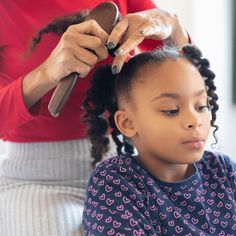
Protective Styling Mistakes Parents Should Avoid
One of the biggest mistakes is choosing a hairstyle based entirely on appearance. A beautiful hairstyle is not protective if it causes pain, excessive tension, or repeated breakage.
Another common problem is keeping a style in for too long. Protective styling is supposed to make hair care easier, not replace regular cleansing and maintenance.
Heavy extensions can also be problematic for children. If added hair makes the hairstyle noticeably heavy or causes the child to complain about pulling, it may not be an appropriate choice.
Parents should also avoid repeatedly styling the same areas of the hair. Constant tension around the edges can contribute to breakage, especially when hairstyles are consistently pulled backward.
If you notice signs of damage, give the hair a break and focus on gentle care. Hair breakage prevention should always take priority over maintaining a particular hairstyle.
Choosing the Right Protective Style for Your Child
The best protective style is not necessarily the most complicated one. For an active child, practicality should come first.
Consider the child’s daily activities. A child who plays sports every afternoon may benefit from a style that stays close to the scalp, while a child who spends more time indoors may have more flexibility.
Also consider the child’s age, hair density, scalp sensitivity, and ability to sit through a long styling session. A hairstyle that takes four hours to install may not be worth it for a young child who dislikes sitting still.
Most importantly, involve the child when possible. Let them choose between a few suitable options, pick accessories, or decide whether they prefer twists, braids, puffs, or another style.
Protective styling should make caring for natural hair easier, not become another source of stress.
Final Thoughts
The best protective styles for active kids combine comfort, practicality, and healthy hair care. Children should be able to run, play, attend school, participate in sports, and enjoy their daily activities without constantly worrying about their hairstyle.
Medium box braids, two-strand twists, cornrows, flat twists, braided ponytails, puffs, and simple updos can all be useful options when installed and maintained gently.
Remember that protective styling does not mean leaving the hair untouched for weeks. Children’s hair still needs cleansing, moisture, gentle handling, and regular checks even when it is tucked away.
Most importantly, never sacrifice a child’s comfort for the sake of keeping a hairstyle looking neat. A simple, comfortable hairstyle that supports healthy hair is always a better choice than a complicated style that causes tension or discomfort.
One Comment