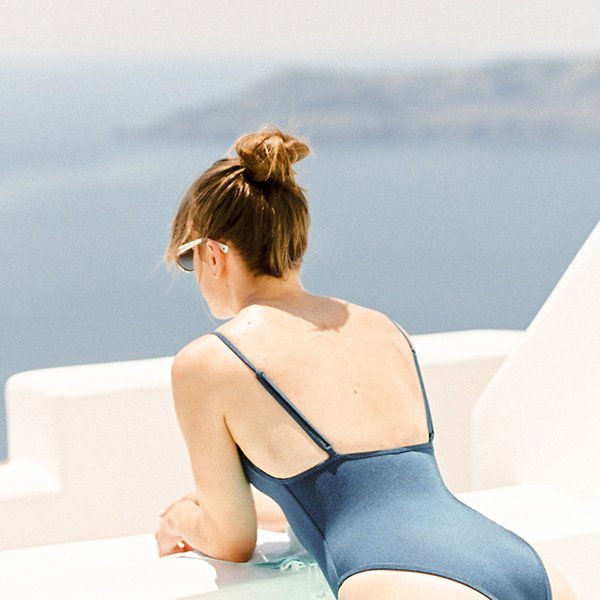
The Best Hairstyles While Transitioning
Disclosure: Some of the links in this post are affiliate links. This means if you click on the link and purchase an item, I will receive an affiliate commission at no extra cost to you.
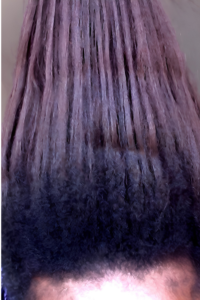
Transitioning from relaxed hair to natural hair comes with a lot of changes, and your hairstyle is one of them. As your natural roots grow, you gradually have more texture to work with while your relaxed ends remain straighter. This can make some familiar hairstyles harder to achieve, but it also opens up plenty of new options.
The best hairstyles while transitioning are usually the ones that work with both textures instead of forcing them to look exactly the same. Styles that stretch the hair, tuck away the ends, or blend the two textures can make your routine much easier while reducing the amount of daily manipulation your hair receives.
You do not have to wait until your hair is completely natural before experimenting with different looks. From simple buns and twists to braids, wigs, and half-up styles, there are many ways to make your transitioning hair look polished while keeping it manageable.
The key is choosing styles that suit your current amount of new growth, protect your fragile areas, and fit your lifestyle. Here are some of the best hairstyles while transitioning, along with tips for making each one work with two different textures.
1. Two-Strand Twists
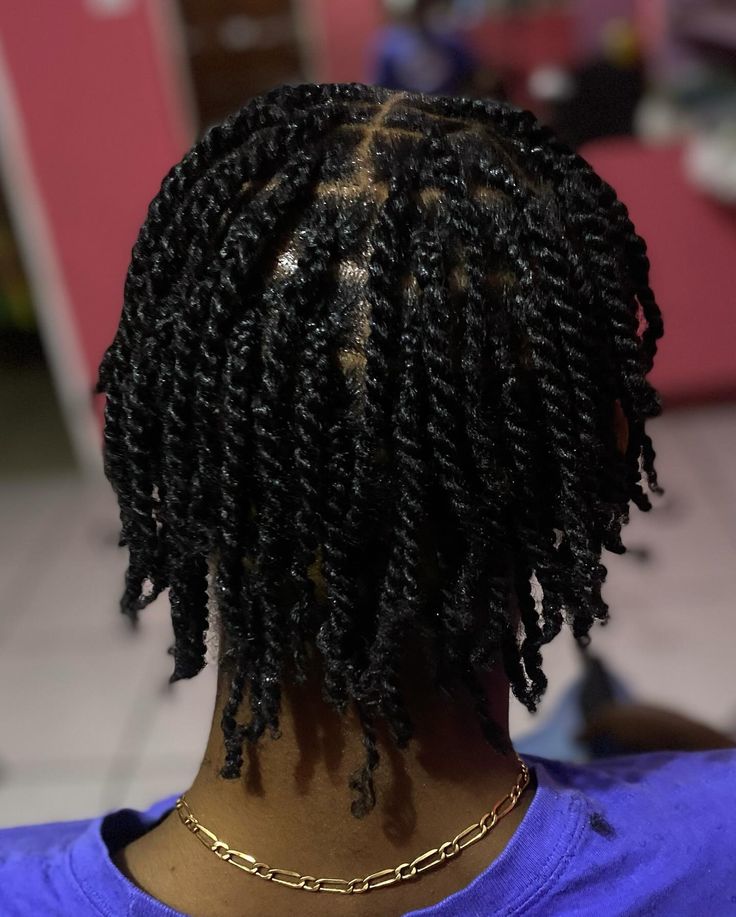
Two-strand twists are one of the easiest styles to experiment with as your natural hair grows out. They can help blend your natural roots with your relaxed ends while giving you a break from daily styling.
You can create medium or large twists depending on how much hair you have and how much time you want to spend styling. For a softer look, you can unravel the twists later to create a twist-out.
If your relaxed ends are too straight to hold the twist properly, you can twist smaller sections and use a little styling product near the ends to help them stay together.
The style can also be dressed up with accessories or arranged into a bun once the twists are finished. This makes it useful for both everyday wear and occasions when you want something a little more polished.
2. Flat Twists
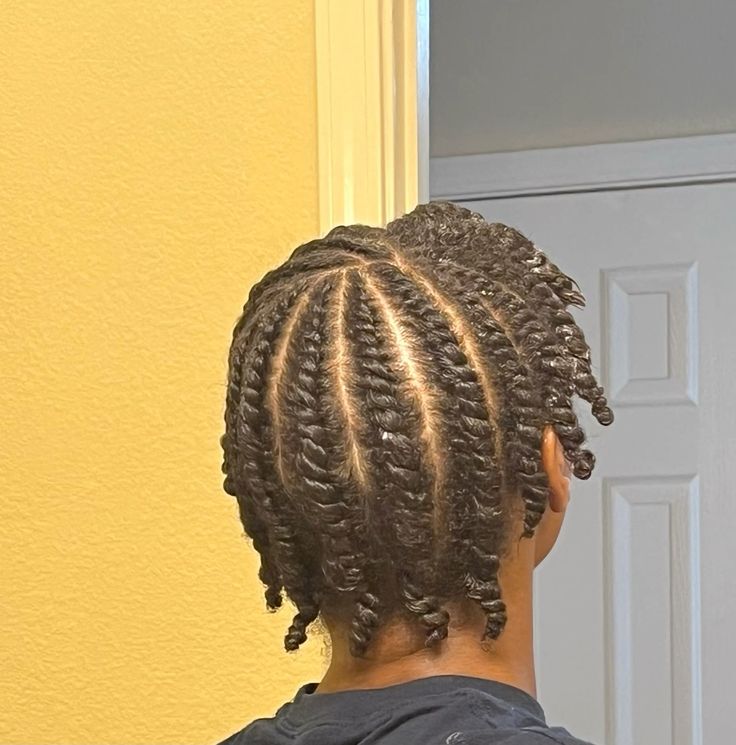
Flat twists are another practical option when you want a style that keeps your hair close to the scalp.
They can be created in straight rows, curved patterns, or simple sections from the front toward the back. Because the style keeps the hair organized, it can make transitioning hair easier to manage between wash days.
You can also combine flat twists with loose ends, a bun, or a puff. If your natural roots are much more textured than your relaxed ends, the flat-twisted section can help disguise some of the difference between the two textures.
Avoid making the twists too tight, particularly around the edges. A hairstyle should not cause pain or leave your scalp feeling excessively tight.
3. Twist-Out
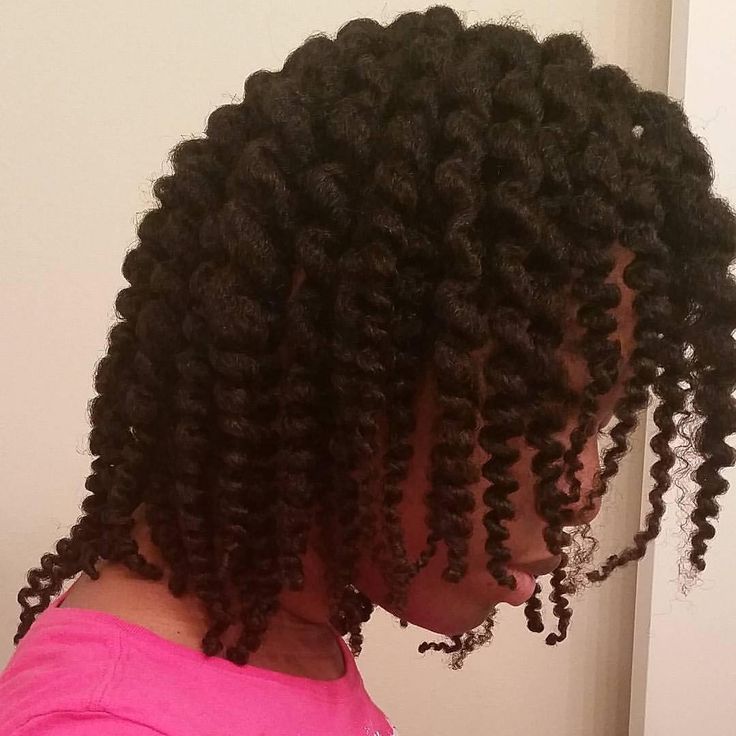
A twist-out can be a great way to give your transitioning hair a textured appearance without using heat.
The technique involves twisting damp or moisturized sections of hair, allowing them to dry completely, and carefully unraveling them. The resulting texture can help your relaxed ends blend visually with your natural roots.
The final result will depend on how much natural growth you have. Someone with only a few inches of new growth may get a different pattern from someone who has been transitioning for a year.
If your ends do not match the rest of the style, you can gently tuck them underneath or use them to create a more structured shape.
You can find more ideas for working with textured styles in these twist-out ideas, especially if you want different shapes and finishing techniques.
4. Braid-Out
A braid-out works in a similar way to a twist-out, but braiding the hair creates a different texture.
This can be particularly useful when your relaxed ends struggle to blend with your natural roots. The stretched, wavy texture created by the braids can make the overall hairstyle look more uniform.
You can create a few large braids for a loose pattern or use smaller braids for more definition.
Make sure your hair is completely dry before taking the braids down. Unraveling damp hair can cause the style to lose definition and may create unnecessary frizz.
If you enjoy experimenting with braid patterns, you can also explore braid-out styles for additional ways to wear the finished texture.
5. Low Bun
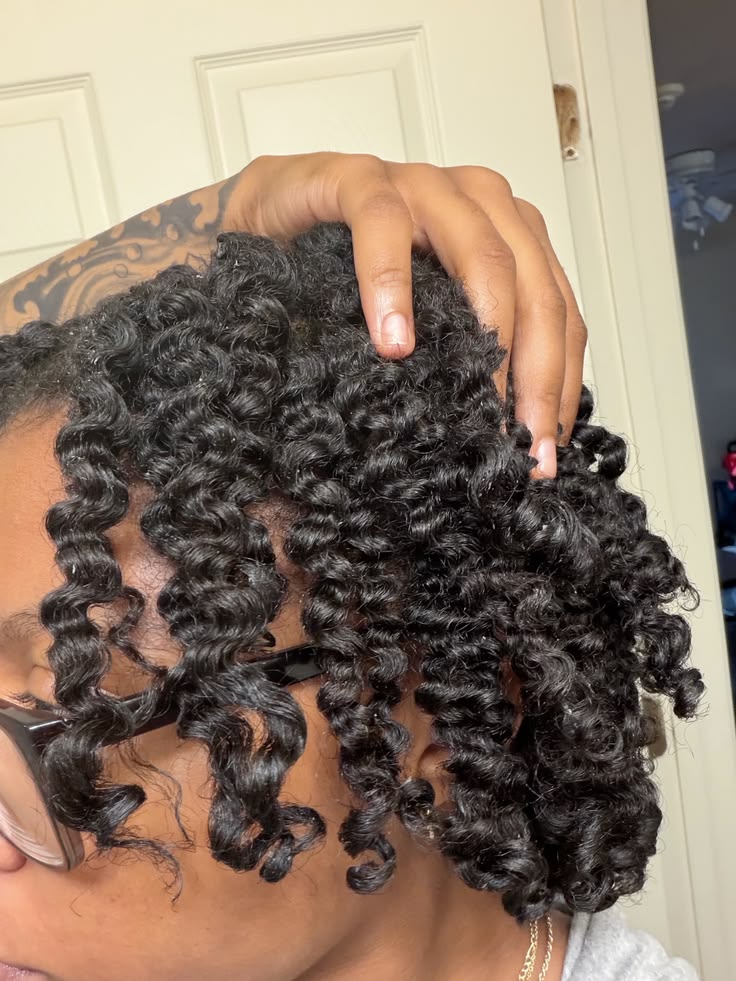
A low bun is one of the simplest options when you want a neat hairstyle without spending too much time manipulating your hair.
You can smooth the front gently and gather the hair at the nape of your neck. Depending on the difference between your textures, you can use a small amount of styling product to help the roots and ends look more consistent.
Do not pull the hair tightly just to achieve a completely sleek finish. Your edges and the area around the line of demarcation need gentle handling.
A low bun can also be changed with a middle part, side part, scarf, or simple accessory.
If you need more everyday options that do not require complicated styling, these easy hairstyles can give you more ideas.
6. High Puff
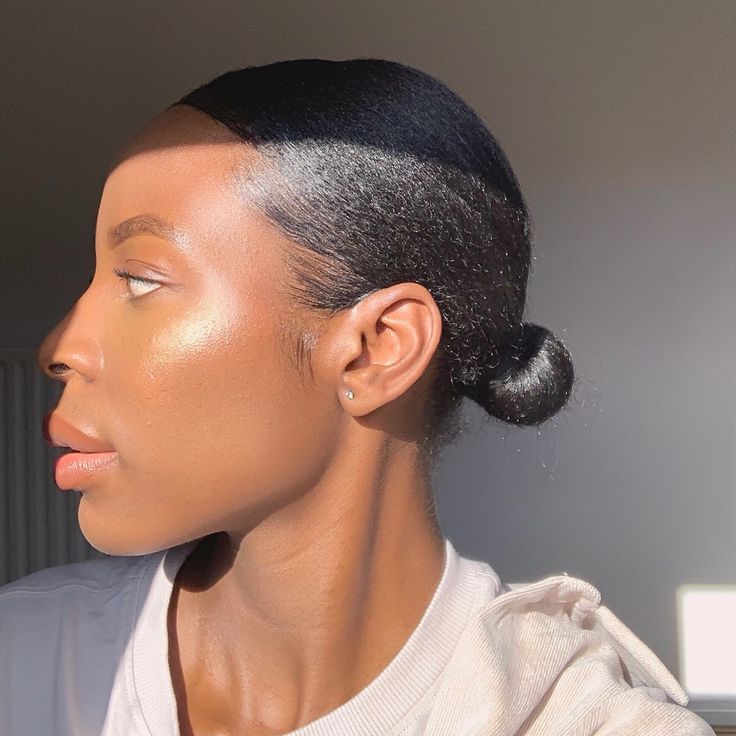
Once you have enough natural growth, a high puff can become a fun way to showcase your texture while keeping your relaxed ends gathered together.
The style works particularly well when your natural roots have enough volume to create a full shape. You can smooth the front gently and gather the hair at the crown.
If your relaxed ends are noticeably straighter, they may hang differently from your natural roots. Instead of trying to force everything into the same texture, tuck the ends into the puff or use a soft hair tie to hold them in place.
Avoid repeatedly tightening the same area. A puff should feel secure without pulling on your scalp.
For more variations, you can experiment with different sizes and shapes from these puff hairstyles.
7. Half-Up Half-Down Style
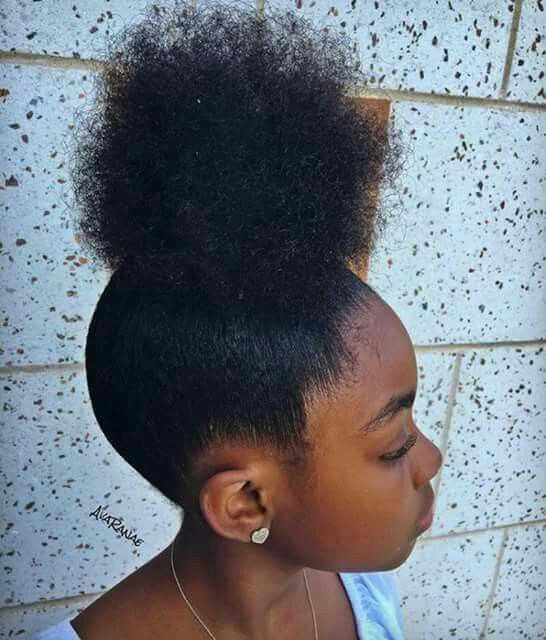
A half-up half-down hairstyle gives you a way to work with both textures without having to manipulate your entire head.
You can gather the top section into a puff, bun, or ponytail while leaving the lower section loose.
This style can also be useful when your relaxed ends still have significant length. The contrast between the two textures can become less noticeable when the hair is arranged into separate sections.
You can create a middle part, side part, or even a simple curved part depending on the look you want.
Add a headband or small clips if you want to make the hairstyle feel more intentional without adding much manipulation.
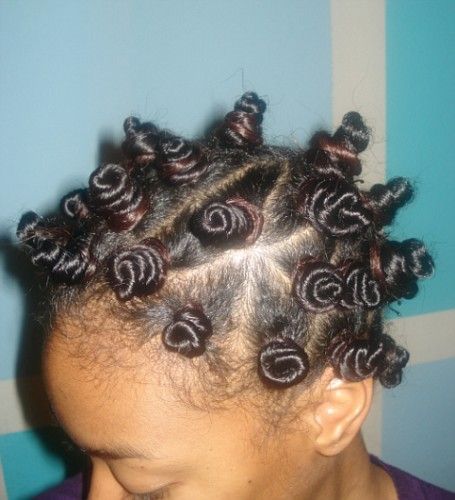
8. Bantu Knots
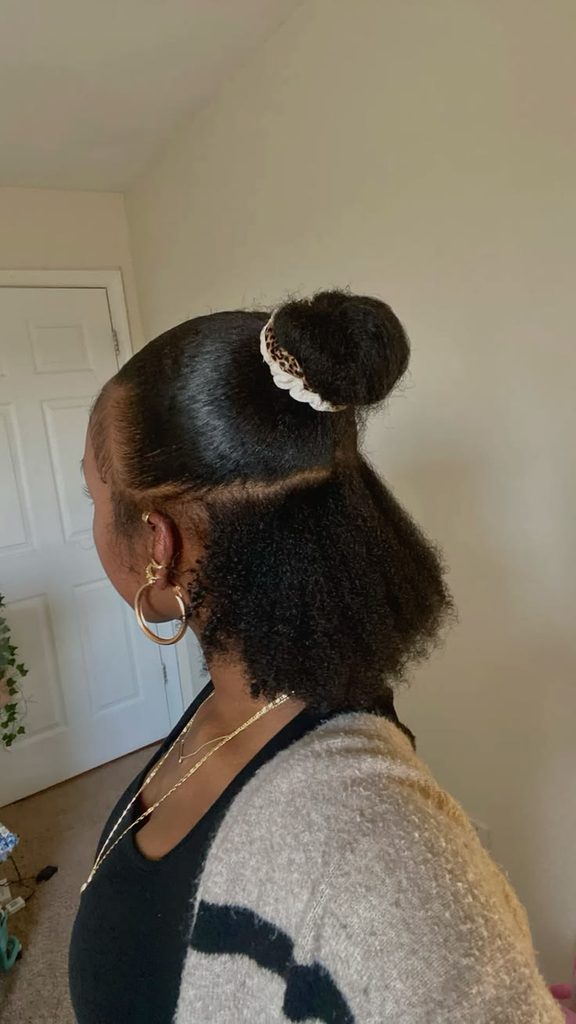
Bantu knots can work well during a transition because they allow you to create a defined style without relying on heat.
The hair is divided into sections and wrapped around itself to form small knots. You can wear the knots as they are or unravel them later to create a textured bantu knot-out.
The size of your sections will affect the final appearance. Larger sections create a looser pattern, while smaller sections generally produce more definition.
Because transitioning hair contains two textures, avoid wrapping the sections so tightly that the relaxed and natural portions are placed under unnecessary tension.
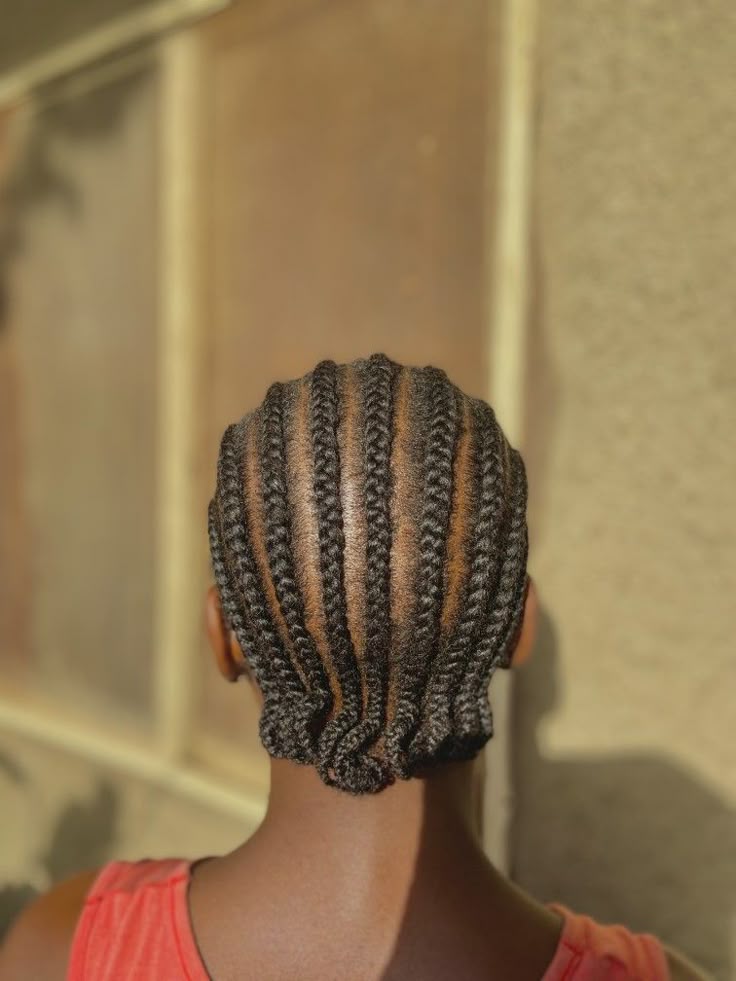
9. Cornrows
Cornrows can keep your hair organized for several days while giving you plenty of room to experiment with different designs.
Simple straight-back cornrows are practical for everyday wear, while curved or patterned rows can create a more decorative appearance.
However, tension matters. Transitioning hair can be fragile where the natural and relaxed textures meet, so tight braiding can place unnecessary stress on the strands.
If you are having your hair braided professionally, let the stylist know that you are transitioning and ask for a comfortable installation.
You can also look through different braided hairstyles when you want inspiration without committing to one particular pattern.
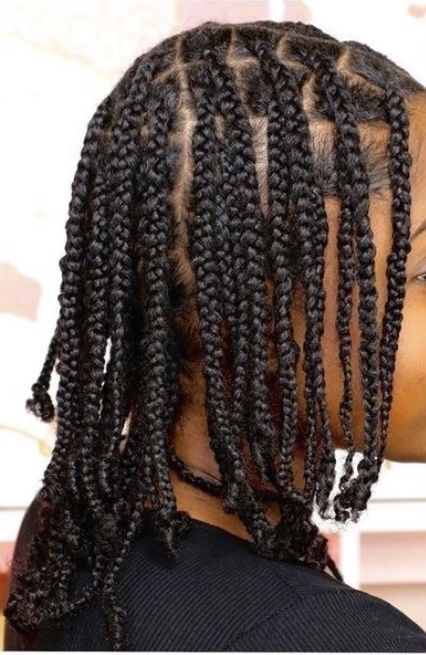
10. Box Braids
Box braids can be useful when you want to take a break from manipulating your hair every day.
They can keep your hair contained and give you several styling options throughout the installation. You can wear them down, gather them into a bun, create a ponytail, or accessorize them.
The most important consideration is how the braids are installed. Heavy extensions or excessive tension can cause problems, particularly around the edges and fragile sections.
Keep the installation comfortable from the beginning. Pain is not a sign that the style is working properly.
Before choosing any long-term style, it is also useful to understand protective styling so you can focus on protecting your actual hair rather than simply keeping it covered.
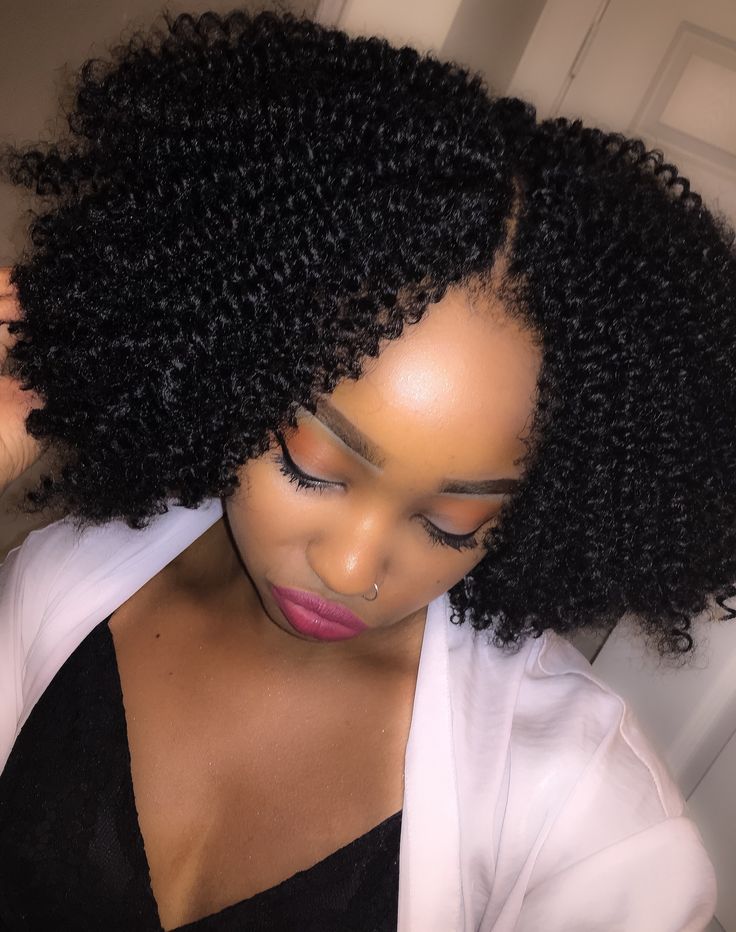
11. Crochet Styles
Crochet hairstyles can give transitioning hair a break from frequent manipulation while allowing you to experiment with different textures.
You can choose curly, wavy, or braided crochet styles depending on the appearance you want.
Because your natural hair is typically braided underneath, it is still important to prepare and care for the hair before installation. Leaving the hair neglected underneath a style can lead to dryness and tangling.
Make sure the style is not too tight and give your scalp and hair appropriate care while wearing it.
12. Wig Styles
Wigs offer one of the biggest changes in appearance without requiring you to manipulate your transitioning hair every day.
You can wear a short bob, long curls, straight styles, or other looks while keeping your own hair tucked underneath.
The preparation underneath the wig matters. Braiding or flattening the hair too tightly can create unnecessary tension, and leaving the scalp and hair neglected for long periods can make maintenance harder.
Choose a comfortable installation method and remove the wig regularly enough to cleanse and care for your hair.
A wig can be especially useful during stages when you are tired of dealing with the visible difference between your natural roots and relaxed ends.
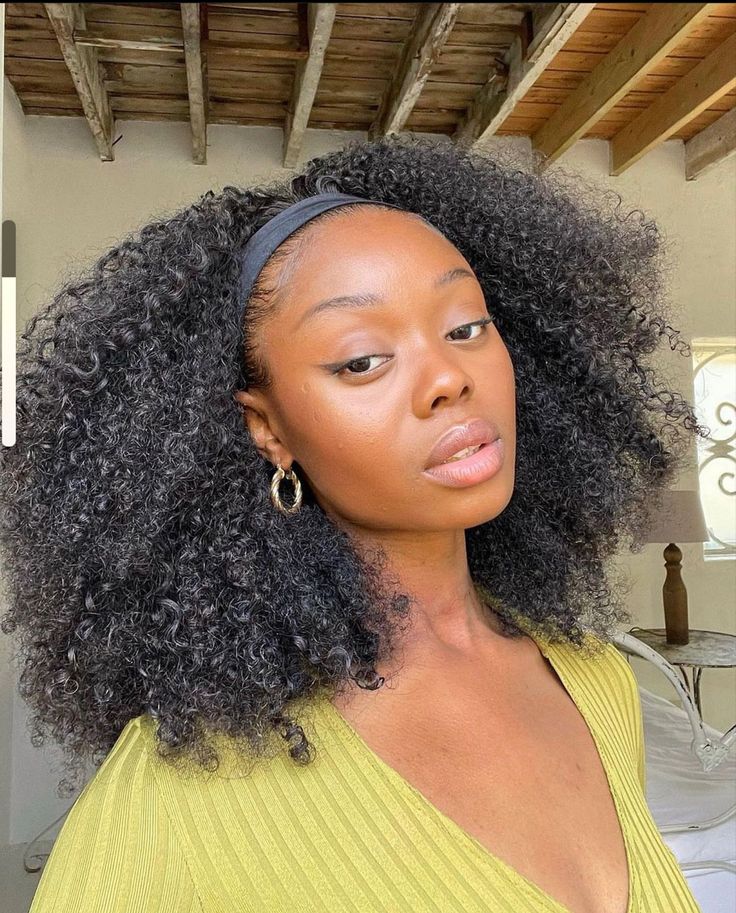
13. Headband Hairstyle
A headband can turn a simple hairstyle into something more polished while helping you manage uneven textures.
You can gather the hair into a puff, bun, or loose ponytail and use a wide headband to cover the front section.
This is particularly useful on days when your roots are difficult to smooth or your hair simply does not cooperate.
Choose a soft headband that does not grip the same area too tightly. Repeated pressure around the edges can contribute to unnecessary stress.
You can also change the appearance by using different fabrics, widths, or positions.
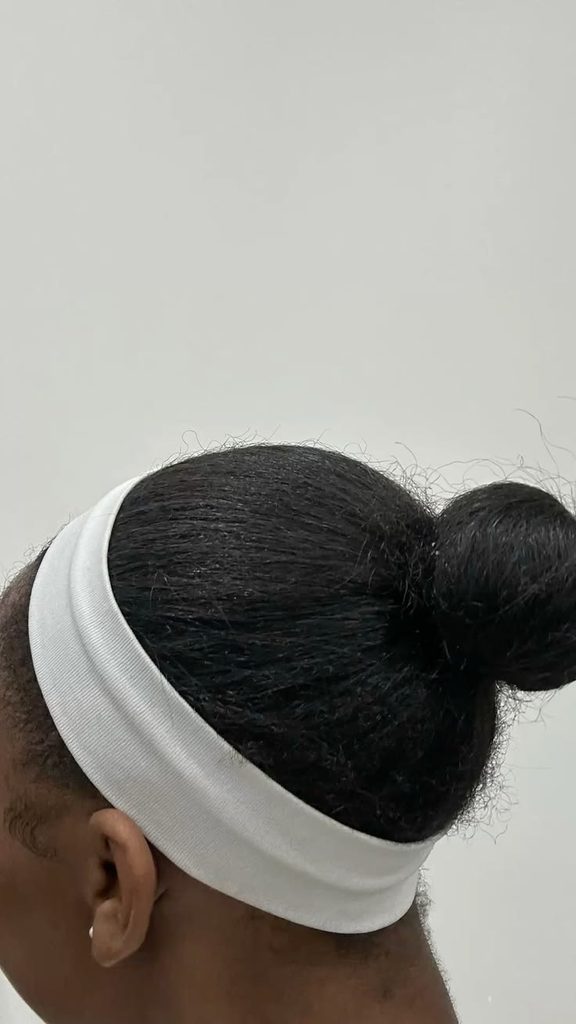
14. Scarf-Wrapped Style
A scarf can do more than protect your hair at night. It can also become part of your daytime hairstyle.
Wrap a scarf around a low bun, puff, or loosely gathered hair to create an intentional look while covering sections that are difficult to blend.
This is a particularly useful option when you want a quick hairstyle without spending a long time manipulating your hair.
Choose a smooth fabric and avoid tying it too tightly. You want the accessory to stay in place without creating pressure around your hairline.
You can also use natural hair accessories to change simple transitioning hairstyles without repeatedly restyling your hair.
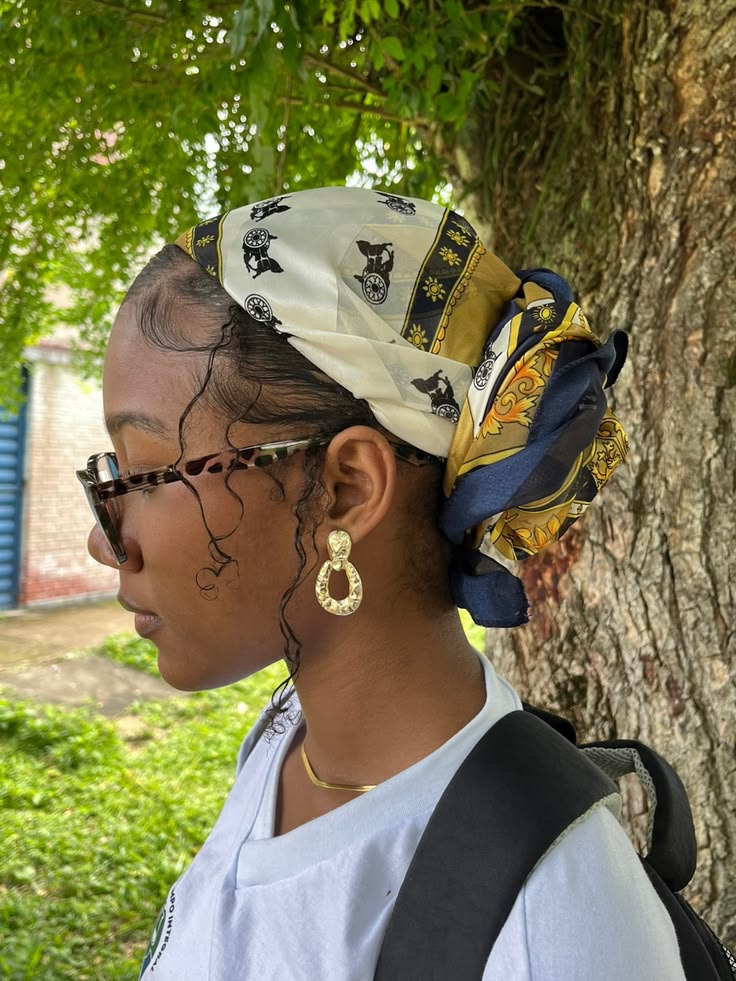
15. Flexi Rod Set
A flexi rod set can create curls throughout your hair without using direct heat.
The style can help make your natural roots and relaxed ends appear more similar because both sections are shaped into curls.
Your results may vary depending on the condition and texture of your relaxed ends. Some relaxed hair may not hold the curl as well as natural hair, so smaller sections and proper drying can make a difference.
Make sure the hair is completely dry before removing the rods. Separating the curls too early can affect the final result.
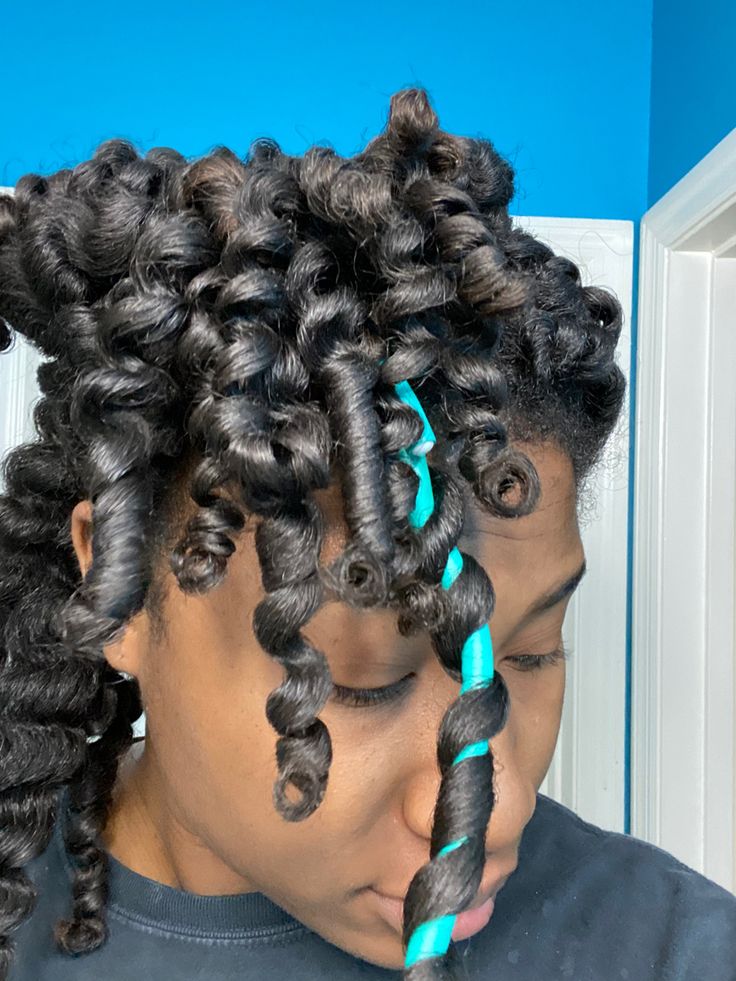
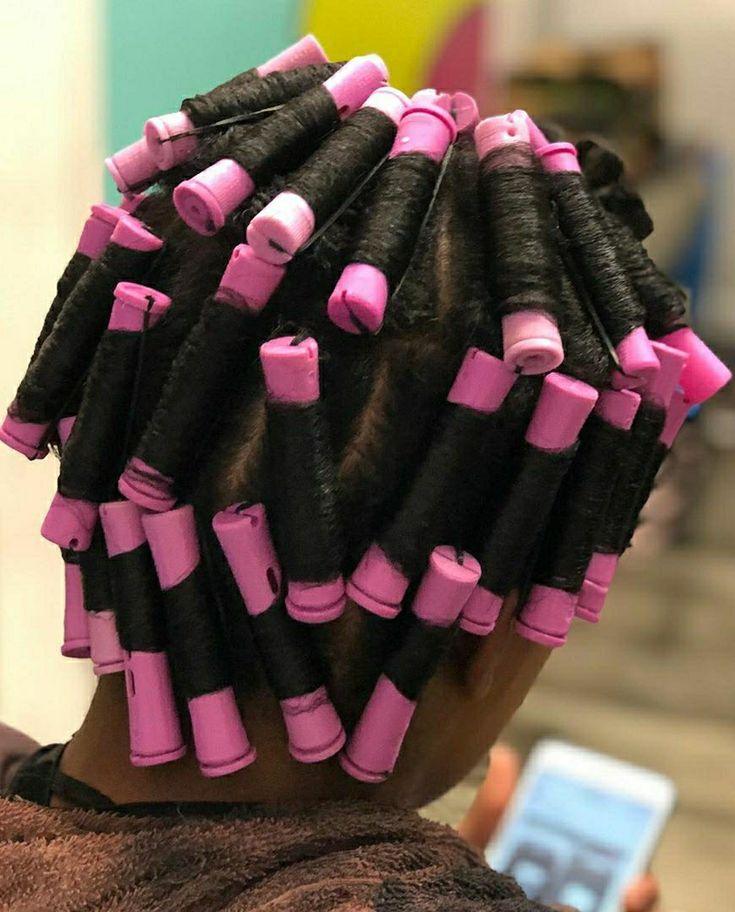
16. Perm Rod Set
Perm rods can also help you create curls while avoiding direct heat.
They are particularly useful when you want a more uniform appearance across your two textures. The curls can disguise some of the difference between your natural roots and relaxed ends.
The smaller the rods, the tighter the curls are likely to appear. Larger rods generally produce a softer result.
As with other no-heat styles, drying time matters. Give the hair enough time to dry completely before taking the rods down.
17. Tucked Ends Style
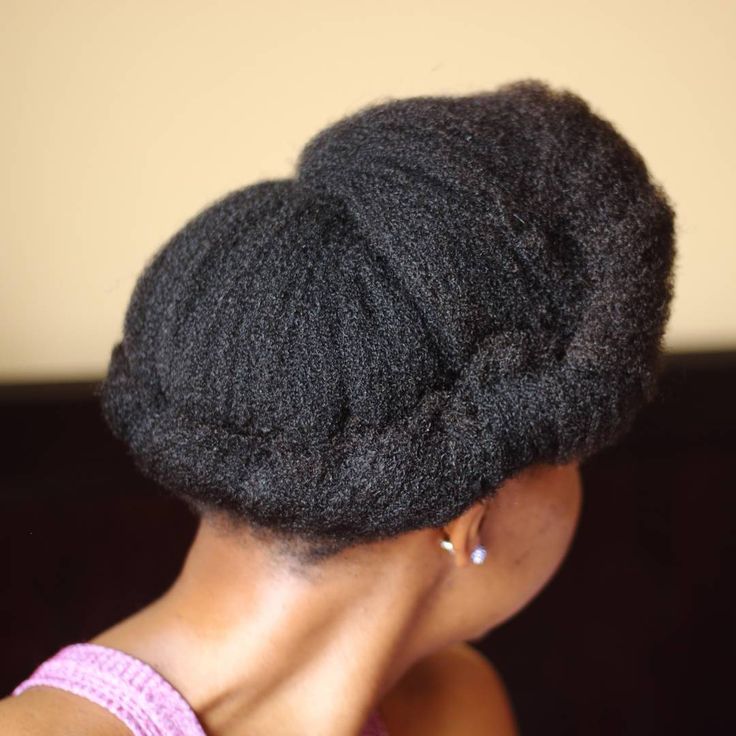
Tucking your ends away can be particularly useful when your relaxed ends are becoming difficult to blend with your natural roots.
You can gather the hair into a bun, roll the ends underneath, or use pins to create a tucked style.
This approach reduces the need to constantly manipulate the relaxed portion and can give your hairstyle a clean appearance.
Make sure your pins are not pulling individual strands too tightly. Remove them gently rather than dragging them through the hair.
A tucked style can be especially helpful when your main goal is to reduce daily manipulation while continuing your transition.
18. Low Ponytail
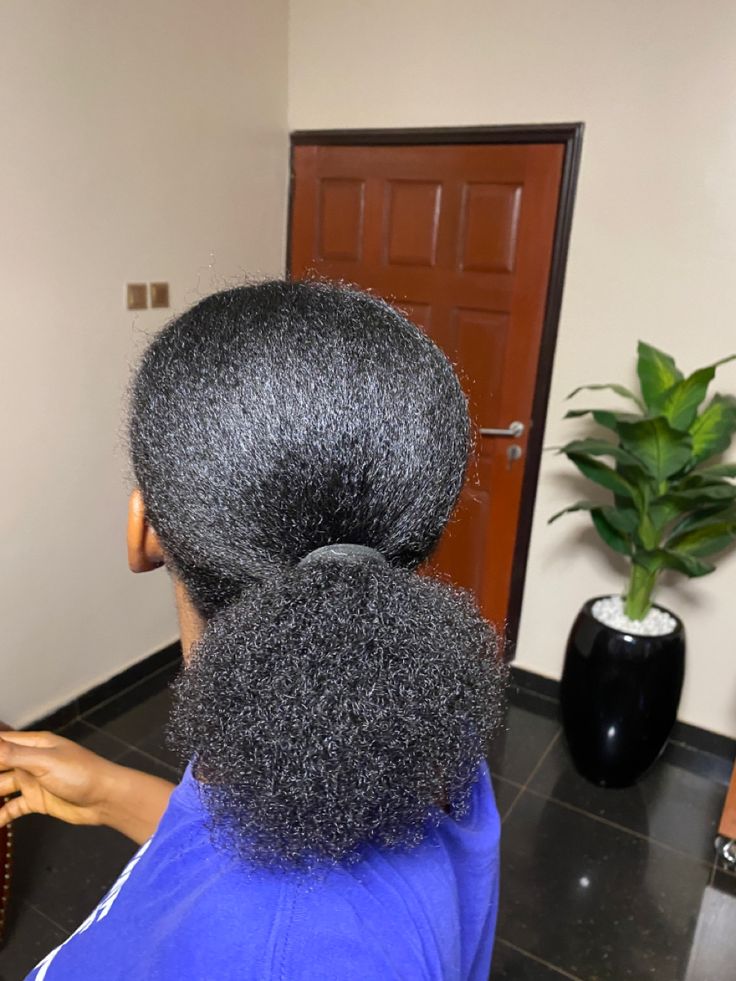
A low ponytail is another simple option when you want your hair out of your face without creating a complicated style.
You can leave the ponytail sleek, add twists, wrap it with a scarf, or tuck the ends underneath.
The style is easiest when your hair has enough length to gather comfortably. If you need to use a lot of force to pull the hair together, choose another style instead.
Use a soft hair tie and avoid repeatedly placing the ponytail in exactly the same position.
19. Halo Braid
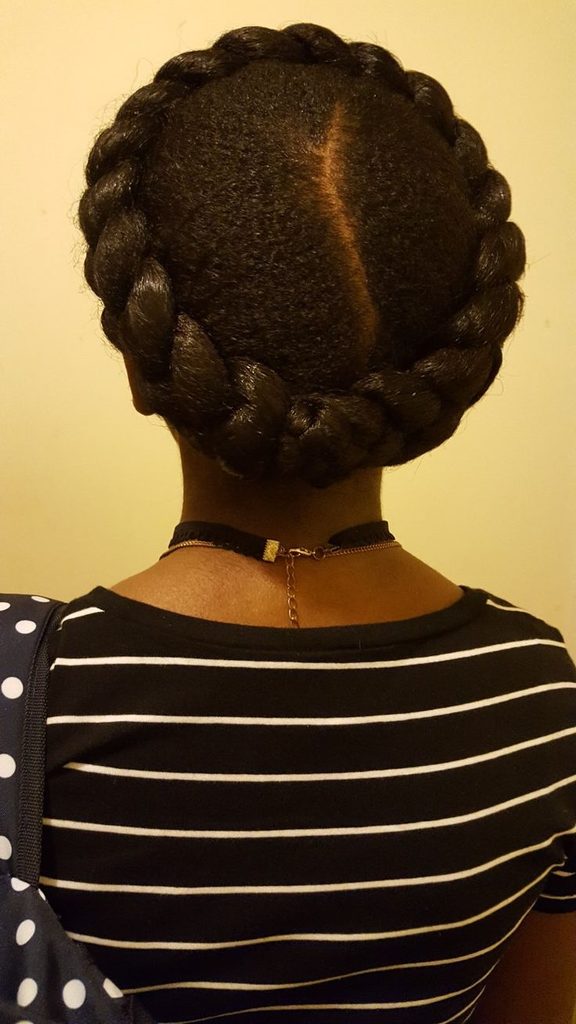
A halo braid can give transitioning hair a neat, elegant appearance while keeping most of the strands contained.
The braid wraps around the head, creating a crown-like effect. You can make it simple or add accessories depending on the occasion.
Because this style involves manipulating the hair around the perimeter, be particularly careful with the edges. Do not braid tightly simply to make the style appear more defined.
A looser halo braid can still look polished while being more comfortable to wear.
20. Simple Updo With Accessories
An updo can be one of the easiest ways to make transitioning hair look intentional.
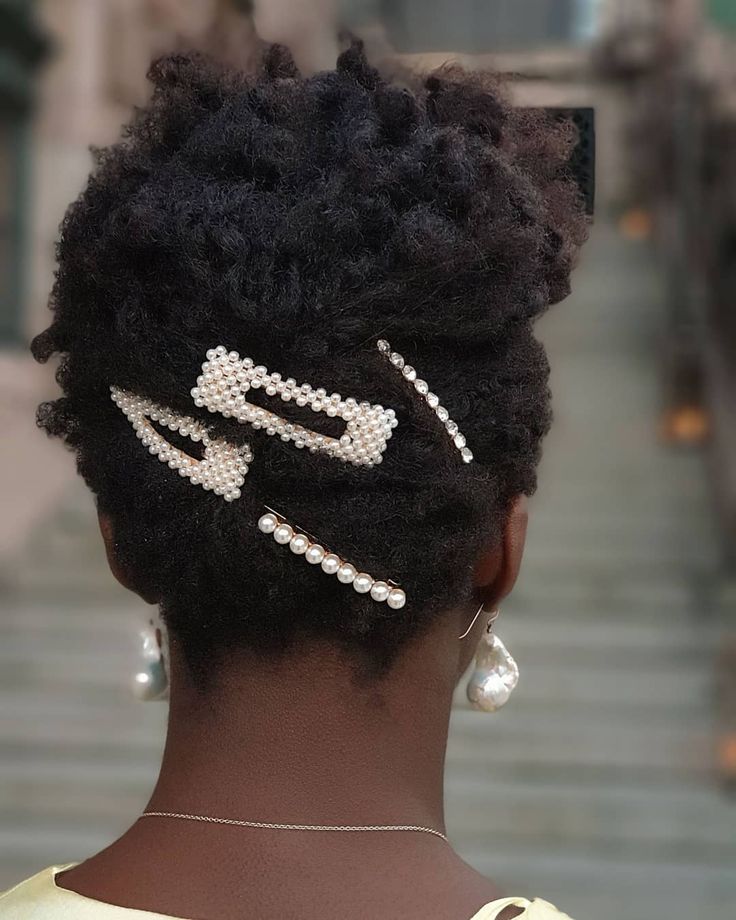
Gather the hair into a bun or rolled style, then add a few clips, pins, a scarf, or another lightweight accessory.
This works particularly well when your textures are difficult to blend on a particular day. Instead of spending a long time trying to make the hair look identical from root to tip, you can arrange it into a shape that works with both textures.
Keep accessories lightweight and avoid anything that repeatedly pulls on one small section of hair.
You can also explore wedding hairstyles for more formal updo inspiration if you need something suitable for a special occasion.
How to Choose the Right Hairstyle While Transitioning
With so many options available, the best hairstyle is not necessarily the one that looks the most complicated. It is the one that suits the current condition and texture of your hair.
Start by considering how much natural growth you have. If you have only a small amount of new growth, styles that curl or stretch the hair may help blend the textures. If you have more natural growth, you may find that twists, puffs, and other textured styles become easier.
Also consider how much manipulation your hair can handle.
If your hair is experiencing noticeable breakage, a style that requires daily brushing and restyling may not be the best choice. A simpler option that keeps your hands out of your hair for a few days may be more practical.
Your lifestyle matters too. A hairstyle that works beautifully for a weekend event may not be convenient if you need something that can survive school, work, exercise, or a busy schedule.
Think about your maintenance level before choosing a style rather than trying to make every hairstyle work for your hair.
How to Keep Transitioning Hairstyles Healthy
A good hairstyle should make your routine easier, not create another source of hair problems.
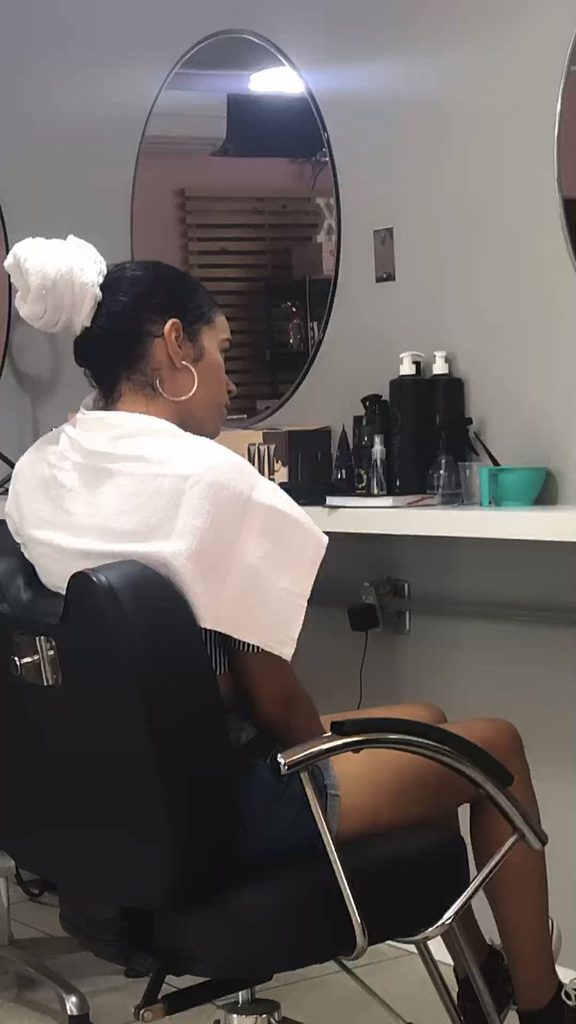
Before styling, make sure your hair is properly cleansed and conditioned. Dry, tangled hair is more difficult to manipulate gently, especially when two textures are involved.
Pay attention to the line where your natural roots meet your relaxed hair. This area can be particularly vulnerable to breakage, so avoid repeatedly pulling, brushing, or combing through it.
Do not leave every style installed for as long as possible simply because it still looks neat. Your scalp and hair still need regular care.
You should also pay attention to how your hair feels after removing a style. Excessive shedding, breakage, soreness, or thinning around the edges can be signs that your styling habits need to change.
If your scalp needs attention, a healthy scalp should remain part of your overall hair-care routine rather than something you think about only when a problem appears.
Hairstyles to Be Careful With During Your Transition
Not every hairstyle is automatically harmful, but some require more caution while transitioning.
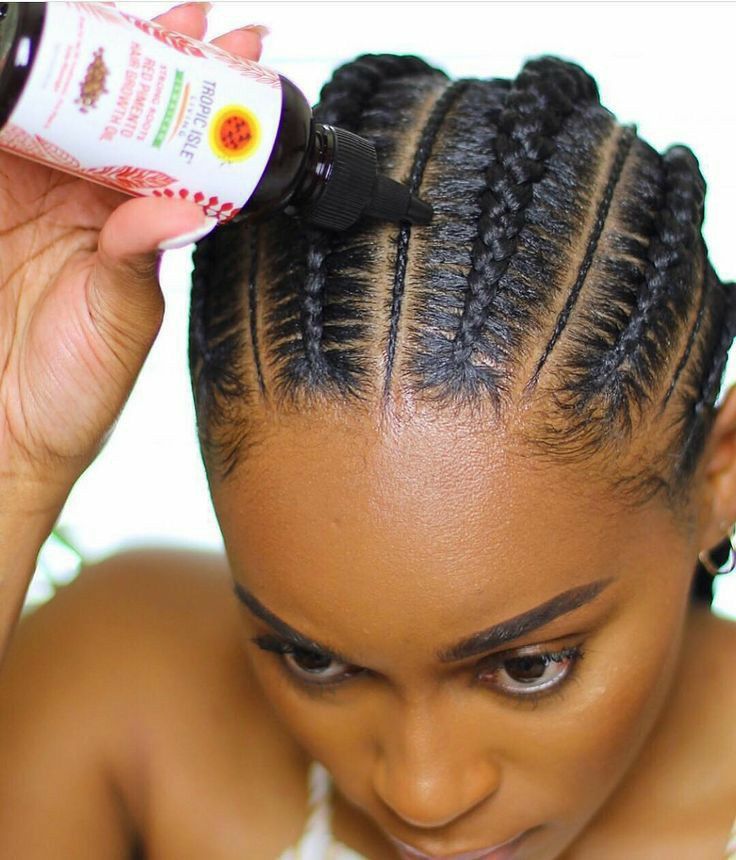
Very tight braids, extremely sleek ponytails, heavy extensions, and styles that require repeated heat can put unnecessary stress on your hair.
Frequent straightening can also make it harder to understand how your natural texture is developing. Heat may temporarily make both textures look similar, but excessive use can cause damage.
You should also be careful with styles that require aggressive brushing or combing to achieve a smooth finish. Transitioning hair often needs more patience, not more force.
If a hairstyle causes pain, persistent scalp tension, or significant breakage, it is worth reconsidering how it is installed or choosing something gentler.
Making Your Transition More Manageable
The first few months of transitioning can feel unpredictable because your hair is constantly changing. A hairstyle that worked perfectly one month may become difficult the next as your natural roots grow.
That does not mean you are doing anything wrong.
Instead of trying to find one hairstyle that works for the entire transition, build a small collection of styles that suit different stages.
Keep a few low-manipulation options for busy weeks, textured styles for days when you want to show more of your natural growth, and tucked or covered styles for times when your two textures are difficult to blend.
It can also help to keep your hair growth tips focused on retaining the length you already have. Growing natural hair is only part of the process. Keeping your strands from breaking is what allows that growth to remain visible.
You may also find that your preferences change as you get more comfortable with your natural texture. At the beginning, you might prefer styles that make your hair look more uniform. Later, you may enjoy wearing styles that highlight the difference between your natural roots and relaxed ends.
There is no single correct way to transition.
Final Thoughts
Transitioning does not have to mean putting your personal style on hold until your relaxed ends are gone.
There are plenty of ways to work with your hair at every stage. Twists can give you definition, buns can simplify busy days, braids can reduce daily manipulation, and accessories can transform a basic style without requiring another full styling session.
The best hairstyles while transitioning are ultimately the ones that help you feel comfortable while treating your changing hair gently.
Your hair will not look the same throughout the process, and that is part of the journey. Give yourself room to experiment, learn what your two textures need, and choose styles that protect your strands without making you feel like you have to hide your natural hair.
As your natural growth continues, more styling possibilities will open up. By the time you are ready to remove your relaxed ends, you will already have experience working with your natural texture and a better idea of the hairstyles you genuinely enjoy.