
Rice Water for 4C Hair: Benefits and How to Use It
Disclosure: Some of the links in this post are affiliate links. This means if you click on the link and purchase an item, I will receive an affiliate commission at no extra cost to you.
Rice water has become a popular DIY treatment among people looking for simple ways to care for their natural hair. It is inexpensive, easy to prepare, and has been used as a traditional hair-care practice in different cultures for generations.
For people with tightly coiled hair, the appeal is understandable. 4C hair can be prone to dryness, tangling, and breakage, so anything that might help the strands feel smoother or easier to manage can sound promising.
But how effective is rice water for 4C hair, and how should you use it without overdoing it?
Rice water may offer some benefits, but it is not a miracle growth treatment. The preparation method, frequency of use, and condition of your hair all matter. Understanding what rice water actually contains and how your hair responds will help you decide whether it deserves a place in your routine.
What Is Rice Water?
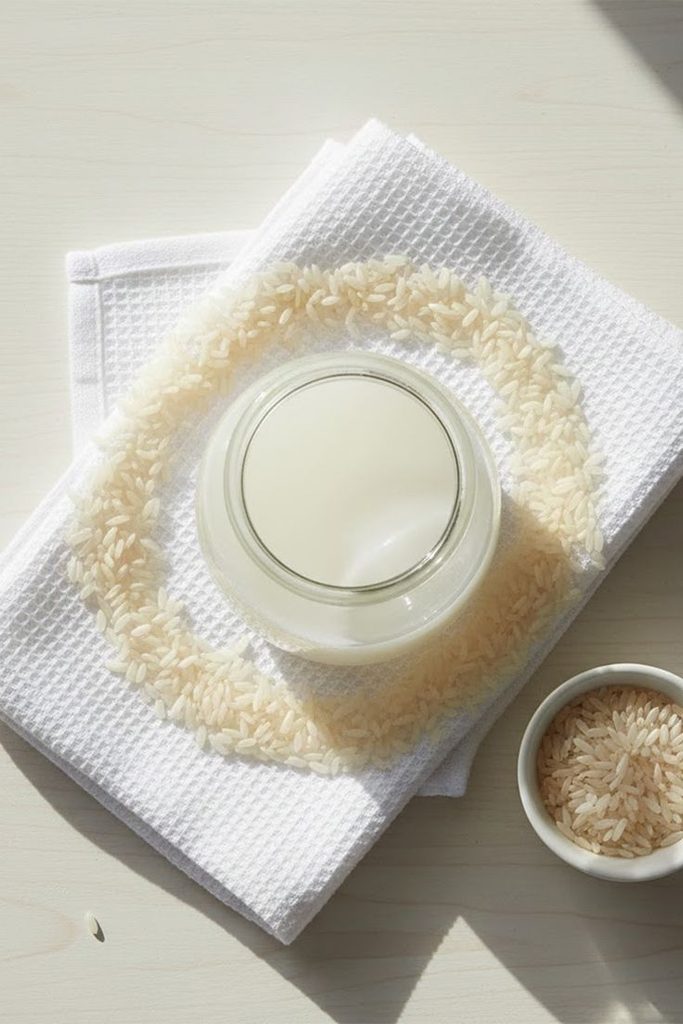
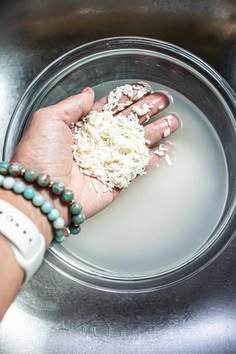
Rice water is the cloudy liquid produced when rice comes into contact with water. You can make it by soaking rice, boiling rice, or allowing a rice-water mixture to ferment.
The resulting liquid contains starch released from the rice, along with varying amounts of other water-soluble compounds. Depending on the preparation method, the concentration and composition can differ.
Rice water is sometimes described online as a protein treatment, but that description can be misleading. Rice itself contains protein, but rice water is not automatically a high-protein hair treatment. Its composition depends heavily on how it is prepared and how much of the rice’s components actually enter the water.
That distinction matters because hair does not necessarily benefit from more protein simply because a treatment is natural.
If you’re still learning about your hair’s individual needs, understanding 4C hair characteristics can help you decide whether a treatment like rice water makes sense for your routine.
Understanding the Nutritional Composition of Rice Water
One reason rice water has become so popular is the idea that it is packed with nutrients.
The reality is more complicated.
Rice contains carbohydrates, protein, small amounts of vitamins and minerals, and other compounds. However, not all of these components transfer into the water in significant quantities.
The amount that ends up in homemade rice water depends on whether you soak, boil, or ferment the rice, how much water you use, how long the rice remains in the water, and whether the rice itself is discarded or consumed.
Starch
Starch is one of the most relevant components in rice water.
Because starch can coat the hair surface, it may contribute to the smoother or temporarily fuller feeling some people notice after using the treatment.
However, repeated coating can also become undesirable if your hair begins feeling stiff or difficult to moisturize.
Protein and Amino Acids
Rice contains protein, and rice-derived ingredients can contain amino acids and other compounds.
However, it would be inaccurate to assume that every homemade rice-water preparation contains a large amount of protein.
The bigger concern is how your individual hair responds to repeated strengthening or coating treatments.
Hair that already feels hard or brittle may not benefit from repeatedly adding a treatment that makes it feel even stiffer.
This is why deep conditioners for dry 4C hair can remain an important part of your routine when you’re experimenting with rice water.
Vitamins and Minerals
Rice contains various micronutrients, but the amount that transfers into homemade rice water can vary considerably.
This means you shouldn’t depend on rice water as a major nutritional treatment for your hair.
A balanced diet and appropriate hair-care routine are much more important for overall hair health.
Is Rice Water Good for 4C Hair?
There is no universal answer.
Some people find that rice water makes their hair feel smoother, stronger, or easier to manage. Others notice stiffness, dryness, or increased tangling after using it.
This difference is important because rice water for 4C hair should not be treated as a guaranteed solution for every natural hair concern.
4C hair can vary considerably in density, strand thickness, porosity, and overall condition. A treatment that feels wonderful on one person’s hair may not produce the same result for someone else.
Your routine also matters. Someone who already uses several strengthening products may have a very different response from someone whose routine contains mostly moisturizing and conditioning products.
If you’re trying to improve the condition of your hair, focusing on healthy hair habits is usually more useful than relying on one trending treatment.
Potential Benefits of Rice Water
Rice water has several properties that explain why it has become popular as a hair rinse.
However, some of the benefits commonly claimed online have stronger evidence behind them than others.
It May Make Hair Feel Smoother
The starch in rice water can leave a temporary coating on the surface of the hair.
This may make the strands feel smoother and easier to handle after rinsing.
For someone whose hair feels rough or difficult to detangle, that temporary improvement may be noticeable.
However, smoother-feeling hair does not necessarily mean the hair has been permanently strengthened or repaired.
It May Improve Manageability
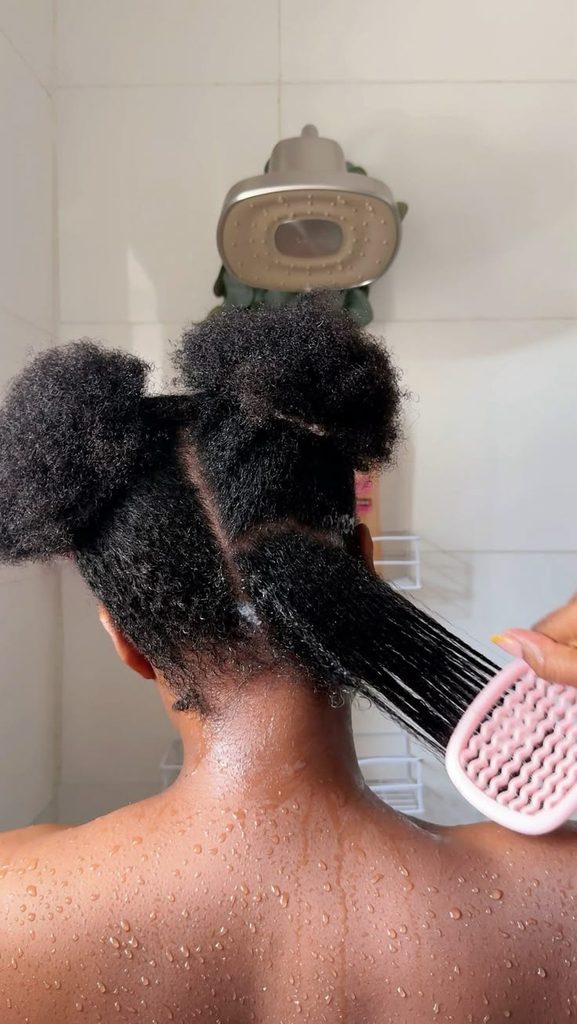
When hair feels smoother, it may become easier to manipulate.
This can be useful for people who struggle with excessive tangling during their routine. Less resistance during handling can potentially mean less unnecessary pulling.
Still, rice water should not replace proper detangling practices. Using gentle detangling techniques remains important, particularly when working with dense 4C hair.
It Can Be an Affordable Treatment
Rice is inexpensive and widely available, making rice water one of the simplest DIY treatments to experiment with.
You don’t need a collection of expensive ingredients to prepare it.
That makes it appealing for people who prefer straightforward hair care and want to experiment without spending much money.
It May Complement a Breakage-Conscious Routine
If your hair responds well to rice water and feels easier to handle afterward, it can potentially fit into a routine focused on reducing unnecessary manipulation.
However, this is different from saying rice water directly stops breakage.
Breakage can have many causes, including excessive tension, rough detangling, dryness, chemical processing, and repeated manipulation. Learning how to stop 4C hair breakage can therefore be more useful than depending on rice water alone.
Does Rice Water Make Hair Grow Faster?
This is one of the biggest claims associated with rice water.
There is currently not enough strong scientific evidence to say that applying rice water to the hair will make your follicles produce hair faster.
Hair growth occurs at the follicle beneath the scalp. A rinse applied to the strands does not simply switch the follicles into a faster growth cycle.
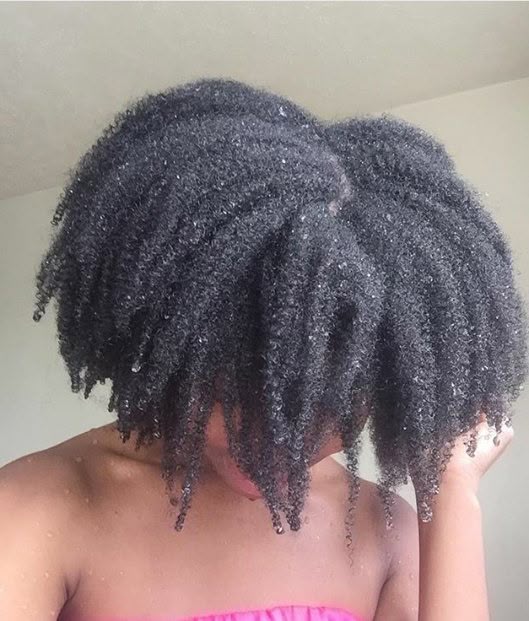
What may happen is that a person experiences better manageability or less visible breakage. If you retain more of the length you naturally grow, your hair may appear to grow better over time.
That is length retention, not necessarily faster growth.
If you’re concerned that your hair seems stuck at the same length, comparing your routine with the truth about 4C hair growth can help you separate growth from retention.
Three Ways to Make Rice Water
There are three common preparation methods you can try.
The simplest is soaking, while boiling creates a more concentrated preparation. Fermentation is another traditional approach, although it requires greater care with storage and hygiene.
1: Soaked Rice Water
This is the easiest method for beginners.
You will need:
- ½ cup of uncooked rice
- 2 cups of clean water
- A clean bowl
- A strainer
- A clean storage container
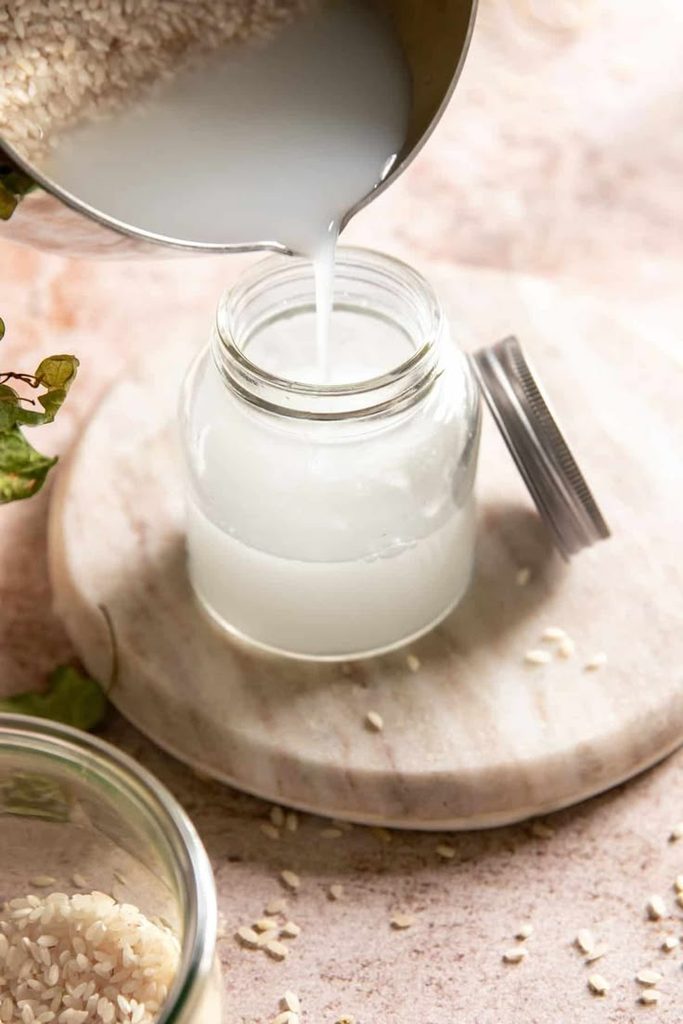
Rinse the rice briefly.
Place the rice in a bowl and add the water.
Allow it to soak for about 30 minutes.
Swirl the rice around occasionally to help release the starch.
Strain the liquid into a clean container.
Your rice water is now ready to use.
This method produces a relatively simple preparation without requiring heat or fermentation.
2: Boiled Rice Water
Boiling is another common method.
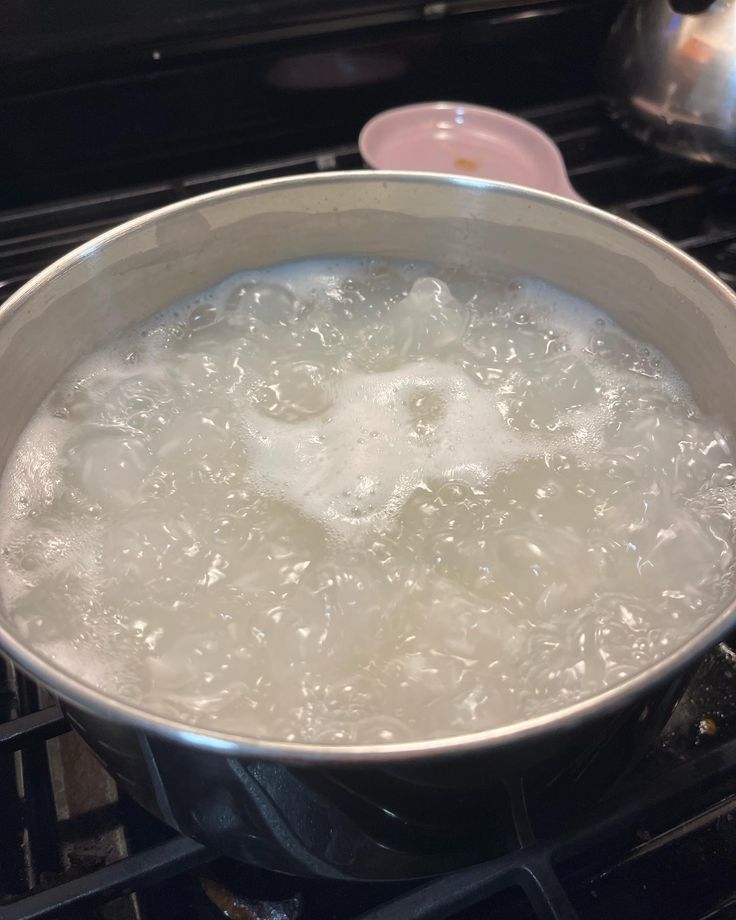
For this version, combine approximately ½ cup of rice with about 2 cups of water.
Cook the rice until it is soft.
Strain the liquid into a clean container while it is still separate from the cooked rice.
Allow the rice water to cool completely before applying it to your hair.
Because boiling can extract more material from the rice than a short soaking process, the resulting liquid may be more concentrated.
You can dilute it with additional clean water if it feels too strong or your hair tends to respond poorly to concentrated treatments.
3: Fermented Rice Water
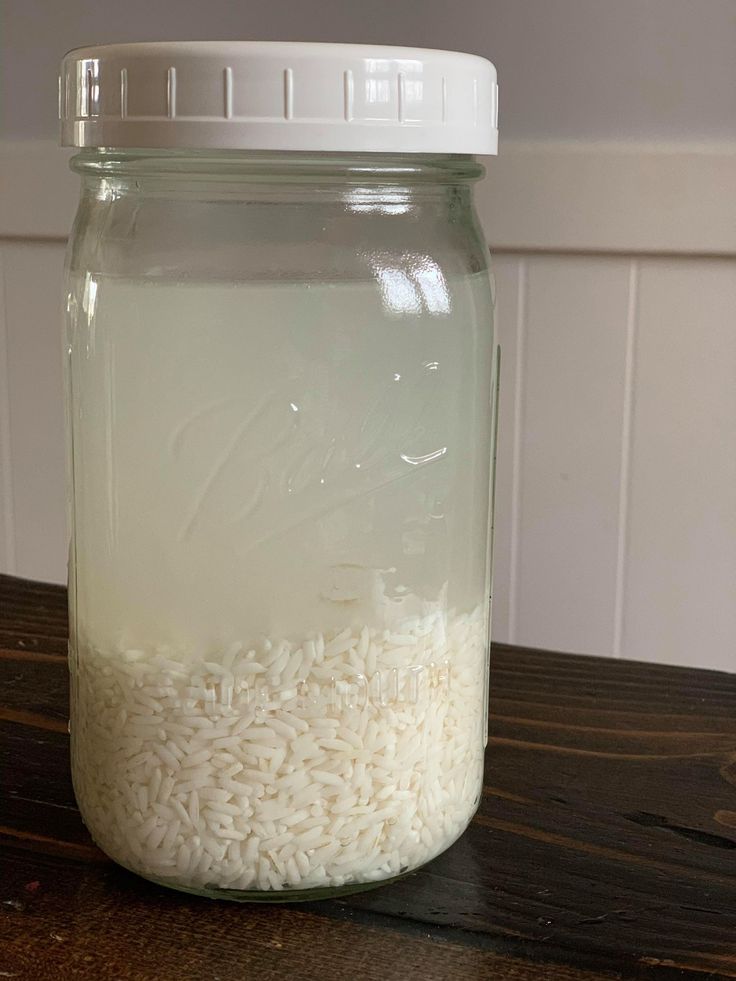
Fermented rice water is made by allowing prepared rice water to sit for a period of time so that fermentation can occur.
Some people prefer this method because it has become popular in traditional and online hair-care routines.
However, homemade fermentation is not perfectly controlled.
If you choose this method, cleanliness and storage are important. Once prepared, keep the mixture refrigerated and discard it if it develops an unusual smell, appearance, or signs of spoilage.
There is also no strong evidence that fermented rice water is automatically better for 4C hair than freshly prepared rice water.
For beginners, the soaking or boiling method is simpler and easier to control.
How to Use Rice Water for 4C Hair
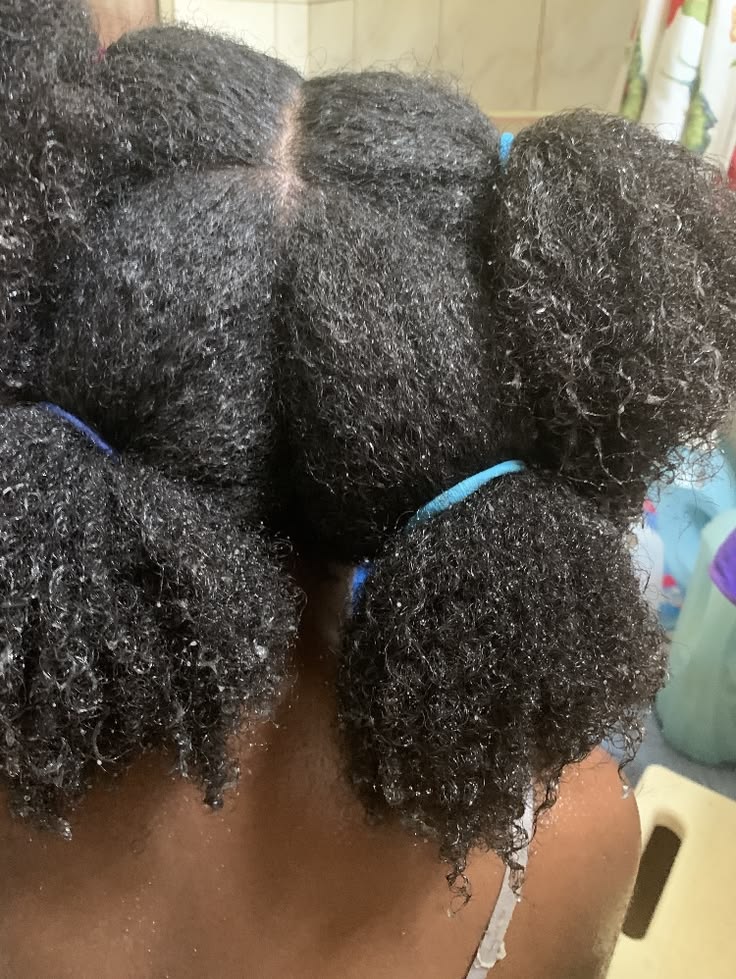
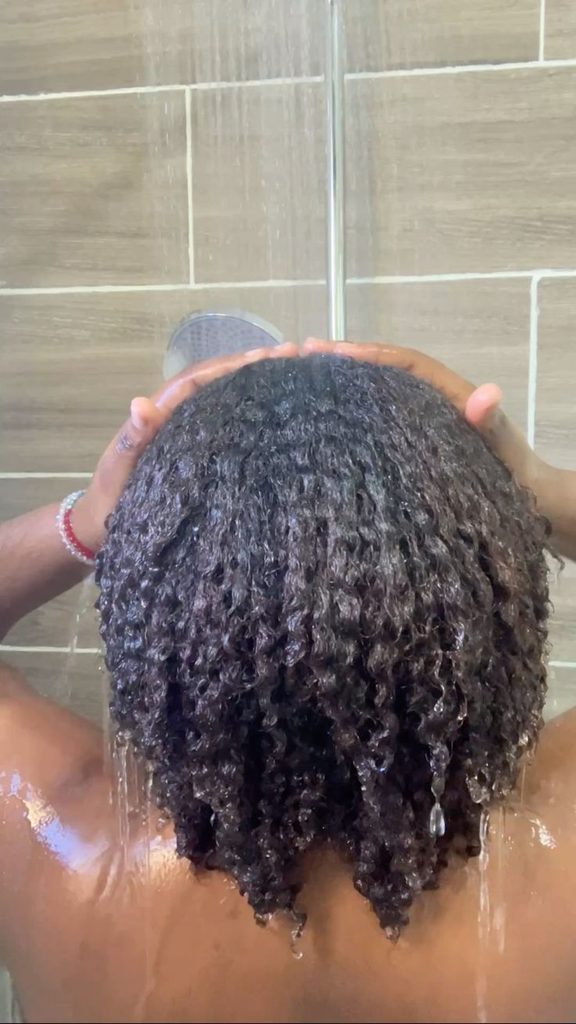
Once your rice water has cooled, you can use it as a rinse during your wash day.
- Start with clean, damp hair.
- If your hair is dense, divide it into manageable sections. This makes application easier and reduces unnecessary manipulation.
- Pour or spray the rice water over each section, making sure the strands are coated without completely drenching your scalp.
- Gently smooth the liquid through the hair using your fingers.
- Allow it to sit for approximately 5 to 15 minutes when trying it for the first time.
- Rinse thoroughly with clean water.
- Follow with your regular conditioner or deep conditioner.
- This final conditioning step can be particularly useful if the treatment leaves your hair feeling slightly stiff.
If you want to build the treatment into your existing routine, following a consistent weekly hair care routine can help you avoid adding rice water too frequently.
How Often Should You Use Rice Water?
You do not need to use rice water every time you wash your hair.
For a first attempt, once every one to two weeks is a reasonable starting point.
Pay attention to how your hair feels afterward.
If it remains soft, manageable, and comfortable, occasional use may work well for you.
If your hair becomes stiff, rough, dry, or difficult to detangle, reduce how often you use it or stop altogether.
There is no benefit in forcing your hair to tolerate a treatment simply because it is popular.
Your hair porosity can also influence how your strands interact with water and products, so your experience may differ from someone else’s.
Why You Shouldn’t Use Rice Water Too Often
Using rice water excessively is one of the easiest ways to turn a potentially useful occasional treatment into a source of frustration.
The problem is not simply that rice water is “full of protein.”
Homemade rice water varies considerably in composition, and the amount of protein or amino acids present may be relatively small. However, the starches and other compounds can leave a coating on the hair.
Repeated applications without enough cleansing and conditioning may cause some people to notice stiffness, dryness, roughness, or increased tangling.
This is especially worth considering if your hair already feels brittle.
Hair generally needs a balance between strengthening and conditioning. A routine that focuses heavily on strengthening treatments without enough conditioning may leave the strands feeling less flexible.
If your hair struggles to retain moisture, learning why 4C hair won’t hold moisture can help you identify other factors that may be contributing to the problem.
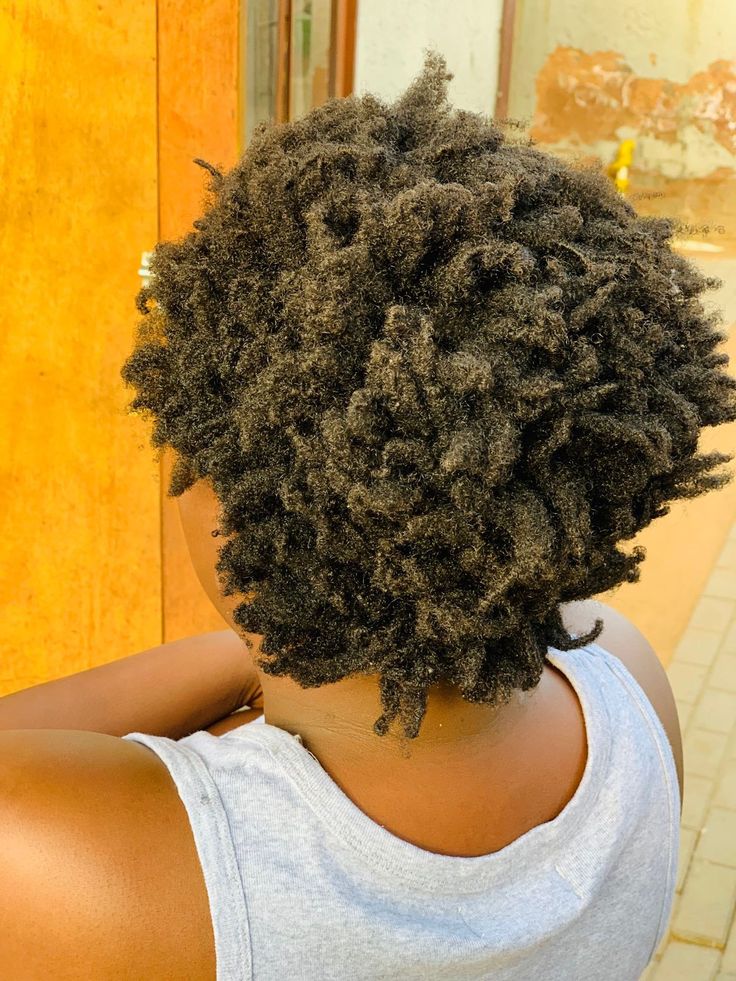
Signs You May Be Using Rice Water Too Often
Your hair can tell you when a treatment isn’t agreeing with it.
Watch for changes such as:
- Increased stiffness
- Rough texture
- More tangling
- Difficulty detangling
- Dry-feeling ends
- Hair that feels coated
- Increased brittleness
- Loss of your usual softness
One isolated bad hair day does not necessarily mean rice water is responsible.
However, if the same symptoms appear repeatedly after each application, take that pattern seriously.
You can stop the treatment and return to your normal cleansing and conditioning routine.
If your hair has already become noticeably fragile, learning about damaged hair masks may help you think about conditioning and recovery, rather than adding more strengthening treatments.
Can Rice Water Be Used on the Scalp?
Rice water can be applied around the scalp as part of a rinse, but it should not be treated as a cure for scalp conditions.
Persistent itching, heavy flaking, redness, sores, swelling, or unusual scalp discomfort requires a different approach.
The scalp is skin, and applying a homemade mixture to irritated skin can sometimes make the situation worse.
Keep the preparation clean and avoid applying it to an already irritated scalp.
If scalp health is one of your concerns, healthy scalp care deserves attention independently from treatments intended for the hair strands.

Can You Leave Rice Water in Your Hair?
Rice water is generally better treated as a rinse rather than a leave-in product.
Leaving a homemade mixture on the hair for an extended period isn’t necessary to get the potential benefits.
A short application followed by thorough rinsing is easier to control.
This is particularly useful when you’re still figuring out how your hair responds.
If you want a product that is specifically designed to remain on the hair, a formulated leave-in conditioner is a more appropriate choice because it is designed for that purpose.
Who Should Be Careful With Rice Water?
Not everyone needs rice water.
If your hair is already healthy, soft, and manageable, there is no requirement to add it to your routine.
You should also be cautious if your hair consistently becomes hard or brittle after strengthening treatments.
People with sensitive scalps should avoid experimenting with homemade mixtures on irritated skin.
If you’re experiencing substantial hair loss, persistent scalp symptoms, or sudden changes in your hair, a DIY treatment shouldn’t replace professional evaluation.
And if you are already using several protein-focused or strengthening products, adding another treatment may not be necessary.
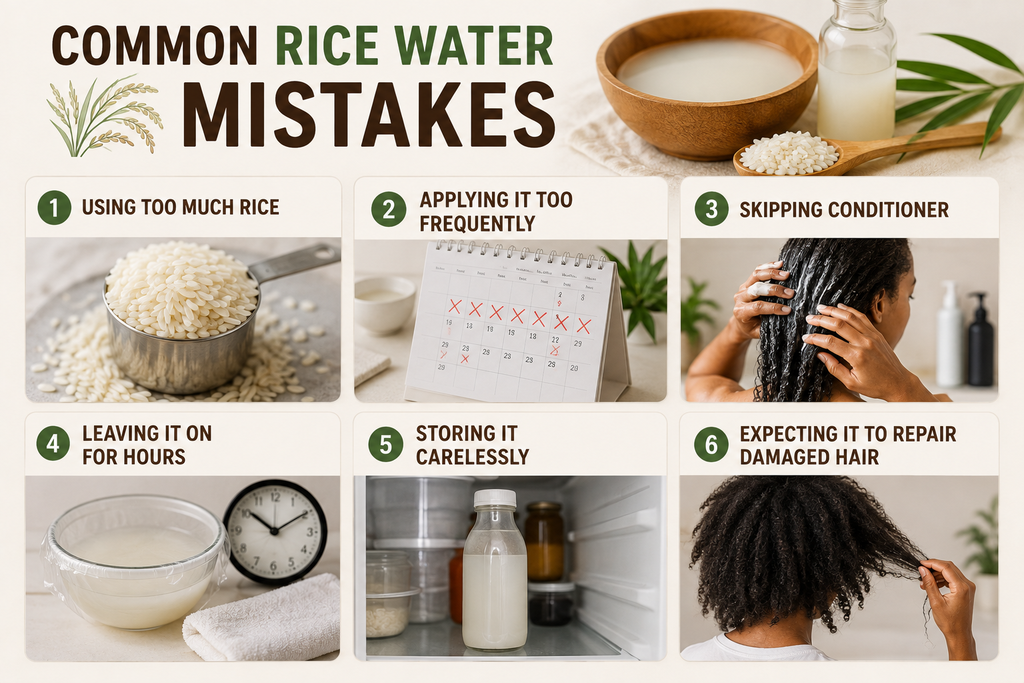
Common Rice Water Mistakes
Using Too Much Rice
A very concentrated mixture isn’t automatically more effective.
Start with a simple preparation rather than trying to make the strongest possible solution.
Applying It Too Frequently
More applications do not necessarily produce better results.
Give your hair time to show you whether it actually likes the treatment.
Skipping Conditioner
If rice water leaves your hair feeling stiff, don’t assume that means it is “working.”
Follow with a suitable conditioner and assess how your hair feels afterward.
Leaving It on for Hours
Longer application does not automatically equal better results.
Start with a short treatment period.
Storing It Carelessly
Homemade mixtures can spoil.
Keep prepared rice water refrigerated and discard it if it develops an unusual smell or appearance.
Expecting It to Repair Damaged Hair
A rinse cannot reverse every type of hair damage.
If your strands are already breaking, look at the wider routine. hair breakage causes can include several factors that have nothing to do with whether you use rice water.
How to Add Rice Water to Your Wash Day
You don’t need to redesign your entire routine just to try rice water.
A simple wash day could involve cleansing your scalp, rinsing thoroughly, applying rice water for a short period, rinsing again, and following with conditioner.
Afterward, continue with the products you normally use.
Avoid introducing several new treatments at the same time. If something goes wrong, you want to know which product or step may have caused the problem.
If you are trying to simplify your wash day, reviewing wash day tips for natural hair can help you build a routine that is easier to maintain.
Rice Water Is Optional, Not Essential
It is easy to feel as though you are missing something if you aren’t using every popular natural hair treatment.
You aren’t.
Rice water can be useful for some people, but healthy hair does not depend on it.
Your hair can thrive with a simple routine built around cleansing, conditioning, gentle handling, appropriate styling, and protection from unnecessary damage.
If you enjoy experimenting with DIY treatments, rice water can be one option to try.
If your hair doesn’t respond well, there is no reason to continue using it.
For people interested in other simple homemade options, DIY hair treatments can provide alternative ideas without making rice water the center of your routine.
Takeaway
Rice water for 4C hair can be an inexpensive and interesting treatment to experiment with, but it should be approached realistically.
It may make some people’s hair feel smoother and more manageable, while others may notice dryness, stiffness, or buildup.
The preparation method also matters. Soaked rice water is simple and beginner-friendly. Boiled rice water can be more concentrated, while fermented rice water requires greater care with hygiene and storage.
There is also no need to assume that rice water is a powerful protein treatment. Its composition varies, and the starch released from the rice may be more relevant to the way the treatment feels on the hair.
The best approach is to start with a mild preparation, use it occasionally, rinse thoroughly, and follow with conditioner. If your hair becomes rough, stiff, brittle, or unusually dry, stop using it and reassess your routine.
Ultimately, rice water for 4C hair is an optional addition, not a requirement for healthy natural hair. Your results will depend on your individual strands, your existing routine, and how consistently you care for your hair overall.