
Dry Scalp vs Dandruff: What’s the Difference?
Disclosure: Some of the links in this post are affiliate links. This means if you click on the link and purchase an item, I will receive an affiliate commission at no extra cost to you.
A flaky, itchy scalp can be confusing. You may notice white flakes on your shoulders, feel an occasional itch, or find that your scalp becomes uncomfortable shortly after washing. It is easy to assume that these symptoms automatically mean dandruff, but that is not always the case.
Dry scalp vs dandruff is an important distinction because the two conditions can look similar while having different causes. A dry scalp is often associated with a lack of moisture in the skin, while dandruff is linked to increased shedding of scalp skin and can be associated with oil production and the naturally occurring yeast Malassezia.
The difference matters when choosing how to care for your scalp. Adding more oil may make a dry scalp feel more comfortable, but it is not necessarily the right approach for dandruff. Similarly, repeatedly washing a dry scalp with harsh products may make the problem worse instead of solving it.
This is particularly important when caring for natural and 4C hair. A dense hair texture, frequent styling, wigs, extensions, oils, creams, and long periods between wash days can all influence how the scalp feels.
In this guide, we’ll break down dry scalp vs dandruff, explain how to tell them apart, discuss common causes and symptoms, and share practical scalp-care habits that can help you manage both.
What Is a Dry Scalp?
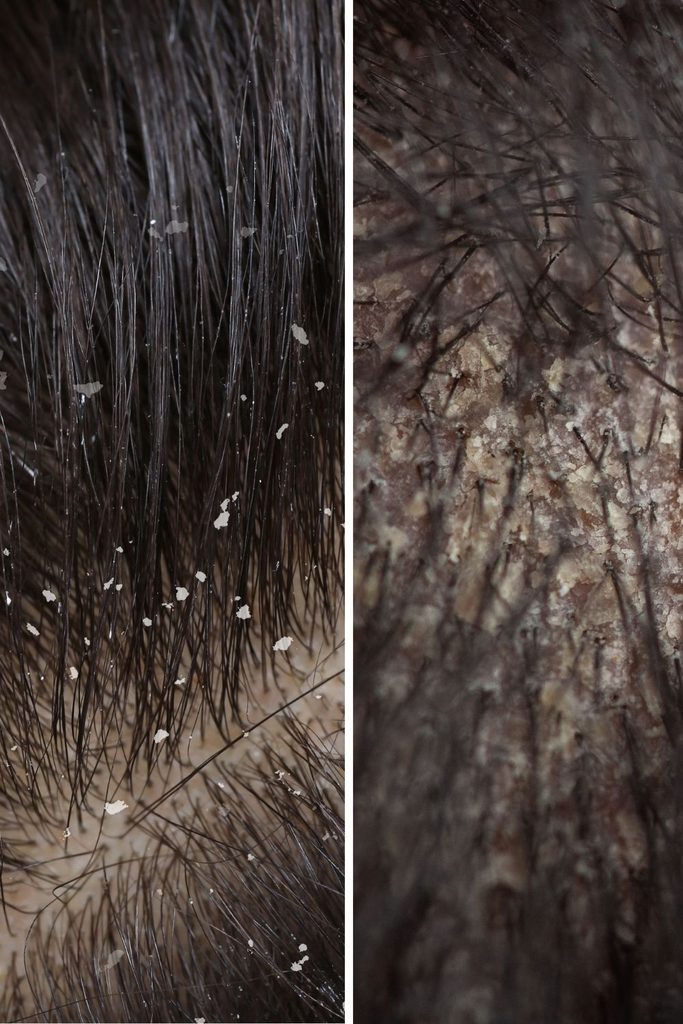
A dry scalp occurs when the skin on the scalp does not have enough moisture.
The scalp, like the rest of your skin, has a natural protective barrier. When that barrier becomes dry or irritated, you may experience tightness, mild itching, flaking, or discomfort.
Several factors can contribute to scalp dryness.
Cold or dry weather can reduce moisture in the skin. Hot water can also leave the skin feeling drier, especially when you regularly wash with very hot water.
Your hair-care routine can play a role as well. Strong cleansing products, excessive washing, or products that irritate your scalp may contribute to dryness.
This is one reason it is useful to understand how to get rid of an itchy scalp naturally before immediately assuming that dandruff is responsible.
A dry scalp can also happen when your skin simply tends to be dry. Some people naturally experience more dryness than others.
Importantly, having dry flakes does not automatically mean you have dandruff.
What Is Dandruff?
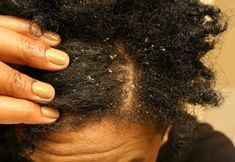
Dandruff is a common scalp condition that causes flakes and can be accompanied by itching.
Unlike ordinary dry skin, dandruff is not simply caused by your scalp “needing more moisture.”
Dandruff is associated with the interaction between the scalp, oil production, and a type of yeast called Malassezia that naturally lives on the skin. For some people, this contributes to increased skin-cell shedding and visible flakes.
Dandruff can affect people with any hair texture.
The flakes may appear white or yellowish and can sometimes look oily rather than dry and powdery. The scalp may also feel itchy or irritated.
It is worth remembering that dandruff is not a sign that someone is dirty.
Good hygiene can help manage scalp health, but dandruff can occur even when someone washes their hair regularly.
If you’re building a healthy scalp care routine, understanding this distinction can help you avoid treating every type of flaking as simple dryness.
Dry Scalp vs Dandruff: The Main Differences
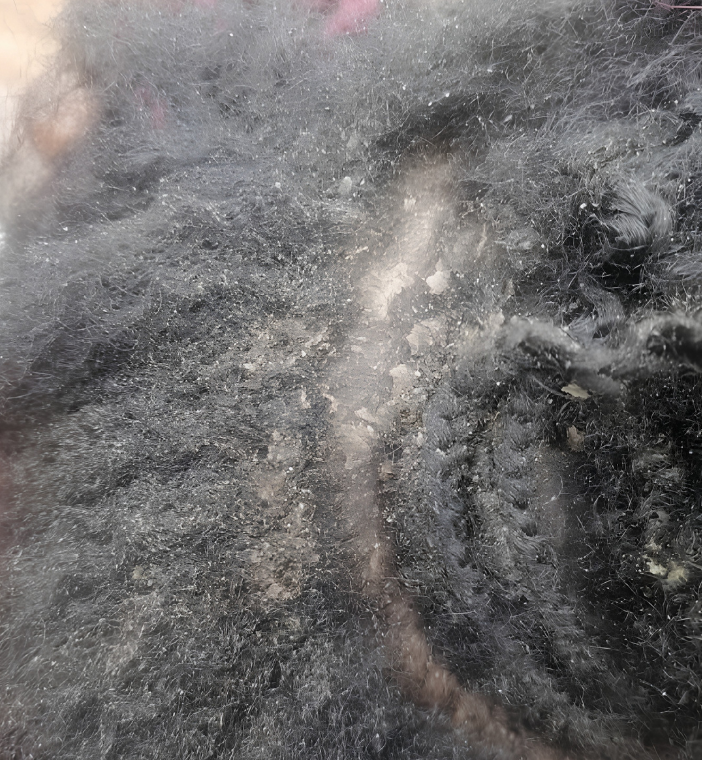
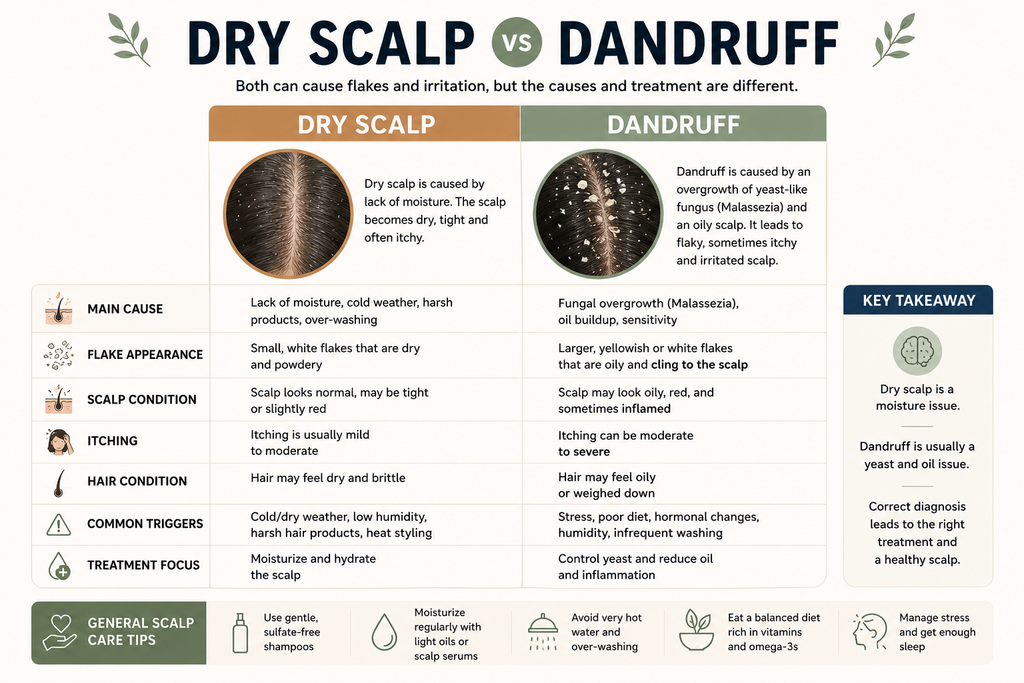
The easiest way to understand dry scalp vs dandruff is to compare their typical characteristics.
| Feature | Dry Scalp | Dandruff |
|---|---|---|
| Main issue | Lack of moisture in the skin | Increased scalp flaking associated with scalp oil and Malassezia |
| Flakes | Often smaller, dry, and white | May be larger, white or yellowish, and sometimes oily |
| Scalp feel | Tight, dry, or mildly itchy | Often itchy, irritated, or oily |
| Hair/scalp oiliness | May be normal or low | Can be associated with increased oiliness |
| Common triggers | Dry weather, harsh products, hot water | Sebum, Malassezia, individual susceptibility |
| Treatment approach | Gentle cleansing and reducing dryness | Appropriate dandruff-focused treatment |
These descriptions are useful guidelines, not a way to diagnose yourself.
Scalp conditions can overlap. Someone can have both dryness and dandruff, while another person may have a different condition entirely.
That is why persistent symptoms should not automatically be treated as one or the other.
What Does a Dry Scalp Look Like?
A dry scalp may produce small, fine flakes that appear white and powdery.
The scalp may also feel tight, particularly after washing.
Some people experience mild itching without significant redness or inflammation.
Dryness may become more noticeable during periods of cold, dry, or dusty weather. In Nigeria, for example, environmental changes during harmattan can make skin and hair feel drier than usual.
During these periods, harmattan hair protection can help you think beyond the hair strands and consider how the environment is affecting your overall hair-care routine.
If your scalp feels dry after every wash, examine the products and techniques you are using.
Washing with extremely hot water, cleansing too aggressively, or using a shampoo that your scalp does not tolerate well may contribute to the problem.
However, persistent flaking should not automatically be blamed on dry weather.
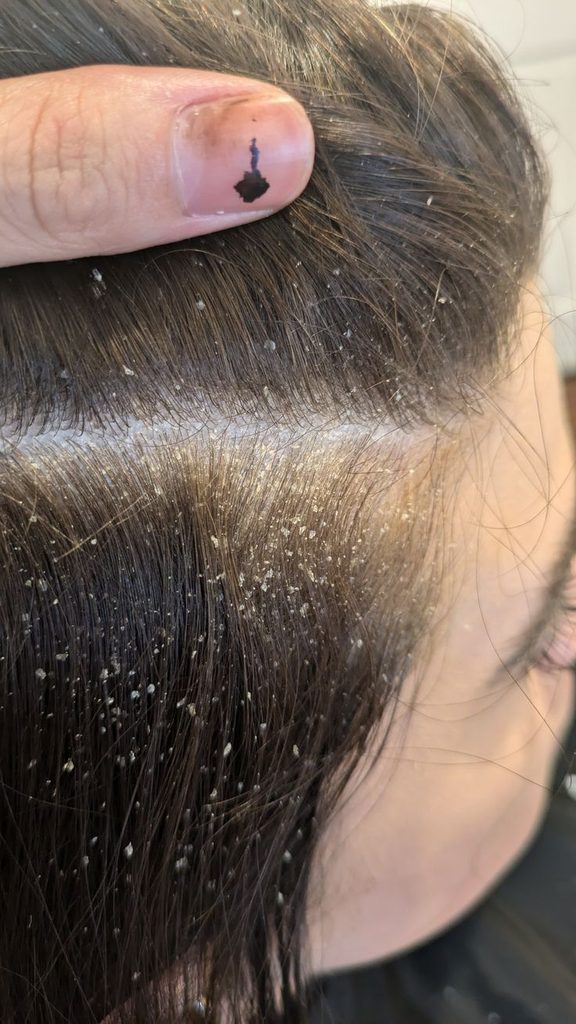
What Does Dandruff Look Like?
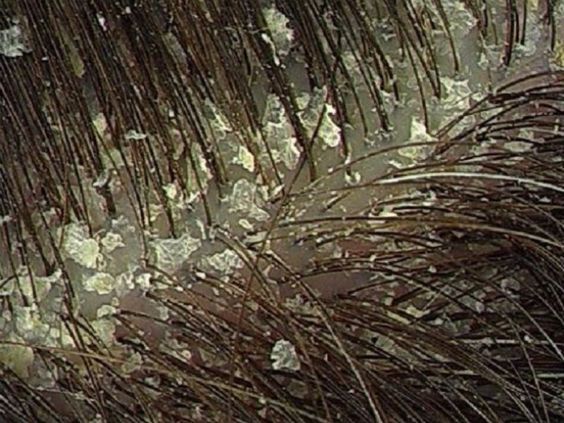
Dandruff can produce visible flakes that appear on the scalp, hair, clothing, or shoulders.
The flakes may be white, off-white, or yellowish. They can sometimes appear larger or more noticeable than the fine flakes associated with ordinary dryness.
The scalp may also feel itchy.
Some people experience dandruff with an oily scalp rather than a dry-feeling one.
The location of the flakes can provide clues as well. Dandruff may be more noticeable around areas of the scalp that produce more oil.
However, appearance alone cannot always tell you what is happening.
Conditions such as seborrheic dermatitis, psoriasis, eczema, and certain fungal infections can also cause scaling.
If you’re also dealing with common scalp problems to watch for, it is useful to pay attention to symptoms beyond the flakes themselves.
Can a Dry Scalp Cause Itching?
Yes.
Dry skin can become itchy, and the scalp is no exception.
When the scalp’s skin barrier becomes dry, you may experience tightness or an urge to scratch.
However, itching does not automatically mean that your scalp is dry.
Dandruff can also cause itching, as can allergic reactions, contact dermatitis, psoriasis, infections, and other scalp conditions.
This is why trying to solve every itchy scalp with additional oil may not be the best approach.
Instead, consider when the itching started.
Did it appear after using a new shampoo? Did it begin after installing braids? Does it happen when your scalp becomes sweaty? Does it improve after washing, or does washing make it worse?
Keeping track of these patterns can help you identify possible triggers.
If you regularly experience irritation after using certain products, reviewing ingredients to avoid in hair products for 4C hair may also help you simplify your routine.

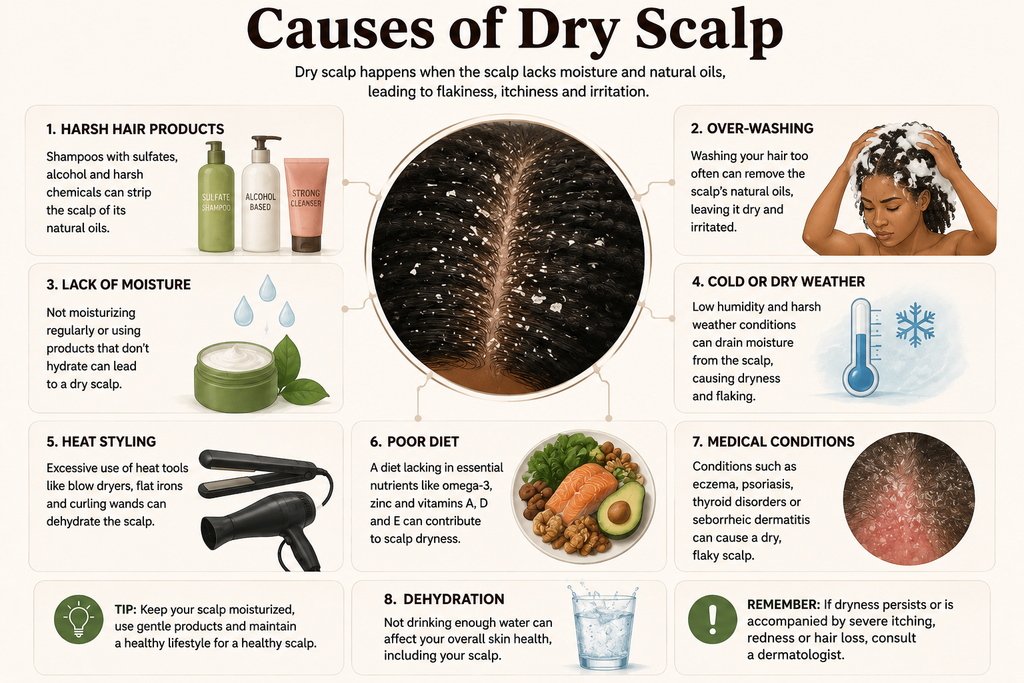
What Causes a Dry Scalp?
A dry scalp can have several possible causes.
Dry Weather
Low humidity can cause moisture to evaporate from the skin more easily.
This may become noticeable during dry seasons or when spending significant time in environments with low humidity.
Hot Water
Very hot water can remove some of the skin’s natural oils and leave the scalp feeling dry.
Lukewarm water is generally a gentler choice.
Harsh Cleansing
Some shampoos may leave certain people’s scalps feeling stripped or uncomfortable.
This does not mean shampoo is bad for your scalp. Cleansing is essential for removing sweat, oil, dead skin cells, and product residue.
The goal is finding a cleanser that works well for your scalp.
Excessive Washing
Washing more frequently than your scalp requires may contribute to dryness for some people.
However, reducing washing frequency is not automatically the answer.
If your scalp becomes sweaty or oily quickly, waiting too long between washes may create other problems.
Finding the right balance is part of developing a simple 4C hair wash day routine that works for your individual needs.
What Causes Dandruff?
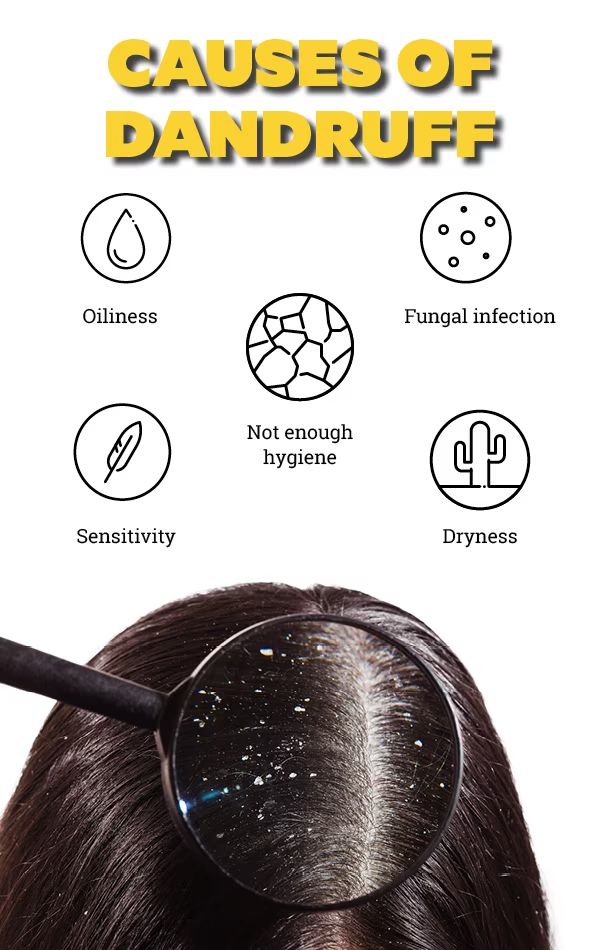
Dandruff has a different set of contributing factors.
One important factor is Malassezia, a yeast that naturally lives on the skin.
For some people, the interaction between this yeast, scalp oils, and the skin’s response can contribute to dandruff.
Individual susceptibility also matters.
Stress, hormonal changes, illness, and environmental conditions may influence some people’s symptoms.
Dandruff can also be more noticeable when the scalp becomes oily.
This is why simply applying more oil to a flaky scalp is not always helpful.
It is also important to understand that dandruff is not caused by poor personal hygiene.
A person can wash their hair regularly and still experience dandruff.
If flakes keep returning despite reasonable scalp care, a healthcare professional can help determine whether dandruff or another scalp condition is responsible.
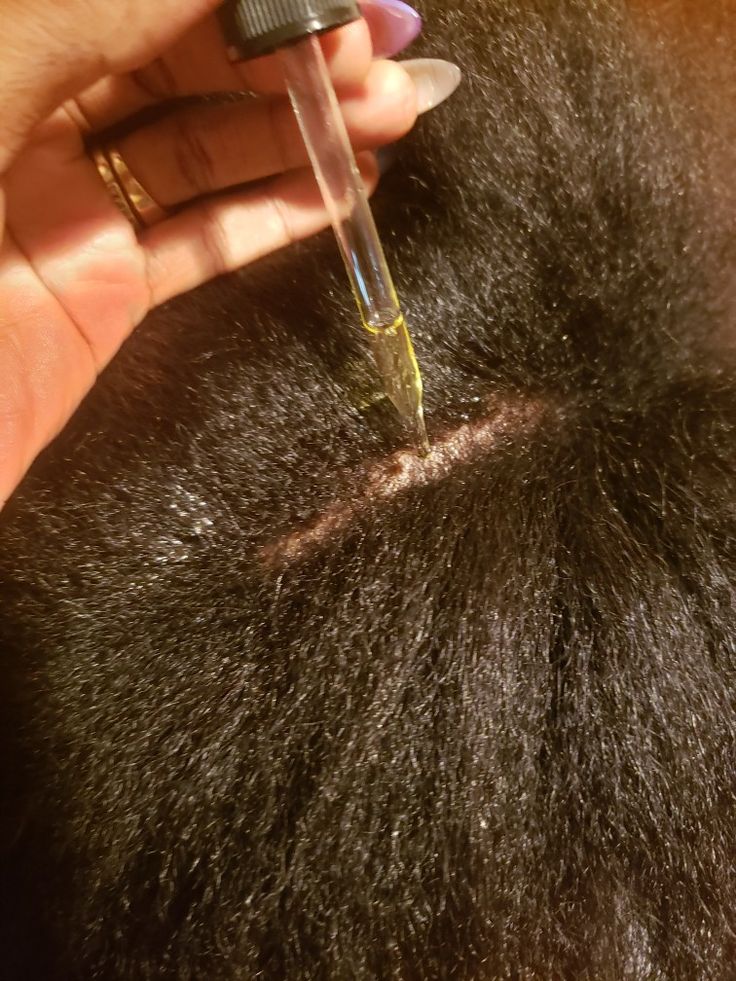
Should You Oil a Dry Scalp?
Scalp oiling is common in natural-hair routines, but it is not a universal solution for dryness.
If your scalp feels dry, a small amount of a suitable product may make the skin feel more comfortable.
However, applying large amounts of oil can create buildup and make it harder to determine what is actually causing your symptoms.
Some oils may also irritate sensitive skin.
Rather than automatically reaching for the heaviest oil available, consider simplifying your routine.
If you use scalp oils regularly, how to use hair oils without causing buildup can help you avoid creating layers of residue that eventually require more aggressive cleansing.
Also remember that the hair and scalp have different needs.
An oil that makes your hair strands feel soft does not necessarily mean your scalp requires the same treatment.
Can Dandruff Be Treated With Natural Remedies?
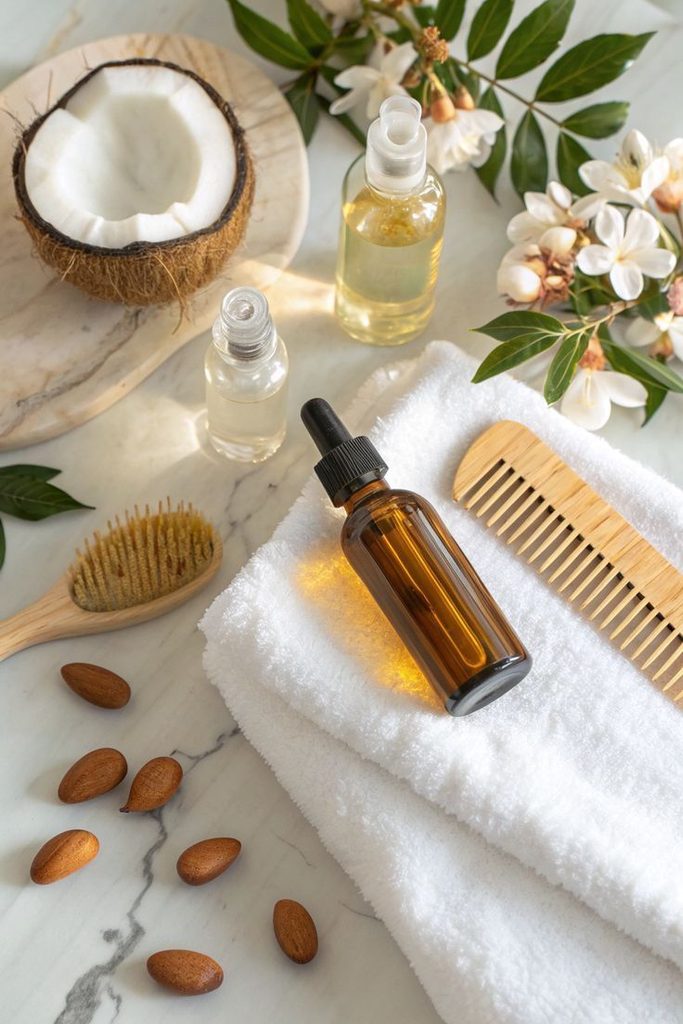
There are many natural dandruff remedies promoted online.
Tea tree oil, apple cider vinegar, aloe vera, coconut oil, and various herbal preparations are frequently suggested.
However, natural remedies should be approached carefully.
An ingredient being natural does not automatically make it suitable for your scalp.
Concentrated essential oils can cause irritation when used incorrectly. Acidic ingredients such as undiluted vinegar can also irritate the skin.
Some natural ingredients may feel soothing, but that does not necessarily mean they treat the underlying cause of dandruff.
If your dandruff is persistent, an evidence-based dandruff treatment may be more appropriate than repeatedly experimenting with DIY mixtures.
You can still keep your overall routine simple and gentle while using an appropriate treatment.
How Shampooing Affects Dry Scalp and Dandruff
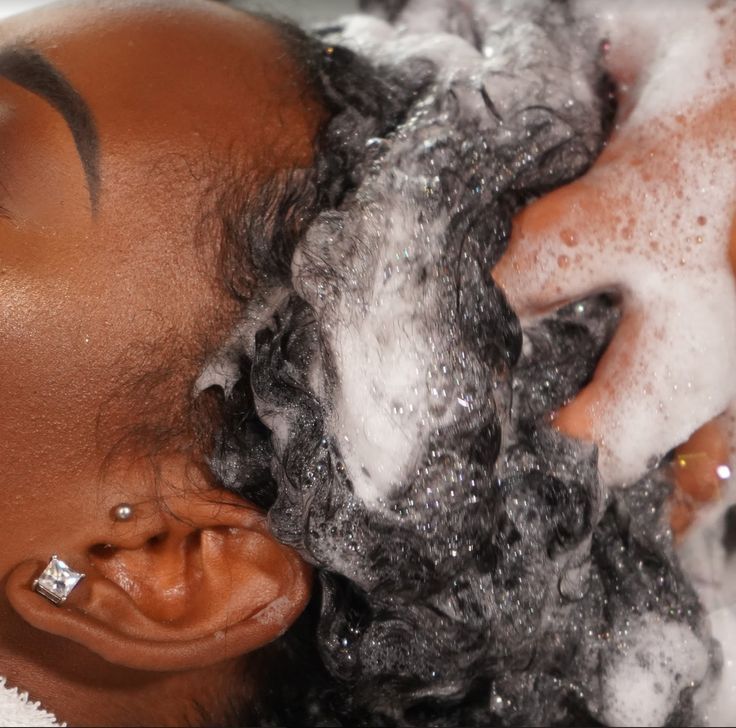
Shampoo plays an important role in both scalp dryness and dandruff, but the approach can be different.
If your scalp is dry, you may want to avoid unnecessarily harsh cleansing and very hot water.
If you have dandruff, however, regular cleansing can be an important part of managing excess oil and flakes.
Some dandruff shampoos contain active ingredients specifically designed to address dandruff.
This does not mean that everyone with flakes should immediately start using medicated shampoo.
First, consider whether your symptoms actually resemble dandruff.
If you have persistent flakes, itching, or irritation, a dermatologist or other qualified healthcare professional can help determine the most appropriate treatment.
For natural hair, cleansing the scalp properly does not require rough scrubbing. Your best shampoos for 4C hair should leave your scalp clean without making your strands unnecessarily difficult to manage.
How Product Buildup Can Make Scalp Problems More Confusing
Product buildup can make it harder to understand what is happening on your scalp.
If you regularly use oils, gels, creams, edge control, butters, leave-ins, and styling products, residue can accumulate around the hair and scalp.
This may make your scalp feel heavy, greasy, or uncomfortable.
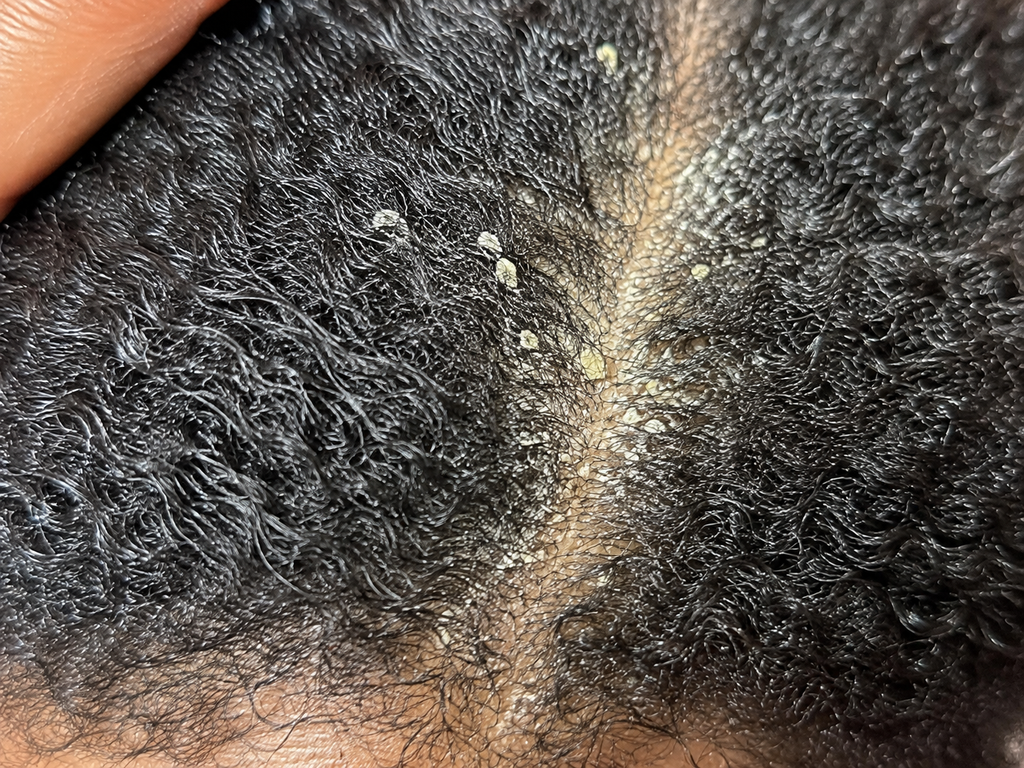
It can also create flakes that are actually a mixture of product residue and dead skin rather than dandruff.
Before assuming that every visible white substance is dandruff, consider when you last cleansed your scalp and what products you have been using.
Reducing the number of products you apply directly to the scalp can make your routine easier to manage.
You can also review how to prevent product buildup on natural hair so that residue does not become a recurring problem.
If deeper cleansing is occasionally necessary, choose a suitable product and follow it with appropriate conditioning.
How Your Hair Routine Can Affect Your Scalp
Your scalp and hair routine are connected.
A hairstyle that looks beautiful can still create scalp problems if it is too tight, too heavy, or difficult to maintain.
Braids, twists, wigs, locs, extensions, and other long-lasting styles can trap sweat and make the scalp more difficult to access.
If a style consistently leaves you with itching, pain, bumps, or significant tenderness, reconsider how it is being installed and maintained.
Your protective hairstyles for 4C hair should reduce unnecessary manipulation without creating excessive tension.
The products you use during styling matter too.
Heavy edge products and scalp oils can accumulate over time, particularly when you continue adding fresh layers without properly cleansing.
A simpler styling routine may make scalp care much easier.
What About Seborrheic Dermatitis?
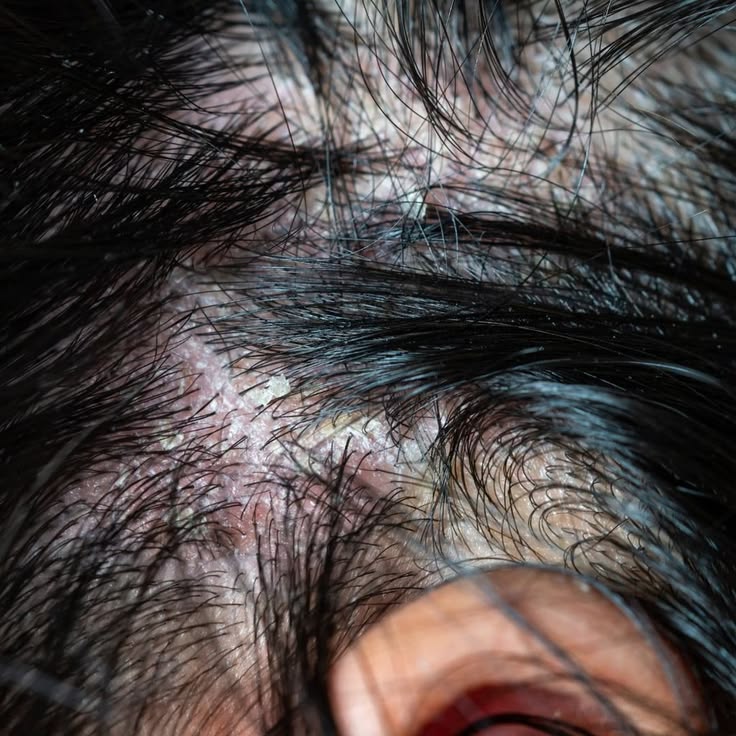
Seborrheic dermatitis is a skin condition that can affect the scalp and cause flaking, itching, and inflammation.
It is related to factors that also play a role in dandruff, including Malassezia and sebum.
However, seborrheic dermatitis is generally more inflammatory and can cause noticeable redness and scaling.
It may also affect areas beyond the scalp, including the eyebrows, ears, sides of the nose, and other oily areas of the skin.
This is one reason you should not assume that every case of flaking is simply dry skin.
If your scalp repeatedly develops significant scaling, redness, itching, or irritation, professional assessment can help determine what you are dealing with.
Treatment may involve medicated shampoos or other therapies recommended by a healthcare professional.
When Should You See a Dermatologist?
Occasional flakes are not necessarily a reason to panic.
However, persistent or severe scalp symptoms deserve attention.
See a dermatologist or qualified healthcare professional if you experience ongoing:
- Severe itching
- Pain or burning
- Significant redness
- Swelling
- Open sores
- Bleeding
- Pus or drainage
- Thick or persistent scaling
- Sudden hair loss
- Bald patches
- Repeated scalp infections
You should also seek professional advice if you have tried reasonable changes to your hair-care routine, but the symptoms continue.
This is particularly important because several scalp conditions can look similar.
Trying multiple home remedies at once may make irritation worse and make it difficult to identify the original trigger.
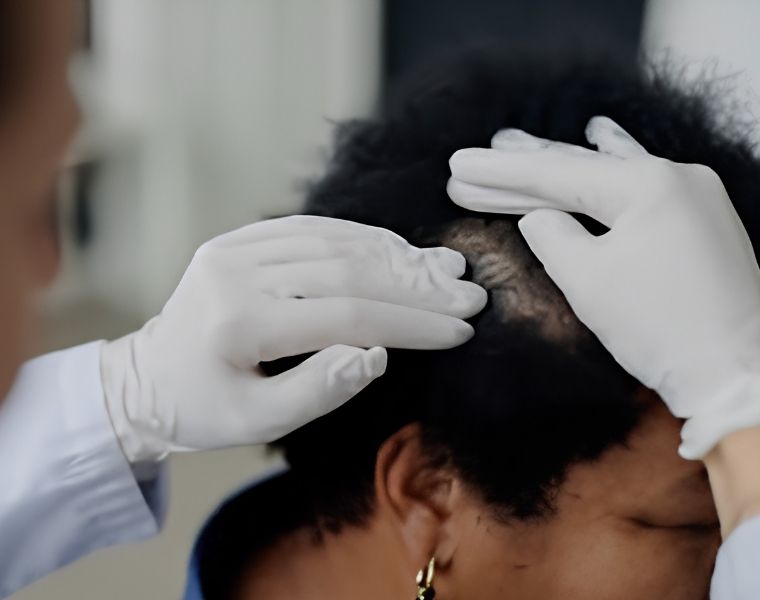
A professional can examine your scalp and recommend appropriate treatment.
How to Prevent Dryness and Dandruff Problems
You cannot prevent every case of dandruff or dry scalp, but you can create habits that support better scalp health.
Start by cleansing your scalp regularly according to its needs.
Avoid washing with extremely hot water.
Do not aggressively scratch your scalp.
Keep your hair tools and accessories clean.
Avoid piling unnecessary products directly onto your scalp.
Be cautious when introducing new products, especially if you have sensitive skin.
If you wear wigs or extensions, give your scalp opportunities to be properly cleansed and avoid excessive tension.
Your general hair routine matters too. Combining scalp care with moisture retention for 4C hair can help you care for both the skin and the strands without constantly overloading either with products.
Most importantly, pay attention to changes.
If your scalp suddenly becomes much itchier, oilier, drier, or more flaky than usual, consider what has changed in your routine or environment.
Dry Scalp vs Dandruff: Which One Do You Have?
The difference between dry scalp vs dandruff is not always obvious from flakes alone.
A dry scalp is generally associated with reduced moisture in the skin and may produce small, dry flakes alongside tightness or mild itching.
Dandruff is associated with increased scalp flaking and factors such as sebum and Malassezia. It may produce larger or oilier-looking flakes and can cause itching.
But these are general patterns rather than a diagnosis.
If your symptoms are mild, start by simplifying your routine, cleansing your scalp appropriately, and avoiding products that appear to cause irritation.
If the problem keeps returning, becomes severe, or is accompanied by redness, sores, pain, significant scaling, or hair loss, professional assessment is the safer choice.
The most effective scalp routine is not necessarily the one with the most products. It is the one that keeps your scalp clean, comfortable, and appropriately cared for while allowing you to recognize when something needs additional attention.
Final Thoughts
Understanding dry scalp and dandruff can save you from treating the wrong problem.
Although both can cause flakes and itching, dry scalp is generally related to dryness of the skin, while dandruff involves increased scalp flaking associated with factors such as sebum and Malassezia.
Pay attention to what your scalp is telling you.
If your skin feels tight and dry, look at your cleansing habits, water temperature, environment, and product choices. If you have persistent oily-looking flakes and itching, dandruff may be a possibility. And if your scalp is painful, inflamed, severely itchy, or changing in an unusual way, do not rely solely on home remedies.
For natural and 4C hair, scalp care should be part of the overall routine rather than something you only think about when a problem appears.
Cleanse appropriately, avoid unnecessary buildup, keep hairstyles comfortable, handle your scalp gently, and choose products based on what your scalp actually needs.
A simple routine, consistent observation, and professional help when necessary can go a long way toward keeping your scalp comfortable and your natural hair easier to care for.
One Comment